How to Identify When Construction Equipment Parts Need to Be Replaced

Tight production timelines and the cost of equipment downtime put pressure on contractors and managers to keep fleets running. However, no matter how well-maintained the equipment is, wear components inevitably degrade with time and usage. When they do, it impacts productivity, deliverables and repair costs.

Recognizing construction equipment part degradation and acting promptly can keep your business efficient and responsive.

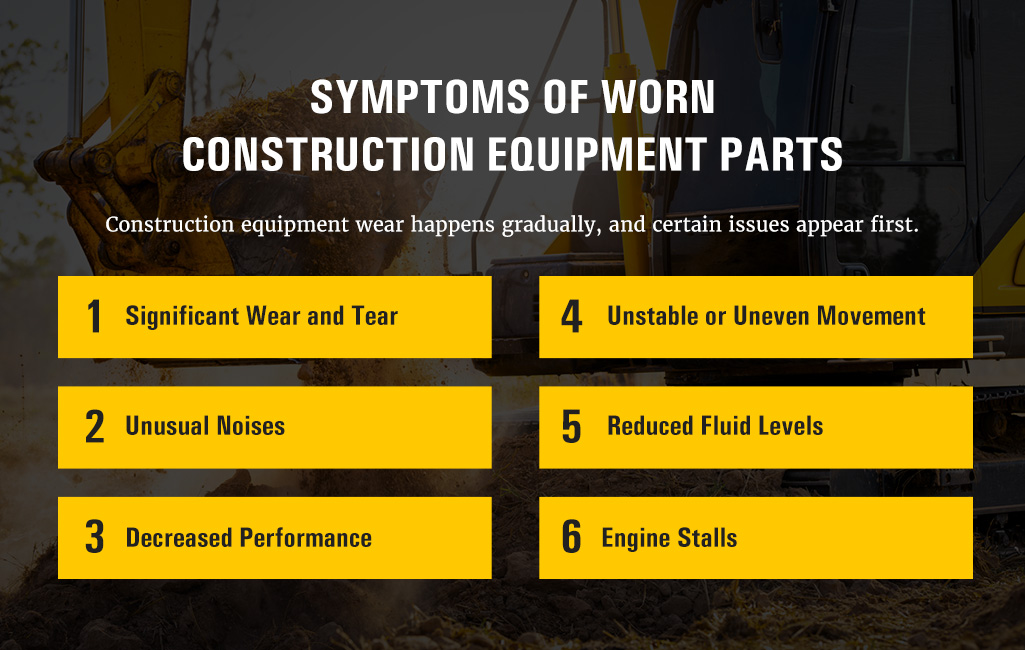
Symptoms of Worn Construction Equipment Parts

Construction equipment wear happens gradually, and certain issues appear first.

1. Significant Wear and Tear

External impact on construction equipment often tells the story long before internal failure occurs. Some signs that can help you plan maintenance include the following:

  • Cracks in metal frames or attachments often develop at high-stress points like pivot joints, weld seams or mounting brackets. These usually indicate fatigue from repeated load cycles.
  • Rust and surface corrosion in hydraulic fittings, pins or undercarriage frames can compromise integrity.
  • Loose or misaligned components like track shoes, sprockets or ground-engaging tools (GETs) accelerate wear on touching parts. Misalignment often stems from prior impact or bushing and bearing wear.
  • Uneven tire wear can point to misaligned axles, suspension fatigue or inconsistent load distribution.
  • Worn tires reduce traction and load-bearing capability. Cuts and exposed cords often appear after repeated use on sharp or uneven surfaces.
  • Fluid leaks from hydraulic lines, gearboxes or undercarriage signal failing seals or fittings.

2. Unusual Noises

Odd noises during operation can indicate equipment issues. Pay attention to changes in the frequency or location of the following noises:

  • Grinding usually points to metal-on-metal contact, often caused by worn bearings and gears or improperly lubricated shafts.
  • Squealing can indicate high-friction issues from slipping belts, brake components or underserviced hydraulics.
  • Rattling noises stem from loose pins and bolts or internal linkage components that have lost proper torque or bushing support.
  • Knocking or tapping tends to come from the engine or drivetrain. This may indicate internal clearance issues or imbalance.
  • Hissing sounds may point to escaping fluid or air pressure, which can lead to performance drops or safety hazards.

3. Decreased Performance

Wear often shows through efficiency loss. Slower operation in lifting, digging or maneuvering tasks may signal hydraulic issues. Reduced power output under load, compared to the equipment’s previous performance levels, may be a sign of degradation in the engine, turbocharger or fuel system components. Sluggish movement results from increased friction in drive components or drag caused by misaligned or sticking undercarriage parts.

4. Unstable or Uneven Movement

Movement issues often start with a slight wobble or a gradual lean and progress with time. Many of these problems originate from the undercarriage or suspension system. Operators may notice:

  • Jerky movement during operation, which may result from sticking hydraulic cylinders or uneven track tension.
  • Pulling or drifting to one side in tracked equipment can stem from sprocket wear or undercarriage misalignment.
  • Rocking or bouncing when lifting or lowering attachments may reflect worn boom pins or shocks or cracked mounts.

5. Reduced Fluid Levels

A drop in fluid levels between service intervals typically points to more than evaporation.

  • Repeatedly topping up hydraulic fluid likely indicates internal leakage.
  • Declining engine oil with no external leak visible could suggest internal consumption.
  • Coolant loss may be a result of small leaks at hose clamps, radiator seams or expansion tanks.

6. Engine Stalls

Stalls can be signs of deeper issues if they happen more than once. Causes for concern include the following:

  • Sudden engine shutdowns under load indicate fuel delivery inconsistencies or electrical interruptions.
  • Gradual loss of power before stalling stems from overheating, failing sensors or restricted fuel lines.

How to Inspect and Diagnose Worn Construction Equipment Parts

Thoroughly checking construction equipment parts for wear helps teams minimize unplanned downtime and extend the life of crucial components.

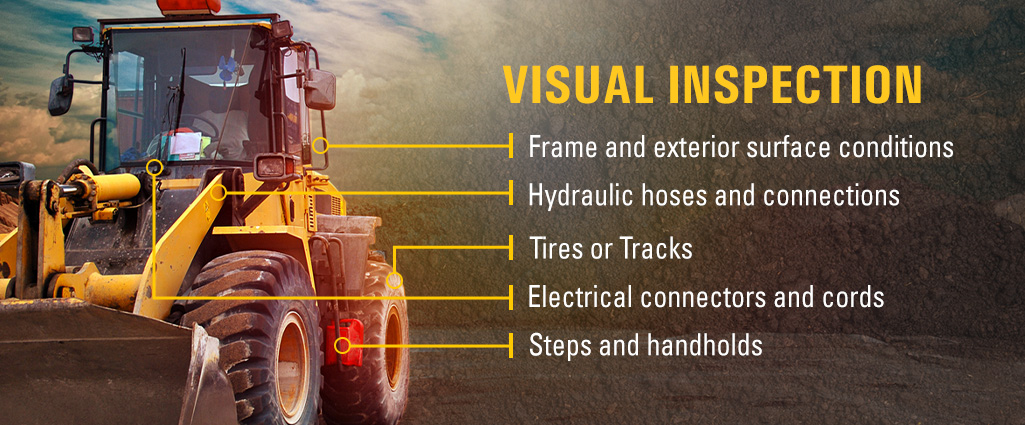
1. Visual Inspection

Perform visual checks before running the engine. Conduct a detailed walk-through on the following parts:

  • Frame and exterior surface conditions: Assess for cracks, dents and corrosion at welds and pivot points. This damage often indicates fatigue from repeated loads.
  • Hydraulic hoses and connections: Ensure they’re free of bulges, abrasions, residue and leaks.
  • Tires: Check inflation using the manufacturer’s guidance. Assess tread depth in multiple spots to detect uneven wear. Inspect for cuts, bubbles, embedded debris and sidewall degradation.
  • Tracks: Look for loose or missing links, uneven patches or tension across the length and wear on rollers or sprockets. Loose tracks can accelerate undercarriage wear and degrade traction.
  • Electrical connectors and cords: Check for signs of rust, frayed insulation and loose connections.
  • Steps and handholds: Confirm that all access points are secure and free of debris and corrosion.

2. Mechanical Inspection

After the initial visual inspection, check internal and moving parts to pinpoint wear. Assess the following parts:

  • Gears: Examine for chipped or pitted gear teeth, metallic debris in gear oil and engagement backlash. These symptoms indicate eroding internal tolerances and compromised reliability.
  • Belts, bearings and shafts: Check for excessive play, binding and lubrication issues. Worn components may feel loose or sound irregular during rotation.
  • Undercarriage components: Check rollers, idlers and sprockets for wear and leaks. Excessive clearance in final drives can suggest deeper gear or bearing wear.
  • Fluid level and quality: Look for milky or darkened hydraulic oil, coolant discoloration and gritty engine oil, which indicate contamination or component wear.
  • Engine mounts and supports: These parts should be rigid. Cracked or flexible mounts lead to vibration and misalignment.
  • Brake system components: Check that pads and drums operate smoothly and without noise or excessive play.
  • Ground-engaging tools: Inspect bucket teeth, cutting edges, adapters and blades. Rounded, dull, cracked or missing tools impact productivity and machine efficiency. Dull GETs require more force to penetrate material, increasing strain on the machine and fuel use.

3. Operational Checks

After the visual and mechanical checks, confirm behavior under operating conditions. Compare current behavior with past operation logs and record the following deviations:

  • Unusual noises during operation: Sounds that operators or technicians didn’t hear before indicate component stress.
  • Odd vibrations: Shaking during travel or lift actions indicates balance issues, worn bearings or misaligned drives.
  • Abnormal functionality: Be mindful of responsiveness loss when lifting, turning or braking.

Construction Equipment Replacement Part Options

Choosing the right replacement parts for construction equipment involves more than finding the cheapest or fastest option. Your decision affects equipment performance, uptime, long-term costs of ownership and maintenance needs.

  • New or OEM parts fit and function like the components they replace. They deliver better wear resistance and predictable performance under stress. While their initial cost may be higher, their value lies in minimized downtime, longer intervals between replacements and reduced risk of secondary impact.
  • Used parts sourced from retired or dismantled machines are a cost-effective solution. Quality used parts with comprehensive maintenance histories can work just as well as many new parts.
  • Remanufactured parts are disassembled, cleaned, inspected and rebuilt using new or reconditioned parts to meet OEM specifications. The result is a component that performs like new, often at a lower price point and with some form of warranty.
  • Exchange parts are rebuilt components available off-the-shelf. They cover various major components across fleets, helping reduce wait times for custom repairs.

Factors to Consider When Choosing Construction Equipment Spare Parts

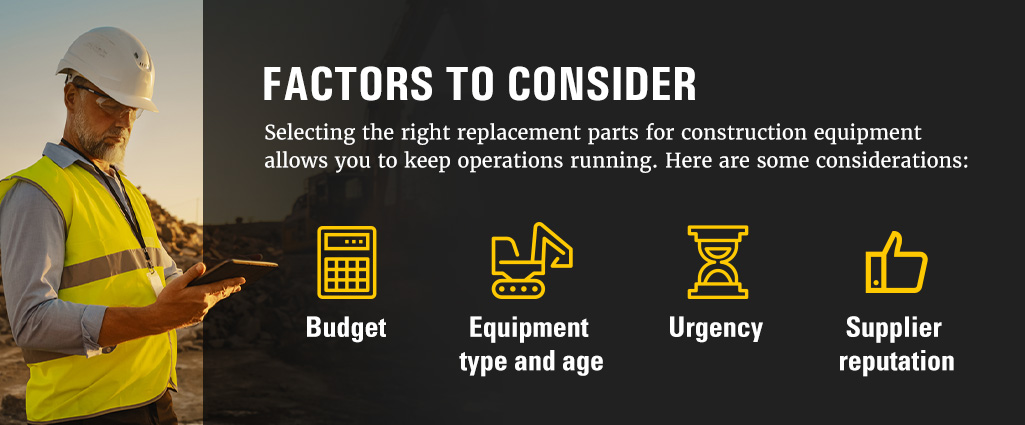
Selecting the right replacement parts for construction equipment allows you to keep operations running safely and efficiently. Here are some considerations:

  • Budget: While new components deliver the best long-term value, used parts are a less expensive initial investment.
  • Equipment type and age: Equipment operating in high-impact environments or on tight production schedules benefits most from OEM or remanufactured solutions because they support performance and durability.
  • Urgency: If you need to overcome downtime fast, new inventory is the fastest path back to productivity.
  • Supplier reputation: Working with a reputable dealer that offers certified rebuilds and warranties ensures quality and accountability.

Inspection and Maintenance Tips for Construction Equipment Parts

Thorough inspections help teams notice and address common construction equipment part problems. When paired with preventative care and expert support, inspections improve equipment life cycle.

1. Perform Regular Inspections

Routine inspections help detect wear early. Technicians or operators should perform daily walkarounds, looking for signs of wear. Teams must verify tire pressure, track tension and fluid levels regularly.

Operators should document each inspection to create a useful log that can help identify trends or recurring issues. This approach allows for smarter maintenance planning.

2. Schedule Preventative Maintenance

A thorough preventative maintenance schedule can extend part life and maintain consistent performance. Service plans typically include:

  • Fluid and oil analysis and changes
  • Electrical system verification and servicing
  • Tire and track checks and corrections
  • Safety equipment inspection

3. Use Technology to Track and Manage Your Equipment

Fleet management helps teams monitor part health, plan service intervals and reduce unplanned maintenance. Cat® technology platforms make fleet management easier with real-time data and predictive insight:

  • Condition monitoring provides insights from equipment telematics to identify problems before they cause failure.
  • S·O·S fluid analysis tracks contamination, wear particles and fluid integrity to inform part replacement timing.
  • Customer Value Agreements bundle parts, service and support into customized plans that help stabilize costs and keep maintenance on schedule.
  • Cat Service Information System offers access to tool guides that help with troubleshooting and service management.
  • VisionLinkTM enables remote visibility of machine performance, location, use, idle time and fault codes.
  • Remote Asset Monitoring helps ensure machines are used efficiently and alerts operators and managers to faults from a distance.

4. Address Minor Issues Promptly

Prompt repairs or part replacements help teams avoid equipment failure. Keeping spare parts on hand can facilitate quick turnarounds. When replacing or repairing, use quality parts — the upfront costs may be higher, but they provide longer life expectancy, warranty support and proven compatibility.

5. Train Operators

When trained properly, operators can identify early signs of wear and report them before failure occurs. Training also ensures equipment runs according to design limits. Scheduled operator refreshers and feedback loops between operators and maintenance teams help reinforce consistent, safe usage practices.

When to Replace Construction Equipment

Determining the right time to replace construction equipment requires balancing operational efficiency, safety and cost control. Your instinct may be to extend asset life as far as possible, but holding on to machines too long introduces risk.

1. Repair Costs Exceed Replacement

A common rule operators follow is the 50/50 rule. If the cost of a major repair is more than 50% of the equipment’s current value, replacement often makes more financial sense. However, this isn’t a stand-alone metric.

Life cycle cost analysis provides a fuller picture. It factors in the purchase price, as well as operating costs, fuel efficiency and resale value. Equipment that’s increasingly expensive to maintain or run may cost more than newer models.

Replacement decisions should also account for:

  • Hours of operation versus expected lifespan
  • Market depreciation
  • Incentives for trading in or upgrading

When repair costs approach or exceed the equipment’s remaining value, replacement may deliver a better return on investment.

Business owners can also opt for certified rebuild programs. These plans involve restoring the entire machine or major systems to like-new condition. They allow you to extend the asset’s life with a known cost structure, updated technology and a renewed warranty.

2. Frequent Breakdowns

Recurring mechanical issues that interrupt operations or require emergency service signal that equipment may be at the end of its useful life. When breakdowns affect timelines or require switching to backup rental equipment, it may be time to make replacements.

3. Limited Parts Availability

As equipment ages, sourcing compatible parts becomes difficult and expensive. Lead time can stretch out projects or lead to improvised repairs that compromise safety and performance. If critical components are no longer readily available, minor, repeatable fixes can become bottlenecks. At this stage, replacing the equipment with a newer model that has strong OEM or aftermarket parts support is likely the best choice.

4. Safety Concerns

Damaged equipment can cause accidents or injuries. If regular inspections flag critical failures or safety violations, prioritize replacement. Compliance with Occupational Safety and Health Administration (OSHA) and local safety standards also becomes harder with aging equipment. Newer machines offer improved ergonomics, visibility, automatic alerts and fail-safes that reduce operator risk and liability.

Partner With Warren CAT for Construction Equipment Parts

When your equipment requires parts, you need a trusted partner. Warren CAT supplies Cat parts for compact equipment and full-scale earthmoving fleets. As an authorized dealer serving West Texas and Oklahoma, we offer direct access to components that meet the highest standards for durability, performance and safety.

We support your business with new and used equipment for sale, rental equipment, custom maintenance plans and expert service. Our technicians receive state-of-the-art training, so they understand your equipment inside and out to perform professional repairs and rebuilds.

Contact us today for construction equipment replacement parts.

Linked Sources:

The Versatility of Telehandlers: Applications Across Industries

High power, reach and versatility make telehandlers an important part of equipment fleets. They can support applications in the construction, agricultural, industrial and landscaping industries.

From lifting heavy objects to performing earthmoving tasks, telehandlers can help you boost productivity on your jobsites. With a far reach and the lifting capabilities of a hydraulic forklift, a telehandler offers numerous advantages.

Telehandler Uses Across Industries

Telehandlers are highly useful in various industries. Consider how you can use one for the following applications:

Construction

The construction industry depends on telehandlers for these tasks:

  • Moving heavy materials vertically: A construction telehandler lifts and moves objects to elevated areas. It can handle heavy materials such as bricks, concrete blocks, steel beams, large machinery parts and pallets of materials.
  • Scaffolding: Because of their height capabilities, telehandlers are excellent options for scaffolding support.
  • Raising workers: A telehandler can provide a raised platform for workers who need to perform tasks at various heights and levels.
  • Loading and unloading materials: You can use a telehandler to load or unload a truck at different heights.
  • Roofing: A telehandler is an excellent option if you need to precisely position roofing or siding materials.
  • Cable and pipe installation: Telehandlers are also beneficial for cable and pipe installation, providing versatile lifting and reaching capabilities. Workers can easily transport and position cables, pipes and other materials.
  • Site clearing: Telehandlers with bucket attachments can help workers remove waste materials and clear debris efficiently.

Agriculture

Telehandlers are highly useful for the following agricultural applications:

  • Moving and positioning heavy loads: Telehandlers can lift and move light and heavy farm loads such as logs, steel beams and hay bales.
  • Log stacking: A telehandler is an ideal option for log stacking thanks to its telescopic boom and lifting capabilities.

Industrial

You can use a telehandler to perform various tasks and facility maintenance in industrial settings. It’s a great option for the following applications:

  • Maintaining or repairing features in high ceilings: A telehandler can help maintenance technicians reach light bulbs, ductwork, sprinkler systems and electrical conduits.
  • Moving heavy materials: Telehandlers are better alternatives to forklifts if you need to move objects to significant heights, maneuver around obstacles or navigate tight spaces.

Landscaping

Telehandlers are also fantastic for these landscaping purposes:

  • Moving materials: Use a telehandler to move materials such as mulch and gravel around your worksites.
  • Transporting equipment: Telehandlers are powerful enough to transport smaller equipment around jobsites.

Advantages of Telehandlers

Telehandlers benefit various industries because of these advantages:

Reach

A telehandler’s extendable boom can reach greater heights than a forklift. This reach can help workers access areas faster and easier than they could with alternative equipment. They are especially beneficial for tall structures such as bridges and tall buildings.

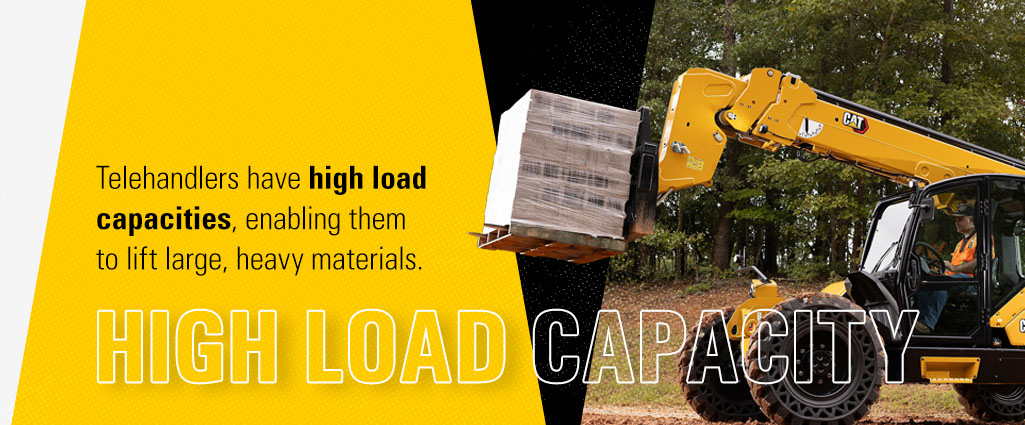
Load Capacity

Telehandlers have high load capacities, enabling them to lift large, heavy materials. This power is vital for large-scale projects and applications.

Maneuverability

The telescopic boom on a telehandler can maneuver around obstacles, move loads at various angles and reach tight spaces. Telehandlers also feature multiple steering axles for more precise control.

Versatility With Attachments

You can fit a telehandler with a wide variety of attachments, such as the following:

  • Buckets
  • Grab buckets
  • Bag filling buckets
  • Platforms
  • Crane jibs
  • Lifting hooks
  • Truss booms
  • Bale grippers
  • Bale spears
  • Bale forks
  • Bale handlers
  • Carriages
  • Fork extensions
  • Rotators
  • Snow ploughs

Efficiency

Telehandlers are highly efficient because they reduce the need to use multiple machines. They can perform the same tasks as equipment like forklifts and mobile platforms. A telehandler’s power and capabilities can also help your team boost productivity, helping them complete projects faster.

Safety

Telehandlers can enhance your jobsite safety when you operate and maintain them according to OSHA standards. They reduce the need for manual lifting, helping workers prevent injuries. They also come with safety features such as heavy-duty railings, load sensors, stability systems and nonslip floor pads.

Road and Off-Road Capabilities

You can safely operate a telehandler on paved surfaces and rough terrain. Its wide off-road tires, four-wheel drive and stability help it travel to and operate smoothly on various types of jobsites.

Forklifts vs. Telehandlers

A telehandler is often a much better alternative to a forklift because of the following advantages:

  • Extended vertical reach: Various telehandler models can reach approximately 15 to 56 feet, while forklifts and reach trucks can typically only reach up to 15 feet.
  • Crane-like capabilities: A telehandler can lift objects up and out, making it easier to retrieve materials and position them on shelves.
  • Higher weight capacity: Telehandlers have much higher weight capacities than forklifts, enabling workers to move larger loads and complete tasks more efficiently.

Choosing the Right Telehandler

Telehandlers come in different sizes and feature various lifting capabilities. Selecting the right type of telehandler is crucial for enhancing productivity, efficiency and safety, so it’s important to consider your jobsites and applications before investing in equipment. Choose a telehandler based on these factors:

  • Load and lifting capacity: Keeping loads within the equipment’s load and lifting capacity is vital for safe operation. Assess the typical load weight you deal with on your jobsites. Select a telehandler that can handle this weight for optimal safety and efficiency.
  • Lifting height: The telehandler must also be able to lift materials high enough for your applications. Consider the tallest height you plan to lift or retrieve materials to choose a telehandler with the appropriate boom lifting height.
  • Horizontal extension: A telehandler’s horizontal extension is the maximum distance it can reach outward while the boom is extended. You may require a long horizontal extension if you often need to maneuver around obstacles. It’s also important to remember that the telehandler’s load capacity is lower when it’s at extended reach than it is while retracted.
  • Movement: Consider whether you need a fixed or rotating telehandler. A fixed telehandler is ideal for lifting heavy loads to significant heights in a straightforward movement pattern. A rotating telehandler is best if you need to achieve complex positioning or maneuvering in tight areas.
  • Work environment: Will you use the telehandler indoors or outdoors? You can choose between standard, heavy-duty and compact telehandlers. A compact telehandler is often ideal for indoor applications or jobsites with narrow spaces.

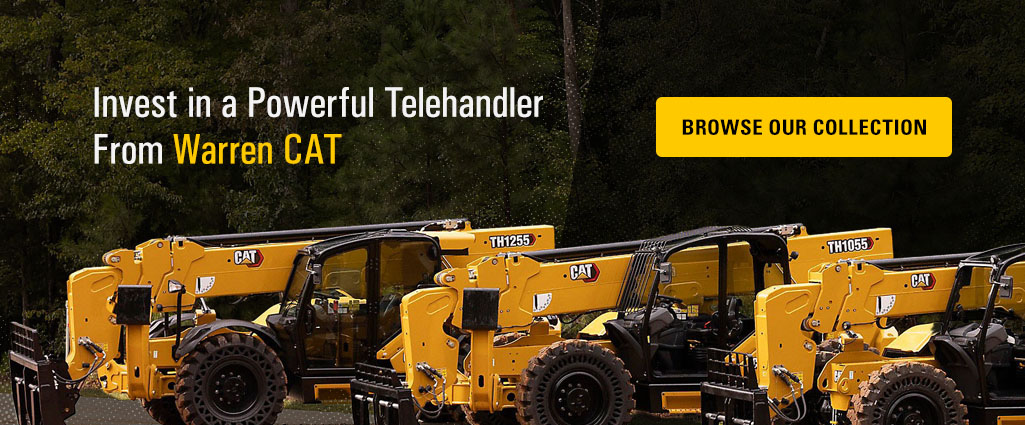
Invest in a Powerful Telehandler from Warren CAT

Adding a telehandler to your fleet can significantly boost productivity, efficiency and safety.

Whether you need equipment for construction, agricultural, industrial or landscaping purposes, Warren CAT offers strong telehandlers you can depend on. You can invest in new equipment for your fleet, save money with a used machine or rent a telehandler for temporary needs. Browse our collection of telehandlers or contact us to learn more about our available equipment.

Essential Attachments for Maximizing Skid Steer Productivity

Skid steer and compact track loader (CTL) attachments expand what you can do with your equipment. From handling materials to clearing heavy vegetation to digging trenches, the right attachments can help you complete various projects with a single piece of equipment.

How Skid Steer Attachments Increase Machine Capabilities

Skid steer and CTL attachments enable you to perform more tasks and complete work faster with one machine. Skid loader attachments help you perform the following duties:

  • Excavation
  • Digging
  • Material hauling
  • Brush clearing
  • Tree removal
  • Landscaping preparation
  • Ice and snow clearing
  • Debris removal
  • Mowing
  • Hedge trimming
  • Irrigation for water management and fence pole setting
  • Jobsite cleanup

Newer machines feature improved coupler systems. These systems make it easier to attach, detach and change attachments without additional equipment, helping your team switch between tasks faster.

Top Skid Steer Attachments

Top Skid Steer Attachments

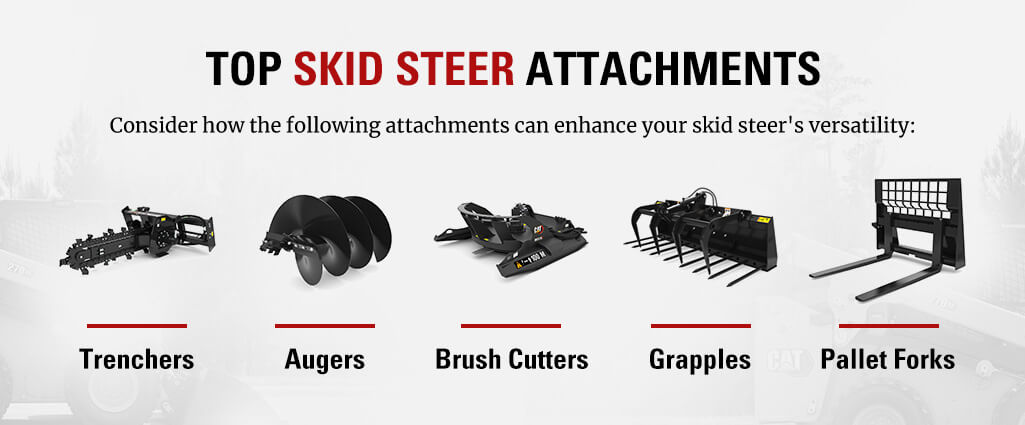
Consider how the following attachments can enhance your skid steer’s versatility:

1. Trenchers

A trencher is a long, slender chain or blade that digs narrow trenches. Trenchers are strong enough to cut through solid materials and heavy tree roots, making them ideal for the following industries:

  • Landscaping
  • Construction
  • Agriculture
  • Gas, water and electricity

Attach a trencher to your skid steer or CTL for the following types of tasks:

  • Landscaping: Dig trenches for an irrigation system or landscaping features such as plant beds.
  • Foundation preparation: Trenchers help dig trenches for building drainage or footings. They create space for level footings and drainage systems, increasing a building’s stability and preventing water damage.
  • Utility installation: You can use a trencher to dig utility installation channels. A trencher attachment helps prepare the ground for electrical conduits, drainage systems and pipelines.
  • Road work: Trenchers can cut through pavement and concrete. They’re perfect for road construction tasks such as reconstruction and drainage creation. Construction teams often use trenches to maintain road edges.

2. Augers

An auger is a spiral screw you can use to drill into the ground. As it rotates, it pulls soil out of the ground to create precise holes. Augers particularly benefit these industries:

  • Construction
  • Landscaping
  • Agriculture
  • Forestry

You can use an auger to perform tasks like the following:

  • Fence building: An auger creates precise holes for fence posts. It’s also a helpful attachment if you need to finish or enlarge existing holes.
  • Sign and pole placement: You can use an auger to dig holes for sign and pole placements.
  • Soil sampling: Some industries use augers to collect soil for analysis.
  • Pylon drilling: An auger’s precise cutting capabilities help you achieve the right pylon size and shape for foundations.
  • Hole boring: You can use an auger to enlarge or finish existing holes. Augers increase cutting precision, helping you achieve the right size and shape for foundational work.
  • Tree planting: Augers create well-formed holes to support root penetration. They can also help your team drill through tough soil and complete work faster.

3. Brush Cutters

Brush cutters feature heavy-duty spinning blades. These industries use brush cutters to cut thick vegetation:

  • Agriculture
  • Landscaping
  • Forestry
  • Environmental services

Attach brush cutters to your skid steer or CTL for the following job types:

  • Land clearing: A brush cutter helps clear land for landscaping or development preparation.
  • Vegetation management: Agricultural and landscaping companies use brush cutters to clear excess or unwanted vegetation. Brush cutters work well in large fields and around residential properties.
  • Trail or park maintenance: Use a brush cutter to clear vegetation in parks and along trails. Brush cutters help you maintain outdoor recreational areas for individuals to enjoy.

4. Grapples

A grapple attachment features hydraulic clamps or arms that open and close. You can use a grapple to grasp, lift and carry various materials. Grapples also make it easier to handle awkward or heavy loads. The following industries rely on this attachment for numerous purposes:

  • Landscaping
  • Waste management
  • Construction
  • Forestry

A CTL or skid steer grapple is ideal for many tasks:

  • Large vegetation handling: Use a grapple to help you move trees or large plants from a jobsite or client’s yard.
  • Demolition: A grapple’s clamps can grasp and pull materials apart to help dismantle structures.
  • Material handling: You can use a grapple to lift and move heavy materials such as rocks, logs and large debris.
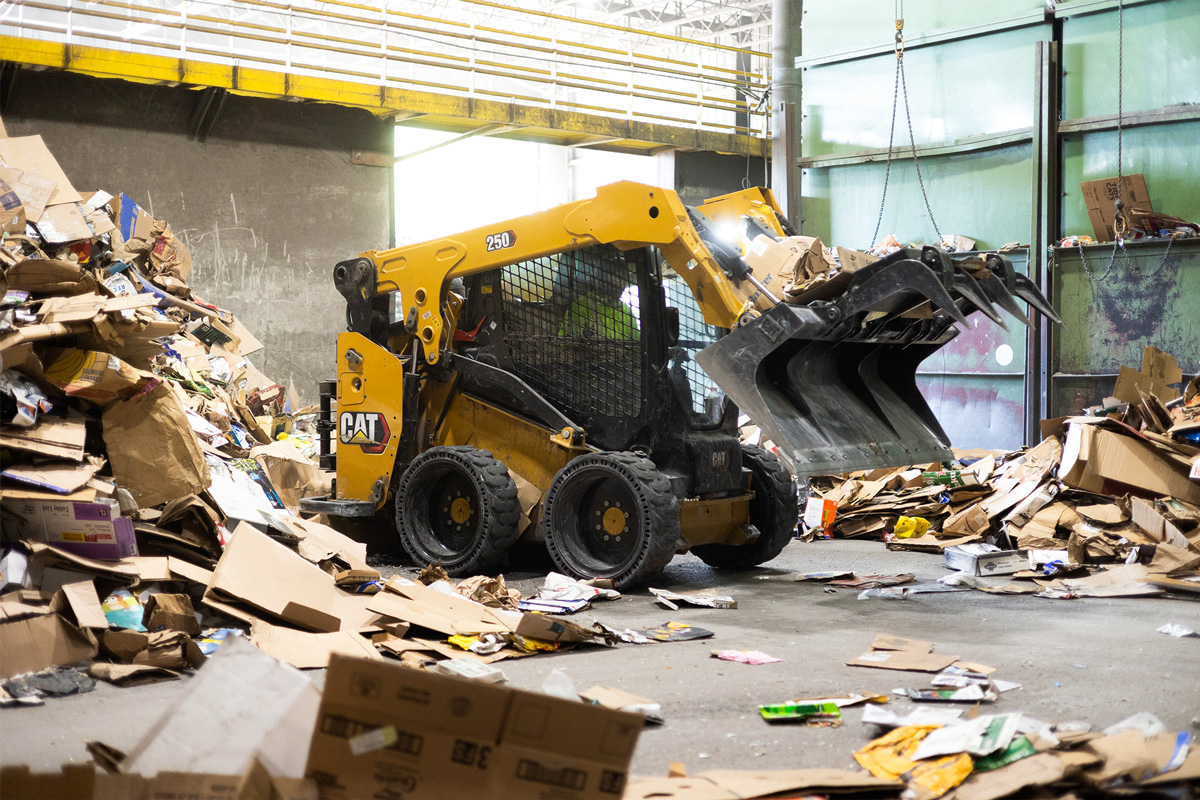
  • Waste material handling and sorting: Waste management companies use grapples to collect, sort and move waste materials. You can use a grapple to move and stack materials, creating more space in your landfill.

5. Pallet Forks

Pallet forks are two prongs that extend from a skid steer. They’re adjustable and attach to the front of a skid steer for material handling purposes. The following industries use pallet forks to lift and move materials:

  • Agriculture
  • Construction
  • Warehousing
  • Retail

A pallet fork attachment can help you complete these tasks:

  • Construction material transportation: Move materials around your construction site easily with pallet forks.
  • Pallet handling: Pallet forks help you lift and move pallets of supplies, tools, materials and products.
  • Material stacking and retrieval: You can also use pallet forks to stack and retrieve pallets.

What Are the Advantages of Skid Steer and CTL Attachments?

Advantages of Skid Steer and Compact Track Loader Attachments

Investing in CTL and skid steer attachments offers the following advantages:

1. Cost savings

Renting or purchasing skid steer attachments is more cost-effective than purchasing several machines. Attachments help you do more with the equipment you already have.

2. Greater efficiency

Skid loader and CTL attachments can help your team perform work faster. They enable workers to complete more tasks in less time, boosting your company’s efficiency.

3. Increased client base

Adding attachments to your equipment fleet is an excellent way to increase your customer or client base. With specialized attachments, you can expand your services and meet unique needs. For example, you might use grapples for clients who need to clear large vegetation from their property. Versatile equipment and attachments allow you to help more clients than you could with limited equipment.

4. More revenue

Since attachments allow you to complete work faster and increase your client base, they can help you significantly boost your revenue.

Should You Purchase or Rent Attachments for Skid Steers and CTLs?

You can rent or purchase equipment and attachments based on your needs, project schedule and budget. Consider your potential return on investment to choose the best option. For example, you can quickly cover an attachment’s cost and increase profits if you use the attachment regularly. However, renting may be more cost-efficient for occasional use. Renting also eliminates the need to pay service costs on equipment and attachments.

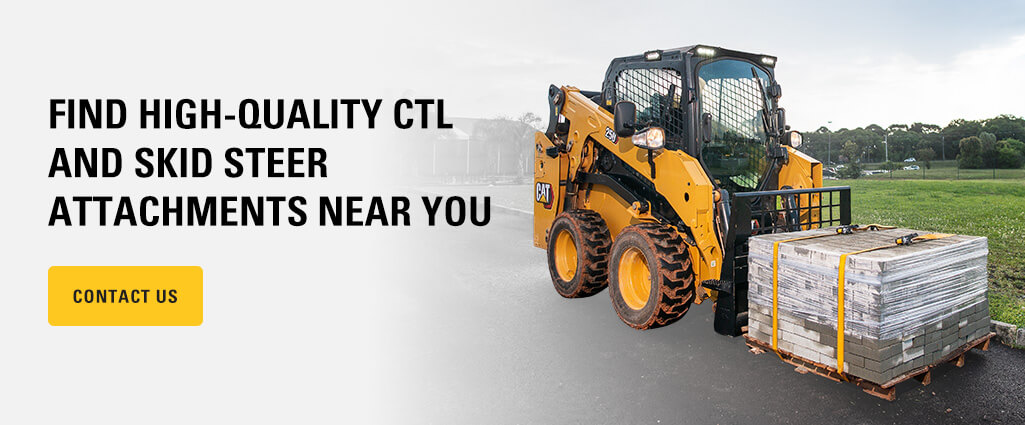
Find High-Quality CTL and Skid Steer Attachments Near You

Skid steer and CTL attachments can significantly expand your capabilities and help you boost revenue. From clearing vegetation to cutting through concrete, attachments let you complete more tasks and take on various projects with one skid steer.

Warren CAT carries several skid steer loader models and versatile attachments. We also offer rental equipment and attachments, helping you use the latest machinery without making a big investment. As an authorized Cat® equipment dealer, we offer highly durable and dependable machines and attachments to meet your needs.

Find a sales representative near you or contact us to learn more about our available equipment.

Find High Quality Skid Steer and Compact Track Loader Attachments Near You

Linked Sources

Operational Efficiency Hacks for Small Contractors: Optimizing Heavy Equipment Usage

Unlocking efficiency is a common goal across construction teams. Thankfully, there are plenty of strategies you can leverage to accomplish this goal. From simple improvements to long-term changes, you can tweak your existing processes or implement new methods to reach long-lasting success.

1. Improve Your Planning

Proper planning is key to construction site efficiency. The construction industry constantly faces new challenges, roadblocks and innovations. Project planning, crafting budgets and anticipating potential pain points can prepare you to overcome obstacles and empower you to control operations smoothly.

Consider budget allocation, timelines, resource availability, project scope, communication lines and potential risks. Outline your goals, proper actions for achieving them and ideas for overcoming pitfalls you may anticipate. These plans will guide your future decision-making and empower your team to bounce back quickly.

2. Offer Operator Training

Training opportunities give workers the knowledge and skills to operate machinery safely and efficiently. With proper education, they’ll understand the best practices for operating equipment.

Trained operators can better identify equipment issues, empowering you to administer fixes as soon as possible to minimize downtime and extend equipment life spans. Additionally, a properly trained team may feel more comfortable and confident operating machines, leading to fewer accidents and minimizing costly errors on the project site.

3. Enhance Project Scheduling

Meeting project timelines is crucial to remaining competitive and ensuring customer satisfaction. Although improving planning will likely impact project scheduling, there are some specific actions you can take to enhance this process.

For example, implementing software solutions can allow you to assign specific tasks to team members or groups. You can also use risk assessments to determine where to improve project activities while reducing errors and accidents. Proper resource allocation and automated material purchasing can help you prevent downtime and keep your team moving.

4. Implement Preventative Maintenance

Equipment maintenance is important for several reasons. Preventative maintenance ensures equipment integrity, allowing you to maximize your investment through prolonged life spans and fewer component issues. Proper maintenance also enhances worker safety.

Further, following specific maintenance tips can help you save money by allowing you to identify minor issues before they grow into significant and costly problems. To keep your equipment in optimal condition, you should establish a maintenance plan and work with a reputable equipment maintenance service provider in your area.

5. Document Your Progress

Insights hold power; documenting your progress can inform future decisions and help you find the best ways to reach operational efficiency. Your team should use data to determine every aspect of your projects, from resource allocation to material spending to machine rentals.

You can find comprehensive software solutions to gather data and use artificial intelligence and machine learning to identify trends for further time savings and enhanced productivity. This information can help you find operational inefficiencies you need to address and provide you insights to highlight when you’re moving in the right direction.

6. Boost Team Communication

Efficient communication can boost team operations by ensuring everyone is on the same page, aligning actions with business goals and reducing errors associated with miscommunication. Construction teams often work with many individuals, including architects, engineers, contractors, customers and project managers. It’s crucial to enhance communication with all relevant individuals to enhance efficiency and project accuracy.

7. Set Realistic Goals

Many construction teams have ambitious goals. While aiming high can motivate, failing to reach unrealistic goals can be discouraging. When setting business goals, consider your realistic scope and how you can actively work to achieve your objectives.

You can also use insights about your business and the industry to determine baselines for your objectives. Establish performance measurements to monitor team progress and highlight the impact of team efforts. After reaching a goal, recognize your team for their hard work to boost employee engagement.

8. Leverage New Technologies

Modern technologies offer many new features and controls for enhancing productivity, operator comfort, safety and efficiency. Choosing a reliable equipment provider gives you access to the latest innovations and cutting-edge technology for construction equipment. These technologies can highlight machine needs, offer enhanced customization and improve precision and accuracy.

9. Organize Your Inventory

Proper organization can improve efficiency by reducing the time it takes to find or access materials and equipment. Keep the job site and inventory organized by removing debris, keeping items off the floor or ground and utilizing a system for removing or replacing items. Organization can also reduce accidents like trips or falls and prevent machine damage.

10. Utilize Cat® Equipment

Optimizing construction efficiency also involves leveraging reliable, powerful and durable equipment. Leading manufacturers use proven technologies and strategies to deliver robust construction solutions.

Cat equipment offers the versatility and reliability construction teams need to enhance efficiency and save time and cost. Additionally, choosing a local Cat dealer ensures you have access to equipment services and comprehensive customer support if you encounter a problem.

11. Gather Team Feedback

Your workers have firsthand knowledge about your equipment, jobs and processes. Interacting with your operators and builders can help you identify problems you were unaware of and gain insight into worthwhile changes that can boost productivity.

Ask for feedback regarding equipment usage, training, safety measures and maintenance needs. After making any alterations, check in with your team to discover what works and what needs improvement.

12. Prioritize Worker Safety

Worker safety is crucial on construction sites. Along with protecting your team from accidents and injuries, prioritizing safety can enhance efficiency.

When teams have to navigate project site hazards, they may experience setbacks. For instance, slower task completion can lead to missed deadlines. Accidents or injuries can cause downtime if you lack the workforce necessary to complete certain tasks. Furthermore, when your operators work in safe conditions, they can dedicate more headspace to project tasks and feel confident in their capabilities and your level of care.

Boost Construction Efficiency With Warren CAT

At Warren CAT, we provide complete solutions to meet every customer’s needs. As your certified Cat dealer in Oklahoma and West Texas, we can help you find the right equipment for enhanced efficiency on the job site.

We offer a wide range of new machinery and used equipment for purchase, or you can choose reliable equipment rentals to satisfy unique project requirements. Browse our offerings today to discover what we have in stock. Have questions about our selection or how to improve construction productivity with Cat equipment? Call 866-292-7736 for expert assistance.

Maximizing Efficiency With Excavators: Essential Tips

Optimizing excavator use can maximize efficiency and boost profits. Excavators are highly versatile due to their many capabilities. By utilizing a wide variety of available attachments, you can use a single excavator for several different tasks, enabling you to do more with fewer machines. Newer, enhanced coupler systems help workers switch between tasks faster and more easily.

You can transform how your team approaches projects with proper job site staging, digging strategies and attachments. Operating an excavator with the right techniques enables equipment operators to complete tasks faster, helping you save time and money.

1. Take Advantage of Versatile Excavator Capabilities

Take advantage of an excavator’s full breadth of capability. If you only use your excavator for one type of task, you may be missing out on its additional uses and benefits. Consider the following types of work you can complete with this versatile machine:

  • Demolition: An excavator can be used to demolish commercial and residential structures. Attachments such as hydraulic thumbs, concrete crushers, shears and hydraulic hammers can help your team complete demolition work faster.
  • Debris removal: Use an excavator and a grab attachment to remove debris such as material scraps, rubble and asphalt from job sites.
  • Digging: An excavator’s standard bucket teeth facilitate easy digging and soil scooping. Attachments such as augers and grading buckets can also boost excavator digging efficiency. These attachments are especially beneficial when digging and preparing foundations, pipelines and fences.
  • Drilling: Equip your excavator with an auger attachment to drill holes in the ground. This attachment allows you to create precise holes and break through hard ground.
  • Earthmoving: An excavator can efficiently clear ground materials such as soil, rocks and vegetation for level foundation laying.
  • Trenching: Use a trencher attachment to dig precise trenches. Excavator trencher attachments are excellent for underground pipes, drainage systems and utilities.
  • Grading: A backfill blade enables your excavator to shape ditches, smooth slopes and reshape terrain.
  • Material handling: An excavator can move various building materials across your worksite. Bucket and thumb attachments help move materials such as steel, purlins and concrete beams.
  • Concrete and asphalt breaking: An excavator’s strength and available hammer attachments enable you to break through hard materials such as concrete, rocks and asphalt.
  • Landscaping: An excavator is an excellent option for landscaping tasks. Various attachments help workers dig, move rocks, remove trees and shape terrain.
  • Snow removal: Excavators can also help remove snow from job sites, roads and properties.

2. Rent or Invest in the Right Attachments

When you have the right attachments, you can switch between tasks quickly and easily. Keep attachments on hand for specific jobs or schedule attachment rentals to ensure you have what you need when you need it.

Using attachments of the right size is also essential. Before choosing an attachment, consider material density and maximum reach to ensure it can handle the job. Jobs with heavier materials may require a larger bucket, while other tasks may require a longer reach. Different boom, bucket and arm configurations can optimize excavator capabilities.

It is also important to match attachments to your excavator’s hydraulic system and power output. Pairing the right attachment with your excavator helps optimize performance, reduce machine wear and decrease fuel costs.

3. Stage Your Job Site

Mapping your job site and setting it up properly increases worker safety and prevents project delays. You can stage your job site with the following tips:

  • Choose the best equipment and spoil pile locations: According to OSHA, you must keep excavated materials and equipment at least 2 feet away from excavation edges. Determine the safest areas for your equipment and spoil piles so your workers can excavate areas quickly and with minimal challenges.
  • Maintain orientation with offset marks: Plan your digging tasks to avoid blocking or boxing your equipment in. String or paint lines help operators keep an excavator in alignment, ensuring it follows the correct path according to your reference guides.
  • Predict underground and overhead obstacles: It is essential to consider underground and overhead obstacles before operating an excavator. Predetermine obstacles to prevent operational delays and potential accidents .

4. Maintain Your Job Site

Using an excavator on an unkempt project site can create unnecessary efficiency issues. Keep your job site clean and organized to prevent roadblocks from damaging your excavator or delaying work. Remove debris when necessary and move excavated materials when they start to accumulate. This helps your workers complete tasks on schedule.

5. Use Slow, Steady Operation on Slopes

Slow, steady operation and safe positioning are essential when working on slopes, so you should take the proper precautions according to your user’s manual. Positioning your equipment so its tracks line up vertically with the hill helps prevent tip-overs, and working slowly prevents the excavator’s swing motor from overworking. Use smaller bucket loads to reduce equipment wear, prevent breakdowns and keep your operations on schedule.

6. Optimize Your Digging Strategy

Gradual digging from the top layer is more efficient than digging from the bottom up. Start digging a top-layer marking path first and gradually dig the layers beneath it. This strategy helps you remove soil faster to save fuel and time.

7. Adjust Your Excavator’s Blade Angle

Your excavator’s blade angle can also affect digging efficiency. Adjust your blade to accommodate each task’s needs based on soil conditions and terrain.

8. Maintain Your Excavator

The following regular maintenance tasks can help your excavator operate as efficiently as possible:

  • Fluid checks: Proper fluid levels help maintain an excavator’s longevity and efficiency. Regularly check your excavator’s engine oil, hydraulic system oil and coolant.
  • Filter and oil changes: Change oil according to your equipment’s user manual or when it appears low. You must also inspect and change the engine and air filters when necessary to prevent debris from entering the machine’s engine.
  • Cooling system maintenance: Check your excavator’s coolant hoses for airflow levels and leaks. This helps your system remain cool to prevent damage from excessive heat.
  • Track tension inspection: An excavator requires proper track tension to operate efficiently. Check the tracks to prevent them from becoming too tight or too loose.
  • Water separator drainage: Daily water separator drainage removes trapped water, preventing steam from corroding your excavator.

Rent or Purchase Quality Cat® Excavators From Warren CAT

Operating a quality, dependable excavator can help you boost efficiency and productivity on your worksites. Warren CAT carries Cat excavators for durability, reliability and efficiency. Whether you want to rent an excavator or purchase a new machine, Warren CAT can help you find what you need. We also carry a wide array of excavator attachments to help you get the most use out of your equipment.

Find a sales representative near you or contact us to learn more about our high-quality equipment.

How Heavy Machinery Can Improve Efficiency on Farms and Ranches

With such a vital role in our civilization, farming operations must consistently manage tasks like planting seeds, harvesting crops and tending to livestock to keep our world fed. Manually performing these tasks can be physically and mentally taxing and would not keep up with demand.

That’s where machinery comes in to improve efficiency and productivity. Machines like skid steers, hydraulic excavators and wheel loaders can support agricultural operations by facilitating various tasks, such as digging holes for crops and fence posts, grading land and transporting materials.

Whether ranches, feedlots or dairy farms, many agricultural operations can benefit from investing in a reliable, durable equipment fleet.

How Does Equipment Impact Efficiency in Agricultural Settings?

Construction equipment allows for improved flexibility, resource management and profitability, allowing farmers and other agricultural workers to automate tasks and improve efficiency. Using equipment like dozers, hydraulic excavators and backhoe loaders to support your farming operations can offer several benefits.

1. Time and Labor Savings

Using construction equipment for farming applications decreases the time and physical labor needed to complete manual tasks, such as:

  • Digging ditches
  • Grading roads and land
  • Dispersing straw over soil
  • Transporting work material
  • Watering crops
  • Moving loose materials like soil and manure
  • Fence construction and maintenance

Heavy equipment helps farmers use land more efficiently and grow a wider variety of crops. It can reduce soil erosion, improve land recovery, streamline irrigation systems and make land that otherwise might not have been used more arable. For example, you can equip hydraulic excavators with different attachments to level soil, remove weeds and fill ditches.

Between saving time, minimizing labor and optimizing land use, construction equipment makes agricultural operations incredibly efficient.

2. Versatility

Construction equipment can tackle multiple activities, including:

  • Fertilizing
  • Plowing
  • Planting
  • Harvesting
  • Irrigation
  • Trenching
  • Post-hole digging

Farmers can perform various duties using one machine, which reduces the need for human labor. For example, a wheel loader can handle many tasks, such as pushing loose materials, lifting heavy items, excavating land and grading fields. With a machine operator taking care of those jobs, the rest of the team can focus their attention elsewhere to help the business grow.

Agricultural workers can benefit from even a limited amount of equipment to complete all their work, especially when they invest in universal attachments that they can swap between, depending on the job. Thanks to this versatility, there’s no need for agricultural operations to use specialized equipment for each process — a few versatile machines will get the job done.

3. Economic Savings

Equipment can be a significant upfront investment. However, the productivity it delivers can enhance profitability over time, allowing for a notable return on investment (ROI). Small- and large-scale farming operations can benefit financially from mechanizing different tasks.

Heavy equipment minimizes the need for human workers, thus lowering labor costs. It can also complete land preparation tasks like digging and leveling more efficiently than manual tools. In turn, farmers can plant crops faster and more accurately and cultivate higher numbers, boosting business profits. All things considered, construction equipment can give farms a competitive edge while boosting savings and maximizing ROI.

4. Improved Safety and Fewer Work Injuries

Between tending to crops, caring for livestock and maintaining land, farms bustle with activity each day. Sole reliance on human labor can quickly lead to burnout, fatigue and productivity loss. Research shows that farmers experience higher overall burnout and exhaustion compared to non-farmers.

Farming involves many repetitive tasks, such as:

  • Bending down
  • Grabbing objects
  • Grasping tools
  • Heavy lifting

With these labor-intensive activities, it’s no surprise that repetitive strain injuries (RSIs) and musculoskeletal disorders (MSDs) are prevalent in agricultural settings. Farmers commonly experience RSI-caused aches and pain in the hands, arms and shoulders. Seventy-five percent of dairy workers report these types of injuries each year.

Construction equipment reduces the need for farmers to perform labor-intensive processes, like manually digging holes and lifting heavy materials, that often contribute to RSIs. Fewer worker injuries translate to safer and more productive farming operations.

4 Types of Efficiency-Boosting Equipment for Farms

Consider filling out your fleet with these four types of equipment to make your workflow more efficient.

4 Types of Efficiency-Boosting Equipment for Farms

1. Hydraulic Excavators

A hydraulic excavator consists of a cab, boom, bucket and rotating platform. As the name implies, it’s a staple for digging and excavation projects. When equipped with the right attachments, hydraulic excavators have an impressive repertoire of capabilities. Farmers can use these machines to:

  • Dig foundations for barns and sheds.
  • Clear land for livestock grazing and crops.
  • Mulch grass and leaves.
  • Dig trenches or ditches for irrigation purposes.
  • Remove underbrush and weeds.
  • Build fencing around the farm.

Hydraulic excavators are also great for lifting materials, relieving farm and ranch hands of this burden. They can carry hay bales, heavy bags of fertilizer, livestock feed and other items. Let the hydraulic excavator do the heavy lifting so you don’t have to.

2. Telehandlers

Telehandlers have a lifting boom and boast a compact design with a tight turning radius. This configuration lets operators navigate tight spaces and work around buildings with ease. They can move through rows of livestock to disperse feed, distribute bedding and clean out pens.

A telehandler makes moving hay bales in fields quicker and more seamless. Its boom has a longer reach than conventional forklifts, reducing loading time and traveling distance.

3. Backhoe Loaders

Backhoe loaders are essentially two machines in one — an excavator and a loader — making them versatile agricultural equipment. You can also retrofit the loader with attachments like bale spears and forks to handle diverse materials.

Some standard farming uses for backhoe loaders include:

  • Loading and unloading crops.
  • Carrying and transporting livestock feed.
  • Handling and distributing fertilizer.
  • Moving soil, plants and mulch.
  • Digging and trenching for irrigation work.

4. Skid Steer and Compact Track Loaders

A wheel or track skid steer loader is a compact, multipurpose machine that is useful for digging, loading, material handling and other applications. It’s lightweight and compact, making it easy to maneuver around the property and assist in many different maintenance tasks. You can equip it with a wide array of useful attachments, including:

  • A bucket attachment for scooping and transporting materials.
  • A trencher for digging irrigation ditches.
  • A flail mower attachment for trimming overgrown grass, brush and vegetation.
  • An auger attachment for digging holes.
  • A broom for sweeping up brush and other debris.

The skid steer’s impeccable versatility makes it worth adding to any agricultural equipment fleet.

Find Cat® Equipment for Sale at Warren CAT

Find Cat® Equipment for Sale at Warren CAT

Warren CAT has skid steers, telehandlers, loaders and other Cat machines for rent and purchase. Our broad inventory of equipment makes it easy to find solutions for your agricultural and landscaping tasks. We also have a variety of attachments available, including buckets, forks, brooms, mowers and augers, so you can swap out tools as needed for different jobs.

Browse our wide selection of equipment and request a quote today. If you have questions about finding the right machinery, fill out our contact form or call 866-292-7736!