
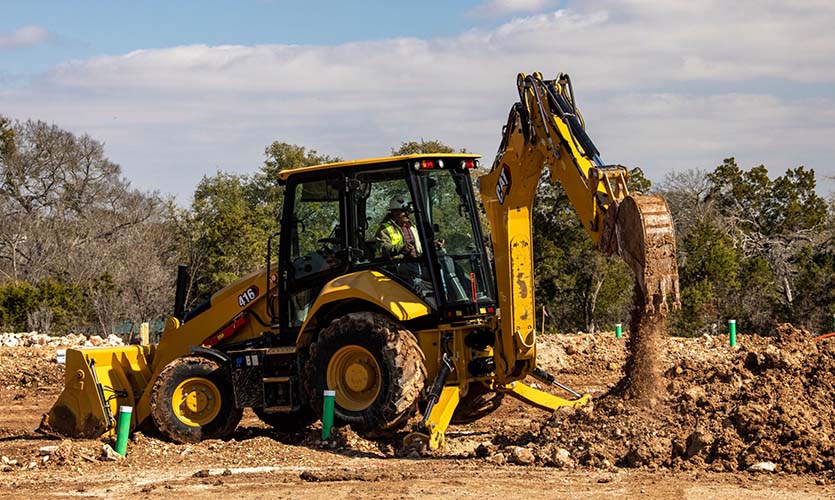
Backhoes are among the industry’s top choices for contractors and construction companies looking to maximize job site productivity while keeping equipment costs in check. From excavating trenches and digging foundations to loading and moving materials, these machines can handle tasks that would otherwise require multiple pieces of construction equipment. Knowing the different models and attachment options is crucial for choosing the best setup for your operational needs.
Types of Backhoes
Backhoes come in various sizes, configurations and power capacities. Industry leaders like Caterpillar offer a complete lineup of backhoe loader models to meet diverse requirements.
Core Components and Operation
A backhoe’s dual-function design features a front loader with a rear excavator boom on a mobile tractor chassis. This complete package allows operators to transition quickly between loading and digging operations without repositioning the machine. Performance factors like bucket breakout force, dig depth and lift capacity vary significantly between models.
Most Cat® backhoes have outriggers that distribute ground pressure and provide anchoring when the arms are fully extended. Different models offer varying stabilizer functionality, from standard designs for dirt and soil to specialized street pads that minimize surface damage on finished pavement.
Today’s backhoes include hydraulics with load-sensing capabilities that adjust flow and pressure based on demand. This technology helps optimize power distribution, reduce heat generation and improve fuel efficiency during operation. High-performance Cat models include closed-center hydraulic systems with variable displacement pumps that provide consistent power regardless of engine speed.
Newer Cat models feature advanced technology that boosts efficiency, reduces operating costs and increases workplace safety. Grade control systems help operators achieve precise depths and slopes with minimal rework. Telematics monitors operating parameters, tracks productivity and schedules preventative maintenance based on the machine’s actual conditions.
Center-Pivot vs. Side-Shift Designs
Backhoes are available in two primary configurations. Center-pivot models — the most common type — feature an excavator boom mounted directly behind the cab. These machines are ideal for general applications where stability, maximum digging force and lifting capacity matter most.
Side-shift models allow the entire excavator assembly to move horizontally along a track. This functionality shines when working alongside buildings, trenching parallel to walls or digging in constricted areas.
The choice between these designs often comes down to the types of projects you typically handle. Center-pivot machines generally offer better lifting capacity and stability for deeper excavation, while side-shift models provide flexibility for working in confined spaces or along existing structures. Many construction companies find that center-pivot machines meet nearly all of their needs.
Size and Power Options
The Cat backhoe lineup ranges from compact utility models to heavy-duty workhorses. The 415 industrial loader is a perfect entry-level machine because it has a lighter footprint ideal for smaller-scale residential work and landscaping. Moving up, the 416 and 420 models offer high maneuverability with plenty of power for most types of utility work and general construction.
The 420 XE introduces enhanced technological features, including electro-hydraulic controls and advanced operator interfaces. For heavier applications, the 430 and 440 models provide increased digging depth and lifting capacity suited for deep utility installation and large-scale construction.
At the top end, the 450 delivers excavator-grade performance with high-capacity loading, making it popular for businesses that need maximum productivity from a single machine. Its larger frame supports increased hydraulic flow rates to power high-productivity attachments while providing enough stability to handle heavier loads.
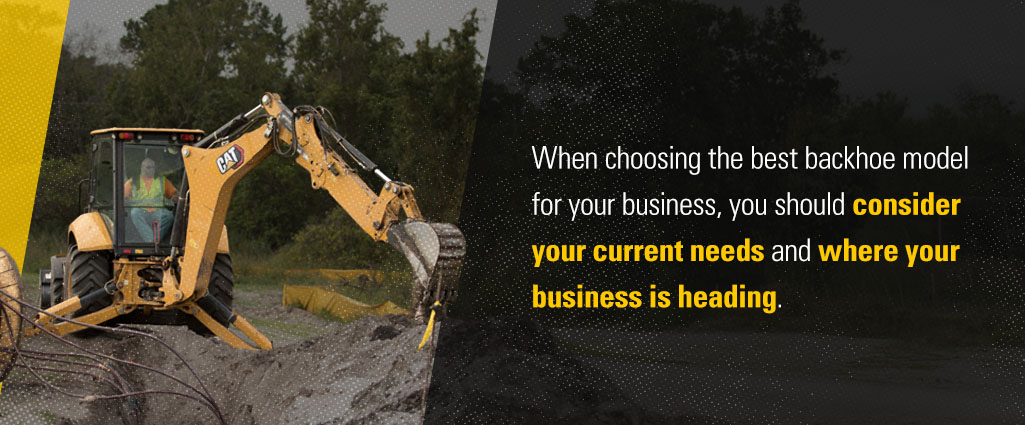
When choosing the best backhoe model for your business, you should consider your current needs and where your business is heading. Many contractors find that investing in a slightly larger model gives them room to grow and expand their business. The difference in cost is often offset by longer service life and higher resale value.
Cat Backhoe Uses in Construction and Other Industries
One of the most significant advantages of a backhoe loader is its exceptional versatility during projects with varied tasks. The ability to dig, load and place materials from a single machine makes them highly beneficial for various applications across a broad industry range. You can use a backhoe for:
- Utility installation: Water, sewer, gas and electrical contractors use backhoes to dig trenches, lower pipes into position and backfill once the connections are made.
- Residential construction: Builders use backhoes for various projects, from digging foundations and basement excavations to final grading and landscape preparation.
- Road maintenance: Highway departments depend on backhoes to repair drainage systems, replace culverts, clear ditches and patch damaged road sections.
- Agricultural work: Farmers rely on backhoe loaders for irrigation projects, fence installation, feed handling and countless other daily tasks.
- Demolition projects: Contractors outfit backhoes with specialized tool attachments that can break concrete, separate rebar and load debris into trucks.
- Snow removal: Winter maintenance crews value a backhoe’s ability to push snow with the loader and clear out areas with the rear bucket.
- Mining and quarrying: Mining operations use backhoes for cleanup work, drainage maintenance, material handling and stockpiling.
- Landscaping: Professional landscapers appreciate the precision digging capabilities for tree planting, boulder placement and hardscape installation.
Your job site layout often has the greatest influence on which backhoe model you choose. Residential contractors working in neighborhoods with restricted access points and tight quarters will benefit from compact models with excellent visibility. Highway contractors who frequently relocate between job sites might prioritize road speed and transportation, while utility contractors digging deeper trenches would focus on dig depth, loading capacity and stabilizer design.
Common Backhoe Attachments for Added Versatility
While impressive in standard configurations, backhoes shine when paired with Cat tool attachments that boost efficiency and productivity for specialized tasks:
- Hydraulic hammers: Break through concrete, asphalt, and rock during demolition.
- Augers: Drill precise holes for fence posts, sign installation, tree planting or pier foundations.
- Thumbs: Grapple and manipulate irregular objects like logs, concrete chunks and pipe.
- Compactors: Tamp down backfill in trenches or compact base materials for pavement.
- Brooms and brushes: Clean job sites, sweep streets or clear snow from walkways.
- Forks: Transform the loader end into a forklift that can move palletized materials around construction sites.
- Buckets: Tackle specialized tasks with trenching buckets, cleanup buckets, rock buckets or high-capacity buckets designed for specific materials.
- Snow pushers: Clear large areas quickly with wide-blade attachments designed for snow removal.
These tools are even more valuable with quick coupler systems, which let operators switch attachments in minutes without leaving the cab.
When evaluating an attachment’s compatibility with your backhoe, you should pay close attention to the hydraulic flow requirements. More powerful attachments like hammers and augers may require higher flow rates than a backhoe can provide in a standard configuration. Many dealers, like Warren CAT, offer high-flow hydraulic packages as factory options or aftermarket upgrades to accommodate these needs.
Boost Your Productivity With Backhoes for Sale and Rent From Warren CAT
For decades, Warren CAT has supplied businesses across Oklahoma, West Texas and the Texas Panhandle with the highest-quality construction equipment solutions. Whether you’re purchasing new equipment, exploring used options or covering your short-term needs with a rental, our experts can help you choose the most practical and effective option.
Visit a nearby location, call 866-292-7736 or contact us online today for a quote or to request additional information.
Links:
https://www.warrencat.com/technology/
https://www.warrencat.com/new-equipment/machines/backhoe-loaders/
https://www.warrencat.com/new-equipment/machines/backhoe-loaders/415-il-industrial-loader/
https://www.warrencat.com/new-equipment/machines/backhoe-loaders/416-backhoe-loader/
https://www.warrencat.com/new-equipment/machines/backhoe-loaders/420-backhoe-loader/
https://www.warrencat.com/new-equipment/machines/backhoe-loaders/420-xe-backhoe-loader/
https://www.warrencat.com/new-equipment/machines/backhoe-loaders/430-backhoe-loader/
https://www.warrencat.com/new-equipment/machines/backhoe-loaders/440-backhoe-loader-2/
https://www.warrencat.com/new-equipment/machines/backhoe-loaders/450-backhoe-loader-2/
https://www.warrencat.com/new/browse-by-industry/
https://www.warrencat.com/new/attachments/
https://www.warrencat.com/new/
https://www.warrencat.com/used/
https://www.warrencat.com/rental/
https://www.warrencat.com/locations/
https://www.warrencat.com/contact-us/