Tight production timelines and the cost of equipment downtime put pressure on contractors and managers to keep fleets running. However, no matter how well-maintained the equipment is, wear components inevitably degrade with time and usage. When they do, it impacts productivity, deliverables and repair costs.
Recognizing construction equipment part degradation and acting promptly can keep your business efficient and responsive.
Symptoms of Worn Construction Equipment Parts
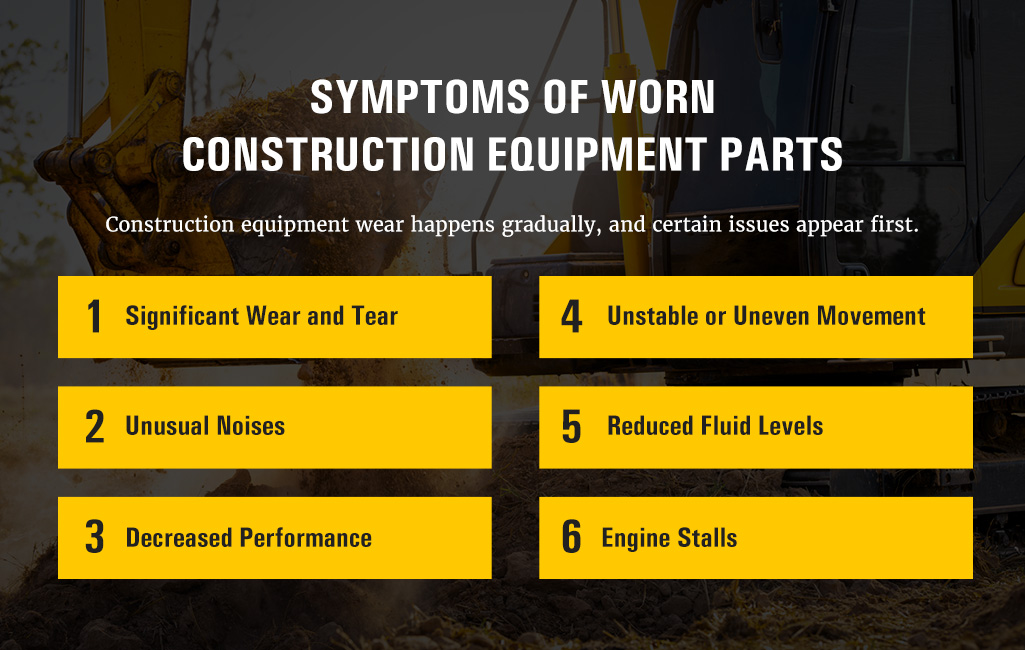
Construction equipment wear happens gradually, and certain issues appear first.
1. Significant Wear and Tear
External impact on construction equipment often tells the story long before internal failure occurs. Some signs that can help you plan maintenance include the following:
- Cracks in metal frames or attachments often develop at high-stress points like pivot joints, weld seams or mounting brackets. These usually indicate fatigue from repeated load cycles.
- Rust and surface corrosion in hydraulic fittings, pins or undercarriage frames can compromise integrity.
- Loose or misaligned components like track shoes, sprockets or ground-engaging tools (GETs) accelerate wear on touching parts. Misalignment often stems from prior impact or bushing and bearing wear.
- Uneven tire wear can point to misaligned axles, suspension fatigue or inconsistent load distribution.
- Worn tires reduce traction and load-bearing capability. Cuts and exposed cords often appear after repeated use on sharp or uneven surfaces.
- Fluid leaks from hydraulic lines, gearboxes or undercarriage signal failing seals or fittings.
2. Unusual Noises
Odd noises during operation can indicate equipment issues. Pay attention to changes in the frequency or location of the following noises:
- Grinding usually points to metal-on-metal contact, often caused by worn bearings and gears or improperly lubricated shafts.
- Squealing can indicate high-friction issues from slipping belts, brake components or underserviced hydraulics.
- Rattling noises stem from loose pins and bolts or internal linkage components that have lost proper torque or bushing support.
- Knocking or tapping tends to come from the engine or drivetrain. This may indicate internal clearance issues or imbalance.
- Hissing sounds may point to escaping fluid or air pressure, which can lead to performance drops or safety hazards.
3. Decreased Performance
Wear often shows through efficiency loss. Slower operation in lifting, digging or maneuvering tasks may signal hydraulic issues. Reduced power output under load, compared to the equipment’s previous performance levels, may be a sign of degradation in the engine, turbocharger or fuel system components. Sluggish movement results from increased friction in drive components or drag caused by misaligned or sticking undercarriage parts.
4. Unstable or Uneven Movement
Movement issues often start with a slight wobble or a gradual lean and progress with time. Many of these problems originate from the undercarriage or suspension system. Operators may notice:
- Jerky movement during operation, which may result from sticking hydraulic cylinders or uneven track tension.
- Pulling or drifting to one side in tracked equipment can stem from sprocket wear or undercarriage misalignment.
- Rocking or bouncing when lifting or lowering attachments may reflect worn boom pins or shocks or cracked mounts.
5. Reduced Fluid Levels
A drop in fluid levels between service intervals typically points to more than evaporation.
- Repeatedly topping up hydraulic fluid likely indicates internal leakage.
- Declining engine oil with no external leak visible could suggest internal consumption.
- Coolant loss may be a result of small leaks at hose clamps, radiator seams or expansion tanks.
6. Engine Stalls
Stalls can be signs of deeper issues if they happen more than once. Causes for concern include the following:
- Sudden engine shutdowns under load indicate fuel delivery inconsistencies or electrical interruptions.
- Gradual loss of power before stalling stems from overheating, failing sensors or restricted fuel lines.
How to Inspect and Diagnose Worn Construction Equipment Parts
Thoroughly checking construction equipment parts for wear helps teams minimize unplanned downtime and extend the life of crucial components.
1. Visual Inspection
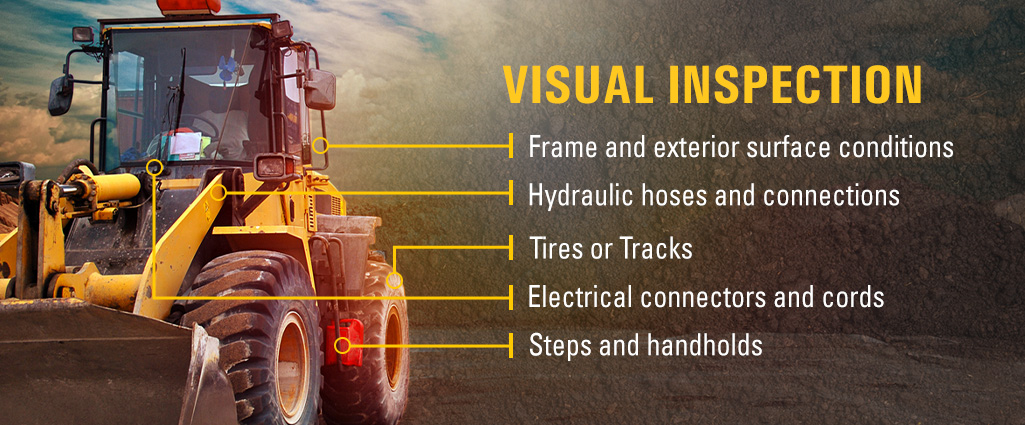
Perform visual checks before running the engine. Conduct a detailed walk-through on the following parts:
- Frame and exterior surface conditions: Assess for cracks, dents and corrosion at welds and pivot points. This damage often indicates fatigue from repeated loads.
- Hydraulic hoses and connections: Ensure they’re free of bulges, abrasions, residue and leaks.
- Tires: Check inflation using the manufacturer’s guidance. Assess tread depth in multiple spots to detect uneven wear. Inspect for cuts, bubbles, embedded debris and sidewall degradation.
- Tracks: Look for loose or missing links, uneven patches or tension across the length and wear on rollers or sprockets. Loose tracks can accelerate undercarriage wear and degrade traction.
- Electrical connectors and cords: Check for signs of rust, frayed insulation and loose connections.
- Steps and handholds: Confirm that all access points are secure and free of debris and corrosion.
2. Mechanical Inspection
After the initial visual inspection, check internal and moving parts to pinpoint wear. Assess the following parts:
- Gears: Examine for chipped or pitted gear teeth, metallic debris in gear oil and engagement backlash. These symptoms indicate eroding internal tolerances and compromised reliability.
- Belts, bearings and shafts: Check for excessive play, binding and lubrication issues. Worn components may feel loose or sound irregular during rotation.
- Undercarriage components: Check rollers, idlers and sprockets for wear and leaks. Excessive clearance in final drives can suggest deeper gear or bearing wear.
- Fluid level and quality: Look for milky or darkened hydraulic oil, coolant discoloration and gritty engine oil, which indicate contamination or component wear.
- Engine mounts and supports: These parts should be rigid. Cracked or flexible mounts lead to vibration and misalignment.
- Brake system components: Check that pads and drums operate smoothly and without noise or excessive play.
- Ground-engaging tools: Inspect bucket teeth, cutting edges, adapters and blades. Rounded, dull, cracked or missing tools impact productivity and machine efficiency. Dull GETs require more force to penetrate material, increasing strain on the machine and fuel use.
3. Operational Checks
After the visual and mechanical checks, confirm behavior under operating conditions. Compare current behavior with past operation logs and record the following deviations:
- Unusual noises during operation: Sounds that operators or technicians didn’t hear before indicate component stress.
- Odd vibrations: Shaking during travel or lift actions indicates balance issues, worn bearings or misaligned drives.
- Abnormal functionality: Be mindful of responsiveness loss when lifting, turning or braking.
Construction Equipment Replacement Part Options
Choosing the right replacement parts for construction equipment involves more than finding the cheapest or fastest option. Your decision affects equipment performance, uptime, long-term costs of ownership and maintenance needs.
- New or OEM parts fit and function like the components they replace. They deliver better wear resistance and predictable performance under stress. While their initial cost may be higher, their value lies in minimized downtime, longer intervals between replacements and reduced risk of secondary impact.
- Used parts sourced from retired or dismantled machines are a cost-effective solution. Quality used parts with comprehensive maintenance histories can work just as well as many new parts.
- Remanufactured parts are disassembled, cleaned, inspected and rebuilt using new or reconditioned parts to meet OEM specifications. The result is a component that performs like new, often at a lower price point and with some form of warranty.
- Exchange parts are rebuilt components available off-the-shelf. They cover various major components across fleets, helping reduce wait times for custom repairs.
Factors to Consider When Choosing Construction Equipment Spare Parts
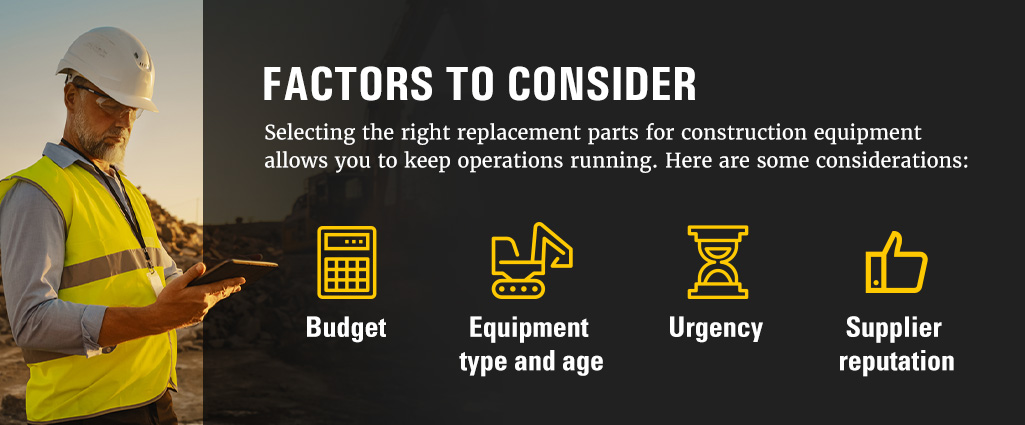
Selecting the right replacement parts for construction equipment allows you to keep operations running safely and efficiently. Here are some considerations:
- Budget: While new components deliver the best long-term value, used parts are a less expensive initial investment.
- Equipment type and age: Equipment operating in high-impact environments or on tight production schedules benefits most from OEM or remanufactured solutions because they support performance and durability.
- Urgency: If you need to overcome downtime fast, new inventory is the fastest path back to productivity.
- Supplier reputation: Working with a reputable dealer that offers certified rebuilds and warranties ensures quality and accountability.
Inspection and Maintenance Tips for Construction Equipment Parts
Thorough inspections help teams notice and address common construction equipment part problems. When paired with preventative care and expert support, inspections improve equipment life cycle.
1. Perform Regular Inspections
Routine inspections help detect wear early. Technicians or operators should perform daily walkarounds, looking for signs of wear. Teams must verify tire pressure, track tension and fluid levels regularly.
Operators should document each inspection to create a useful log that can help identify trends or recurring issues. This approach allows for smarter maintenance planning.
2. Schedule Preventative Maintenance
A thorough preventative maintenance schedule can extend part life and maintain consistent performance. Service plans typically include:
- Fluid and oil analysis and changes
- Electrical system verification and servicing
- Tire and track checks and corrections
- Safety equipment inspection
3. Use Technology to Track and Manage Your Equipment
Fleet management helps teams monitor part health, plan service intervals and reduce unplanned maintenance. Cat® technology platforms make fleet management easier with real-time data and predictive insight:
- Condition monitoring provides insights from equipment telematics to identify problems before they cause failure.
- S·O·S℠ fluid analysis tracks contamination, wear particles and fluid integrity to inform part replacement timing.
- Customer Value Agreements bundle parts, service and support into customized plans that help stabilize costs and keep maintenance on schedule.
- Cat Service Information System offers access to tool guides that help with troubleshooting and service management.
- VisionLink™ enables remote visibility of machine performance, location, use, idle time and fault codes.
- Remote Asset Monitoring helps ensure machines are used efficiently and alerts operators and managers to faults from a distance.
4. Address Minor Issues Promptly
Prompt repairs or part replacements help teams avoid equipment failure. Keeping spare parts on hand can facilitate quick turnarounds. When replacing or repairing, use quality parts — the upfront costs may be higher, but they provide longer life expectancy, warranty support and proven compatibility.
5. Train Operators
When trained properly, operators can identify early signs of wear and report them before failure occurs. Training also ensures equipment runs according to design limits. Scheduled operator refreshers and feedback loops between operators and maintenance teams help reinforce consistent, safe usage practices.
When to Replace Construction Equipment
Determining the right time to replace construction equipment requires balancing operational efficiency, safety and cost control. Your instinct may be to extend asset life as far as possible, but holding on to machines too long introduces risk.
1. Repair Costs Exceed Replacement
A common rule operators follow is the 50/50 rule. If the cost of a major repair is more than 50% of the equipment’s current value, replacement often makes more financial sense. However, this isn’t a stand-alone metric.
Life cycle cost analysis provides a fuller picture. It factors in the purchase price, as well as operating costs, fuel efficiency and resale value. Equipment that’s increasingly expensive to maintain or run may cost more than newer models.
Replacement decisions should also account for:
- Hours of operation versus expected lifespan
- Market depreciation
- Incentives for trading in or upgrading
When repair costs approach or exceed the equipment’s remaining value, replacement may deliver a better return on investment.
Business owners can also opt for certified rebuild programs. These plans involve restoring the entire machine or major systems to like-new condition. They allow you to extend the asset’s life with a known cost structure, updated technology and a renewed warranty.
2. Frequent Breakdowns
Recurring mechanical issues that interrupt operations or require emergency service signal that equipment may be at the end of its useful life. When breakdowns affect timelines or require switching to backup rental equipment, it may be time to make replacements.
3. Limited Parts Availability
As equipment ages, sourcing compatible parts becomes difficult and expensive. Lead time can stretch out projects or lead to improvised repairs that compromise safety and performance. If critical components are no longer readily available, minor, repeatable fixes can become bottlenecks. At this stage, replacing the equipment with a newer model that has strong OEM or aftermarket parts support is likely the best choice.
4. Safety Concerns
Damaged equipment can cause accidents or injuries. If regular inspections flag critical failures or safety violations, prioritize replacement. Compliance with Occupational Safety and Health Administration (OSHA) and local safety standards also becomes harder with aging equipment. Newer machines offer improved ergonomics, visibility, automatic alerts and fail-safes that reduce operator risk and liability.
Partner With Warren CAT for Construction Equipment Parts

When your equipment requires parts, you need a trusted partner. Warren CAT supplies Cat parts for compact equipment and full-scale earthmoving fleets. As an authorized dealer serving West Texas and Oklahoma, we offer direct access to components that meet the highest standards for durability, performance and safety.
We support your business with new and used equipment for sale, rental equipment, custom maintenance plans and expert service. Our technicians receive state-of-the-art training, so they understand your equipment inside and out to perform professional repairs and rebuilds.
Contact us today for construction equipment replacement parts.
Linked Sources:
- https://www.warrencat.com/parts/
- https://www.warrencat.com/parts/resources/cat-exchange-components/
- https://www.warrencat.com/support/condition-monitoring/
- https://www.warrencat.com/service/service-programs/sos-fluid-analysis/
- https://www.warrencat.com/service/service-programs/customer-value-agreements/
- https://www.warrencat.com/parts/resources/cat-sis/
- https://www.warrencat.com/technology/visionlink/
- https://www.warrencat.com/support/warranty-information/
- https://www.warrencat.com/service/service-programs/rebuild-programs/
- https://www.warrencat.com/about-us/
- https://www.warrencat.com/new/
- https://www.warrencat.com/used/
- https://www.warrencat.com/rental/
- https://www.warrencat.com/service/service-programs/planned-maintenance-kits/
- https://www.warrencat.com/contact-us/