
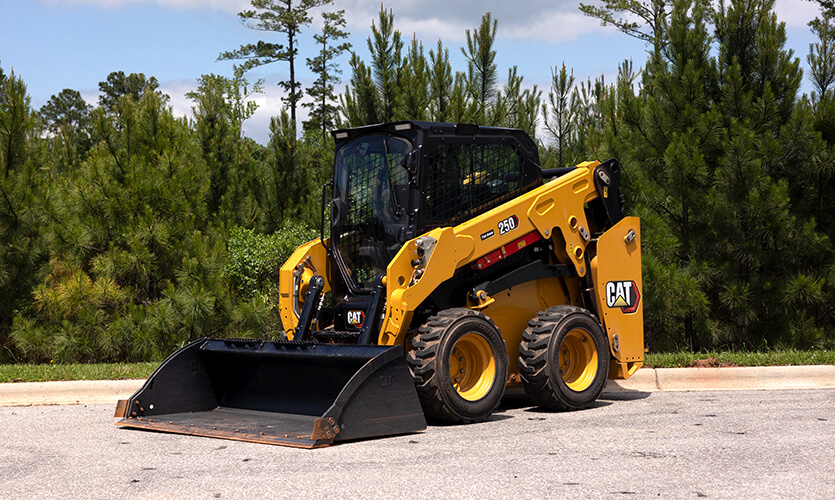
When construction teams need versatility and power, the skid steer is one of the most common pieces to consider. This equipment comes in many sizes, capabilities and features, and with so many options on the market, finding the right skid steer takes careful consideration.
The Most Important Skid Steer Specifications to Consider
Skid steers deliver immense power, reliability and versatility. Skid steers can handle many tasks, and attachments make them even more versatile, empowering teams to enhance productivity.
However, like all pieces of equipment, it’s important to find a suitable skid steer to support your operations. There are several significant factors you should consider when comparing models to ensure you find a skid steer that minimizes downtime and boosts efficiency.
1. Size
While size should not be the only element you consider, this knowledge can be an excellent starting point for your search. Generally, there are three skid steer sizes available — small, mid-range and large. Skid steer dimensions generally refer to the frames of the skid steer and can provide information about the model’s horsepower and operating capacity.
- Small: This frame size is suitable for confined jobs requiring little lifting power. For example, residential landscaping and some underground construction operations can benefit from small-framed skid steers. These models allow teams to maneuver in small or tight spaces and around corners easily.
- Medium: Mid-size skid steers support many landscaping and construction tasks. They deliver exceptional power and can fit within many suburban construction project areas. Depending on the project’s scope and working environment, medium-framed skid steers can support commercial and residential projects.
- Large: Skid steers with large frames offer the highest capacity. Because they possess a lot of power, large-framed skid steers can move significant amounts of materials and are compatible with many attachments. These machines can aid in drilling jobs, demolition projects, road maintenance or building, and similar heavy-duty tasks.
2. Horsepower
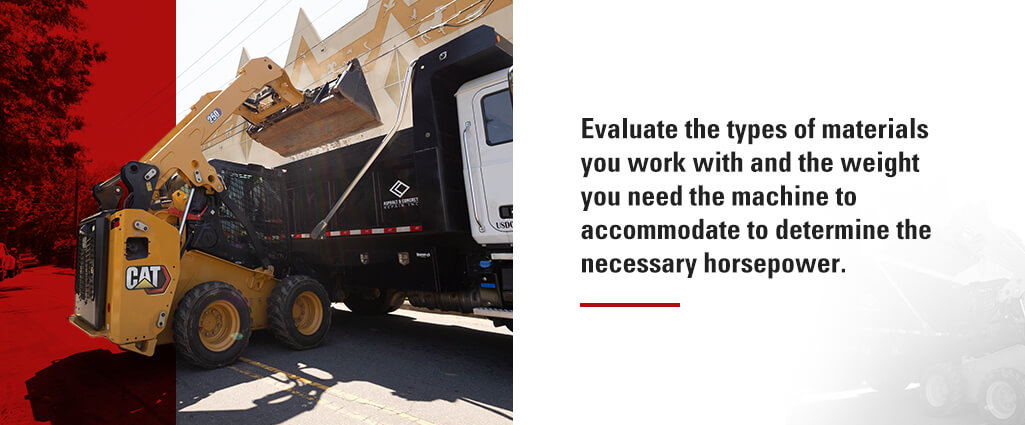
Although the equipment size will give you an idea of its horsepower, it’s crucial to consider the specifics. Higher horsepower is necessary for heavy-duty projects or challenging operating environments. Evaluate the types of materials you work with and the weight you need the machine to accommodate to determine the necessary horsepower. Small-framed skid steers will typically offer 50 horsepower or less. Medium units range between 50 and 70 horsepower, and large-framed models offer 70 horsepower or more.
It’s critical to consider flow and pressure when evaluating hydraulic horsepower. Many equipment providers offer machines with high flow, but they tend to lack pressure. When you need higher flow and pressure, Cat® XPS and XHP models can meet application needs. The 265 compact track loader offers high flow XPS at 34gal/min and maximum loader hydraulic pressure of 4061 psi.
3. Lifting Capacity
You can find two types of lifting capacities for skid steers, vertical and radial. Both types have unique designs, lift heights and features. Vertical lift capacities are more suitable for projects involving heights, while radial lift capacities support digging and grading applications.
4. Maneuverability
Several factors impact maneuverability, including operating weight, terrain, site layout and attachments. Generally, larger skid steers with higher capacities offer less maneuverability in small or tight spaces. Knowing the equipment dimensions, such as length and width, can help you determine which model is suitable for your applications. Keep in mind that machine length will change depending on whether you have a bucket attachment on the machine.
5. Tracked vs. Wheeled
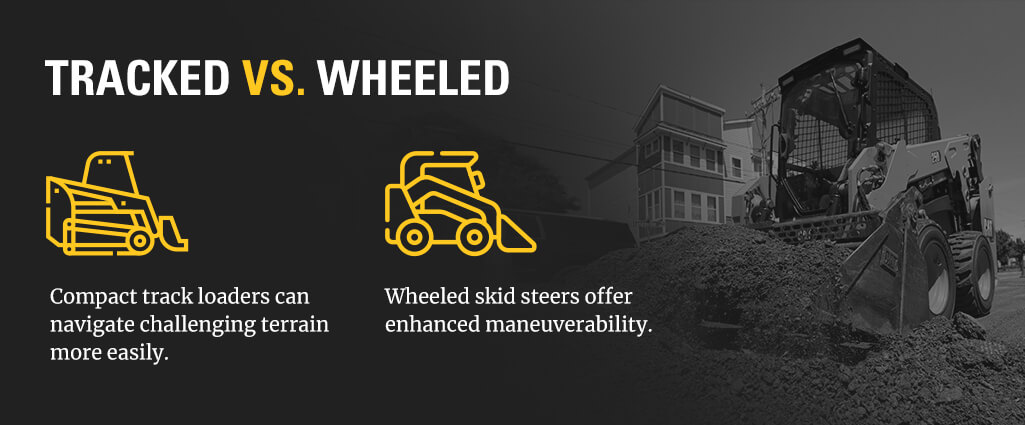
Another important aspect to consider when choosing a skid steer is whether you prefer a tracked or wheeled unit. Both types offer unique advantages and drawbacks that can impede project productivity.
Models with a rubber track system are known as compact track loaders. These machines can navigate challenging terrain more easily but are less suitable for long distances or tight spaces. Alternatively, wheeled skid steers offer enhanced maneuverability but are most suitable for asphalt and dry-level terrain.
6. Project Environment
Your typical project environment should be a driving factor for the skid steer model you choose. Evaluating your project environment means considering your project type, machine use frequency and worksite terrain and conditions.
Large-framed skid steers better support heavy-duty or commercial projects, while small-framed models empower operations in tight spaces. Wheeled skid steers are ideal on flat surfaces, and tracked units can navigate muddy or rocky terrain. How often you use your machine can help you decide whether to invest in new or used machinery or if you should opt for the latest technologies.
Other Factors to Consider to Find the Best Fit
Although skid steer specifications will drive much of your purchasing decision, there are other elements you can assess to find the best fit for your team. These factors may not be detrimental to project completion but can enhance operator comfort and safety or boost productivity.
- Amenities: Equipment models from leading brands offer the latest technology and innovations, allowing you to choose among equipment with safety and comfort-enhancing amenities. For example, you can find Cat skid steers with features like heated seats, air conditioning, noise reduction technology, adjustable seats and arm rests and more. These features can be especially beneficial when working many hours with the same machine. Consider your work environment and which features can enhance your operators’ experience.
- Attachment compatibility: Attachments enhance skid steer versatility, allowing teams to complete more tasks with one machine. Browse attachments to decide which ones will be most beneficial for your projects and determine whether the skid steers you’re interested in are compatible with them.
- Controls: Many modern skid steers offer joystick operation. One perk of modern equipment is that it often features electronic dashboards that provide maintenance insights, which can help you increase machine life spans and improve operator safety.
- Renting vs. buying: Renting or buying heavy equipment is a common topic for many construction teams. The choice depends on project needs and financial constraints. For example, if you want to tackle a unique project requiring specialized equipment, it can be most cost-effective to rent equipment for the job. Alternatively, if you plan to engage in specific projects often, it may be more economical to purchase new equipment. You can also blend renting and buying by purchasing your skid steer and renting suitable attachments.
Contact a Warren CAT Rep to Help You Choose a Cat Skid Steer
Warren CAT is your Cat-certified dealer in Oklahoma and West Texas. We offer the leading name in heavy equipment and provide comprehensive services to ensure you have the support you need to increase productivity, make informed decisions and scale your business.
Our team has over 50 years of experience in the industry, giving us extensive experience and knowledge. If you need help choosing between Cat skid steer sizes and other features, trust our support team to help you make the right choice. Contact Warren CAT by calling 866-292-7736 to learn more about different skid steer specs and get professional advice.