Renting vs. Buying Heavy Equipment

Construction companies have a few options to get the machines they need for each project — they can invest in a new addition to their fleet or rent the equipment for the duration they require it. Both choices can benefit your business and daily operations, but first, you need to understand how the two differ in how they’ll impact your budget, overall flexibility and project management.

A few key considerations for renting vs. buying heavy equipment will help you determine the right choice for your business.

Costs and Financial Flexibility

Consider your budget and how much financial flexibility you require. Renting heavy equipment is a very economical solution that affords many companies access to better machines than what they could readily invest in right now.

Choosing rental equipment also means forgoing many of the expenses associated with ownership, such as transportation and storage. Businesses can get the equipment they need without tying up too much capital and compromising the projects they can bid on.

However, purchasing the equipment may be more cost-effective if your business utilizes a particular machine frequently or requires it for long-term use. In many cases, owners can save costs by depreciating their machines each year and deducting certain expenses like maintenance, replacement parts and service.

Those who are interested in investing in their equipment can also save costs by selecting used models rather than brand-new options. Used heavy equipment can deliver the power and efficiency your business needs when carefully maintained and operated.

Equipment Utilization

How you plan to use the equipment is an essential consideration for businesses, and there are a few elements to keep in mind:

  • Frequency of use: If your projects require a particular machine on a regular basis, it is often cost-effective to buy heavy equipment rather than rent it in the long run. Renting is the preferable choice when you only need the machine occasionally or for a special project.
  • Project duration: Consider the average length of your construction projects. If you have an upcoming long-term job that will require a piece of equipment not currently in your fleet, buying may be the better option. Renting gives you greater flexibility to meet the needs of sporadic and short-term gigs.
  • Seasonal demand: If your business needs to fulfill seasonal demands, such as brush cutting or snow removal, renting is a fantastic way to get the tools you require without wasting money during the months when those machines are not useful to your operation.

With equipment utilization in mind, you can make smarter financial decisions and ensure the machines in your lineup are useful to your operations.

Maintenance and Repair Needs

Another important factor to consider when choosing to rent or buy heavy equipment is ongoing maintenance and last-minute repairs. When you invest in a machine, you are in charge of establishing and keeping up with a preventative maintenance plan to ensure your equipment is operating at peak performance for as long as possible.

You’ll need to schedule professional inspections and ensure servicing aligns with your plan. If a breakdown occurs, your business needs to tend to the repairs to get the machine up and running again without too much downtime or delaying a current project. Managing maintenance and repairs can ultimately be a juggling act for busy owners.

By renting, you can forgo most maintenance and repair responsibilities. The dealer will likely take care of these things for you, and you can reap the benefits of a well-maintained machine that is ready to work when you are. Your business does not have to invest the time, money or energy into routine inspections, servicing and repairs.

In cases when a breakdown occurs with a piece of equipment you own, renting allows you to get the tools you need last minute without having to wait for repairs.

Technology

The latest construction equipment technologies can supercharge your daily operations. These tools will help your team increase visibility, productivity and efficiency while offering valuable insights into your project data. They can also offer advanced safety features for detecting potential issues before they become serious and costly problems. Ultimately, the technology your business has access to directly impacts how quickly and effectively you can get your projects done.

Purchasing a newer piece of equipment can give your team access to some of the most dynamic software solutions available in the construction industry. However, all these amazing benefits can come with a hefty price tag.

If your business is not in a position to invest in equipment with advanced tech, you can still harness the powers of these tools by renting. Your construction business can take advantage of equipment rentals to experiment with newer technologies and determine if a specific solution is right for your operations. Plus, you will not be responsible for keeping up with ongoing system updates and integrations like you would if you purchased.

Additional Factors to Consider

Businesses should consider a few additional elements when deciding how to secure their next machine:

  • Transportation: Renting can be a great option for companies that do not have the means to transport equipment, especially large models, to different job sites. The dealer typically covers the equipment transport and unloading for each job, which is particularly advantageous for long-distance projects when transport costs rack up quickly.
  • Storage: When you purchase equipment, you are responsible for finding adequate and secure storage for it. Consider the associated costs and how storage may impact your insurance premiums.
  • Availability: One of the key benefits of buying a machine is knowing your business has access to it when it is needed, while rental equipment could potentially be unavailable or have a waitlist. However, renting is a great choice for fulfilling niche project needs.
  • Try before you buy: If you’re considering purchasing a new piece of equipment in the future, renting allows you to try the machine, ensuring you choose a good fit for your fleet before making the investment.

Browse Equipment Rental and Sales Options

As the authorized Cat® dealer in West Texas and Oklahoma, Warren CAT is here for all your heavy equipment needs. We are a full-scale solutions provider with newused and rental inventory readily available to tackle your next project.

Our team is here to help you discover the right machines and models for your unique job requirements. Whether you’re looking to expand your current fleet or secure a piece of equipment for a short-term project, we’ll ensure you get the equipment your business needs to thrive.

Contact Warren CAT or find your nearest dealer location online to get started today.

Ultimate Guide to Renting Skid Steer and Compact Track Loader Attachments

If your business is interested in renting attachments to diversify how you use your skid steer or compact track loader (CTL), you have some important considerations to keep in mind.

These pieces of equipment are often compatible with many of the same tools, making them useful for tackling similar types of projects. However, you need to know what specific attachments are best for your application. Additionally, you should know why renting can be an advantageous way of fulfilling your unique job and budget requirements.

This guide provides all the information you need to make an informed decision about renting the right equipment and attachments for your project.

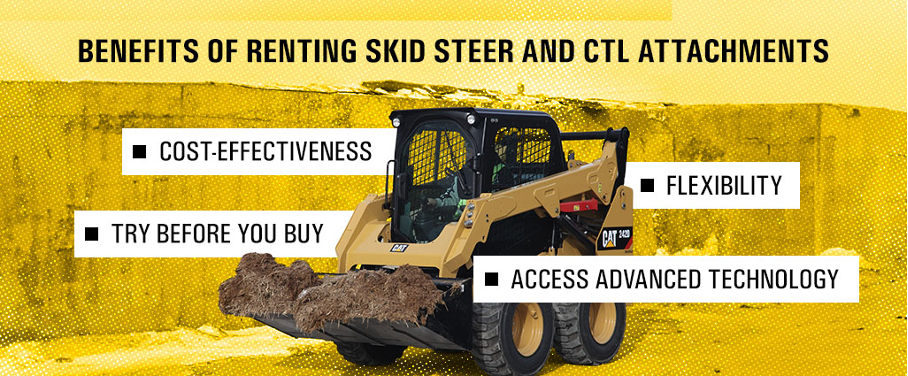
Benefits of Renting Skid Steer and CTL Attachments

Businesses can enjoy many financial and logistical advantages when renting skid steer and CTL attachments:

Cost-Effectiveness

Renting attachments is a cost-effective way to secure the tools you require for an upcoming project. Whether you have a tight budget or short-term needs, renting affords access to additional equipment without requiring a large investment.

Rentals allow you to have lower maintenance and repair costs because your business is not responsible for ongoing upkeep. You also won’t have to worry about storage expenses since you’ll have the machine only for the predetermined project time frame.

Flexibility

Another benefit of renting attachments for your compact track loader or skid steer is having greater flexibility to tackle new types of jobs without the long-term commitment of owning multiple attachments.

Renting is the perfect solution if you won’t need attachments regularly or if it doesn’t make sense to invest in purchasing them yet. Rentals make it possible to fulfill last-minute or unexpected project needs and quickly close gaps in your fleet.

Try Before You Buy

By renting your CTL and skid steer attachments, you can test their functionality and evaluate their performance before investing. You can try before you buy to ensure you select the best options for your particular equipment models.

If you are trying to decide between two attachment choices, you can rent both and get feedback from your operators on which one suits your business’s needs best. You can also consider which attachments offer the most return on investment regarding their different uses and how they impact productivity.

Access Advanced Technology

Renting makes it possible for businesses to access the latest attachment technology. These advanced tools can benefit your operations by enhancing performance, safety and efficiency.

You can see how the newest features and improvements can impact your bottom line and determine whether they are a good fit for your business. Rental attachments with advanced technology can also help you tackle projects with tight time constraints.

Understanding the Different Types of Skid Steer Attachments and Their Uses

Before renting attachments for your skid steer or compact track loader, it can be valuable to explore the different types available and their versatile uses. A wide variety of attachments are available to greatly expand the capabilities of compact construction equipment, and learning about each will help you select the most effective options for your job.

Types of Skid Steer and CTL Attachments to Rent

You can find various types of skid steer and compact track loader attachments available for rent:

  • Angle blades: These attachments, also known as dozer blades, are useful for various tasks, including leveling, backfilling and pushing materials like soil, gravel or snow.
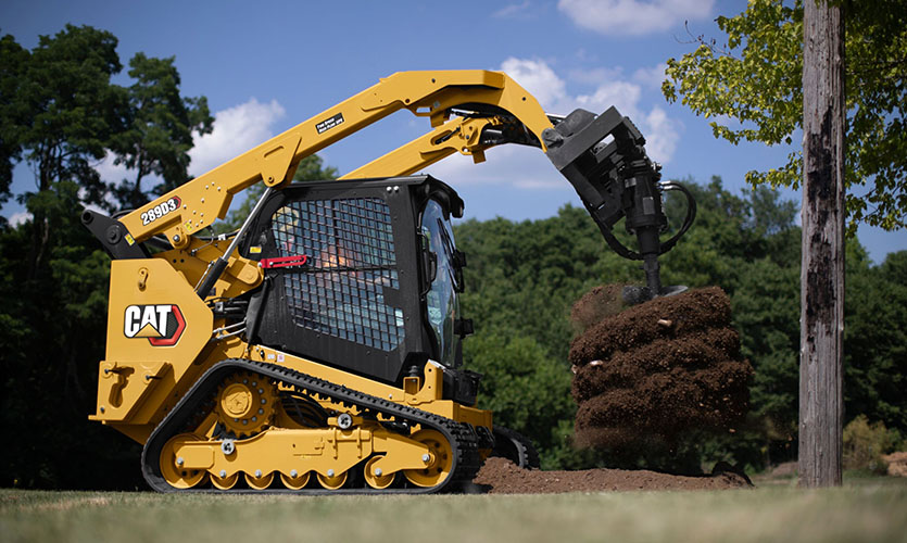
  • Augers: You can use augers that feature a helical drill to pierce the ground for tasks like installing fence posts and planting trees.
  • Breakers: Breaker attachments are useful for site preparation, rock excavation and concrete projects. They help you break up hard, heavy materials for easier removal.
  • Brooms: Debris removal, site preparation and snow-clearing applications can benefit from broom attachments. They use heavy-duty rotating brushes for sweeping surfaces.
  • Forks: Fork attachments are a popular option for material-handling applications. They feature prongs that allow for easy lifting, loading and unloading tasks.
  • Grapples: Handling bulky materials, such as logs, brush or site debris, is easier and more secure with the help of grapple attachments. The hydraulic claws can offer an advanced grip for your materials.
  • Hammers: You can use these attachments for similar applications as breakers. Hammers are better suited for lighter demolition projects, like breaking up smaller rocks.
  • Hay spears: Hay spears are the go-to attachment for lifting, hauling and stacking hay bales. You can also use them for moving materials, such as wooden pallets or insulation bundles.
  • Mowers: Mower attachments feature rotating blades that can cut grass and vegetation on a job site. They are useful for landscaping, construction and roadside maintenance applications.
  • Mulchers: Land-clearing and vegetation management efforts can benefit from adding a mulcher attachment that can shred branches, bushes and shrubs.
  • Rakes: Rake attachments feature teeth for collecting debris in site cleanup, landscaping and soil preparation applications.
  • Sod rollers: You can use a sod roller attachment on a CTL or skid steer to flatten and compact the ground to achieve an even and smooth surface.
  • Stump grinders: A stump grinder can help your team remove rough plant and tree roots for land clearing and site prep applications.
  • T-post drivers: A t-post driver attachment can streamline the installation process for fence posts. They help you drive the post securely into the ground.
  • Tillers: Tillers are useful for breaking up soil for landscaping and ground maintenance. They use rotating blades or tines to penetrate and turn the ground surface.
  • Trenchers: You can use trenchers for digging and cutting through the soil. These attachments are great for utility, irrigation and drainage system installation.

Skid Steer and CTL Attachment Suitability for Different Construction Projects

A few key considerations will help you determine which attachment rentals are right for your business:

  • Project needs: Assess your upcoming project requirements and the specific tasks your team will tackle. The scope, materials and job site conditions will impact which attachment rentals are best.
  • Model compatibility: Always check the specifications of your skid steer or CTL to ensure you select attachments that will work with your particular model. Many attachments are universal, but not all of them will match up with your machinery.
  • Versatility: While exploring different attachment options, your business can benefit from choosing options that can be useful for multiple applications and tasks.
  • Availability: Another important consideration when selecting attachment rentals for your business is your project timeline and whether the particular tools you require will be readily available when you need them.

Look for equipment rental dealers where you can work with an equipment specialist to determine the right attachments for your construction projects.

The Importance of Selecting the Right Attachments

The best skid steer attachments to rent will depend on your specific machine, capacity requirements and applications. There are a few key reasons why every business should prioritize working with the right tools for every job:

Safety

CTLs and skid steers are powerful machines. Using compatible attachments is essential for ensuring operator safety. Improperly matched tools can cause excessive stress on your equipment and unnecessary wear and tear or breakdowns. These issues can result in accidents and increased safety risks on your job site.

Prioritize operational safety by selecting attachments that fit correctly and are designed to suit your specific tasks and typical project conditions.

Optimal Performance

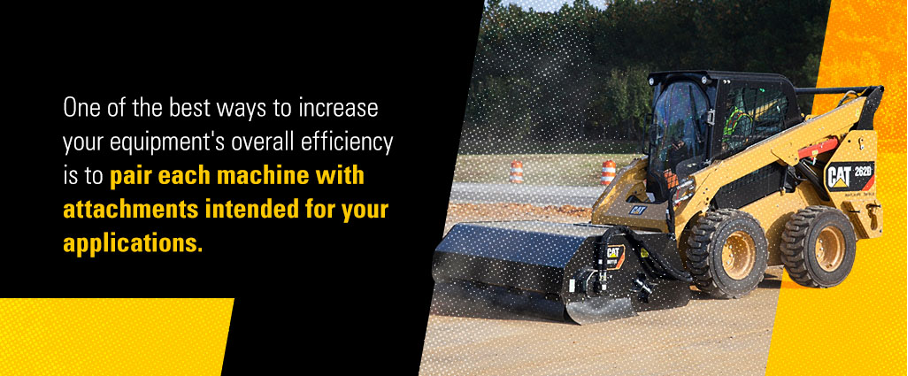
One of the best ways to increase your equipment’s overall efficiency is to pair each machine with attachments intended for your applications. These tools will supercharge your performance on the job, increasing productivity and ultimately boosting customer satisfaction and profitability. Renting the right attachments allows you to enjoy greater reliability and reduce the risk of downtime caused by equipment failures or damage.

Having the right attachments will help you achieve optimal results on every project and take your business to the next level.

Equipment Longevity

Proper care and operation are essential for extending your equipment’s working life. Selecting CTL or skid steer attachments designed specifically for your machine will help you protect your investment and combat premature wear. Using compatible tools is a simple way to save costs on repairs, replacements and unplanned downtime.

Working with a professional can be useful for finding attachments that work with your equipment models and fulfill as many job functions as possible.

Maximizing Productivity With the Right CTL and Skid Steer Attachments

Once you determine the right attachments for your machine and project needs, there are some key ways your business can use these tools to maximize productivity and efficiency:

  • Streamline operations with task-specific performance: Each attachment has unique features that enable quick, precise task execution and contribute to improved effectiveness and faster completion rates.
  • Reduce manual labor needs: The right tools can help your business save time and money by streamlining tasks and reducing the manual labor required to tackle a particular job. Less physical strain on your personnel can increase individual productivity and keep your team functioning at their best.
  • Increase versatility: Having different attachments allows your team to diversify the types of jobs they can complete. Selecting multifunctional rental attachments can also help you quickly transition from one task to the next, directly benefiting your operational efficiency.

Tips for Optimal CTL and Skid Steer Attachment Operation

Your business can also maximize productivity with a few tips for optimal attachment operation:

  1. Follow the manufacturer’s guidelines: Read the equipment’s manual and follow the suggestions for inspecting, maintaining and operating your attachment.
  2. Ensure proper installation: Carefully follow installation instructions for your skid steer and CTL attachments and inspect the fitment to ensure safe and effective operation.
  3. Pay attention to maintenance: Ensure your attachments remain in working condition by Incorporating them into your routine maintenance checks so you can spot issues before they become bigger problems. By not working with faulty equipment, your operators can increase their safety on the job site.

When Does Buying Attachments Make Sense?

While there are many benefits of renting attachments for a compact track loader or skid steer, buying may be more advantageous in certain circumstances:

Consistent Project Requirements

If your business’s typical workload requires a specific attachment, purchasing it may be a better option than renting. Buying ensures your tools are readily available when you need them, and you have the equipment to tackle your daily tasks with convenience and improved efficiency.

Consider the time frame you’ll need the attachment and if the costs of repeatedly renting will surpass the expenses of purchasing. If a particular attachment is a fundamental part of your company’s everyday operations, owning it will be more convenient, and you will likely save long-term costs.

Readily Available Capital

Businesses that have larger budgets and are interested in expanding their fleets can benefit from investing in their attachments rather than renting them. You can buy either new or used options, depending on your financial constraints. Ensure you have the capital to properly operate, maintain, repair and store your tools before buying them.

How to Get the Most out of Your Attachment Rentals

Contractors and business owners can get more out of their rental attachments with a few tips and tricks:

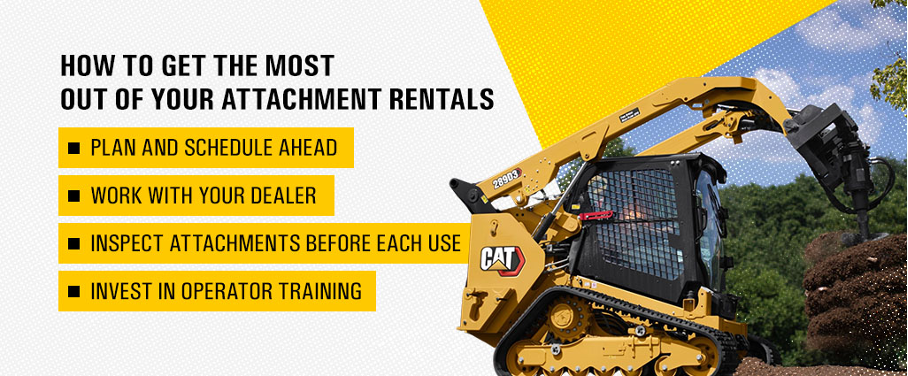
1. Plan and Schedule Ahead

One method for maximizing the use of your rental attachments is to create a detailed plan ahead of time. Determine your project requirements and the estimates for how long your team will need each tool. Reference your schedule and ensure you can secure the attachments you need for your desired time frame without delay or the risk of last-minute unavailability.

2. Work With Your Dealer

Be sure to communicate your project requirements with the rental company you work with. By providing your dealer with detailed information about your specific tasks, worksite conditions and unique project considerations, they will be able to advise you on the most suitable attachment options for your needs. You can get expert guidance on installation and operation to support greater performance.

3. Inspect Attachments Before Each Use

You should carefully inspect equipment and attachments before renting them to ensure they are in good working condition. In addition to this initial inspection, have your operators take a close look at your rental tools before each use to flag potential issues. Doing so will help you remain safe and control costs by reducing the likelihood of breakdowns during your rental period.

4. Invest in Operator Training

Taking the time for training can help your team learn about the proper operation, safety protocols and maintenance requirements for your rental attachments. Have your operators complete training on how to work with your rental equipment. They should understand the controls and settings before tackling each project.

Training will offer the know-how needed to maximize project efficiency and productivity while keeping your job site safer throughout the rental term.

Get Quality Rental Attachments and Tools From Warren CAT Rentals

If your business is looking for durable attachment rentals, turn to Warren CAT Rentals. We have an extensive inventory of reliable Cat® compact track loader and skid steer attachments available to support your operations and benefit your bottom line. Our team will help you find the right options for your machines and applications.

Browse the rental attachments available from Warren CAT Rentals, and find a location near you to get started today!

A Complete Guide to Construction Equipment Rentals

Many contractors and construction businesses turn to rental equipment for their temporary project needs. Renting lets you obtain the equipment you require without taking on the responsibility of ownership. If you’re considering this route, we created this guide to cover all the basics of renting construction equipment, including:

  • Reasons to rent equipment
  • How to choose the right machine for the job
  • Types of equipment you can rent
  • Whether you need a short- or long-term rental agreement
  • Other tips to keep in mind when renting equipment

After browsing this guide, you’ll have the information you need to help you make a more knowledgeable decision about renting heavy machinery for your next project.

Why Rent Construction Equipment?

In 2022, the global construction rental equipment market was worth $187.46 billion. It’s projected to grow at a compound annual growth rate (CAGR) of 6.12% until 2030. Renting equipment is an increasingly mainstream option, especially for companies that:

  • Have a limited budget to spend upfront.
  • Have minimal space to store an extensive equipment fleet.
  • Are newly entering the industry or getting their business off the ground.
  • Regularly handle specialized, short-term or diverse projects, thus requiring many machines.
  • Want to try out different options to see what would benefit their operations most.

Renting provides a flexible solution to get the machines you need quickly, making it a popular avenue for small and large companies alike.

1. Ability to Try Before Buying

Renting lets you test out several types of equipment. You can determine which machines, sizes, features and capabilities best accommodate your needs. Plus, if the unit you rent turns out to be incompatible with the job, you won’t be stuck with it. Return it and try something different.

Finding the right equipment often takes some trial and error, so don’t hesitate to rent and experiment with multiple options. Should you decide to buy equipment someday, you can purchase it with confidence since you’ll know precisely what you’re looking for.

2. Cost Savings

Renting your construction machinery provides multiple opportunities to save money. You don’t have to pay a large sum upfront since you won’t own the equipment. This aspect makes rental construction equipment an excellent option for businesses with limited capital. If you’re a startup company, you can begin accepting projects without purchasing a full fleet of equipment.

You can also avoid other expenses associated with equipment purchases and ownership, such as:

  • Maintenance, servicing and repairs
  • Replacement parts
  • Workshop space to perform repairs
  • Equipment storage space

3. Flexibility to Support Your Schedule and Demand

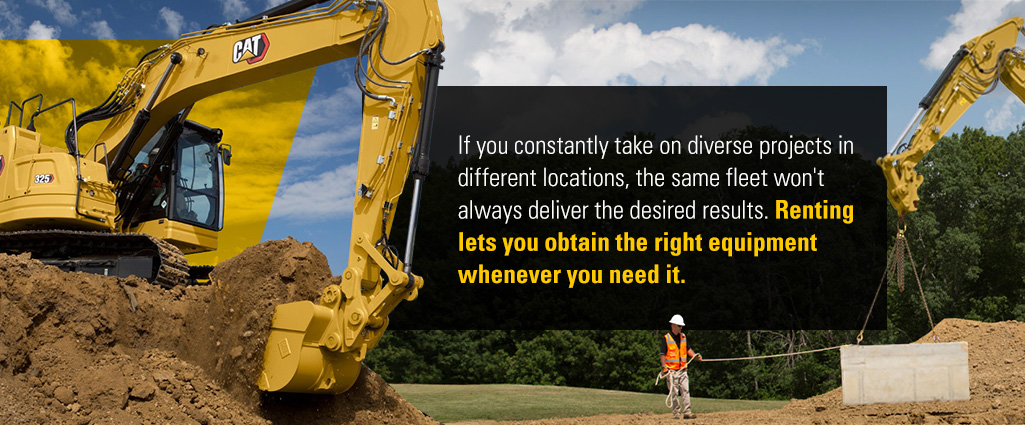
Every contractor knows that no two projects are the same. Every job has unique specifications, including size, scope, timeline and required equipment. If you constantly take on diverse projects in different locations, the same fleet won’t always deliver the desired results. Renting lets you obtain the right equipment whenever you need it.

Plus, construction can be unpredictable. You never know when an unplanned project or hurdle will arise. Say a high-priority project with a fast-approaching deadline comes up, or your team must complete a job sooner than anticipated. Maybe you have to redo a task you initially thought was complete. Whatever the case, if you’re ever in a bind for equipment, renting provides a flexible way to get the temporary solutions you require.

Cat® Equipment Rental Options Available at Warren CAT

Caterpillar is a global leader in construction equipment. It’s known for its impeccable quality, performance, durability and technology. At Warren CAT, we’re proud to offer our clients various Cat construction equipment rental options. Whether roadwork, landscaping, building construction or demolition, we have solutions for nearly any project — large or small.

1. Bulldozers

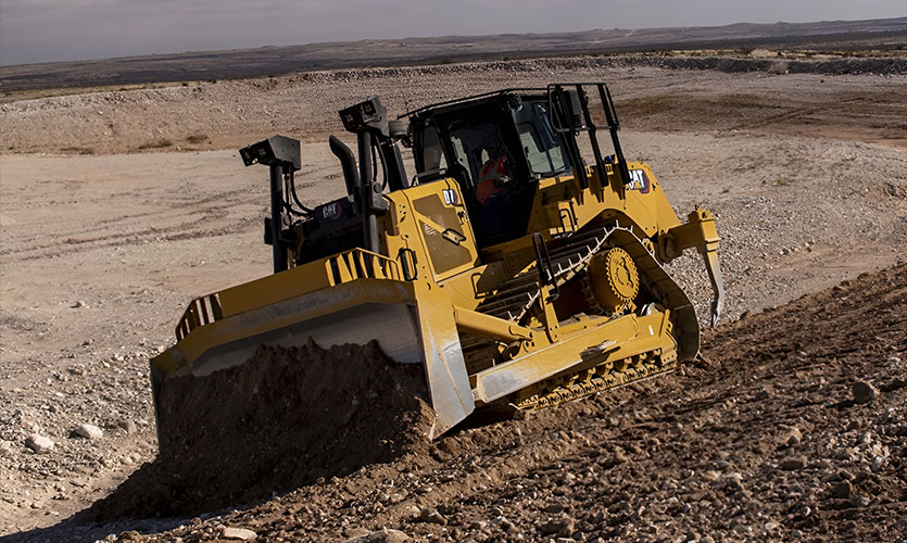
From construction and forestry to snow removal, bulldozers accommodate a variety of tasks. They come in a wide range of sizes, from compact to mid-sized to large models. This range makes it easy to find the right solution for your job, whether clearing a small area of land or moving large amounts of soil and gravel.

2. Excavators

Excavators are fantastic tools for digging applications. Excavators come in a range of sizes and include a boom, arm and bucket, letting the operator dig, lift and move different materials across the job site.

You can choose an excavator with tracks or wheels, depending on your project needs and the terrain. Wheeled configurations are better suited to flat, level ground, while tracked excavators can handle rocky and irregular terrain.

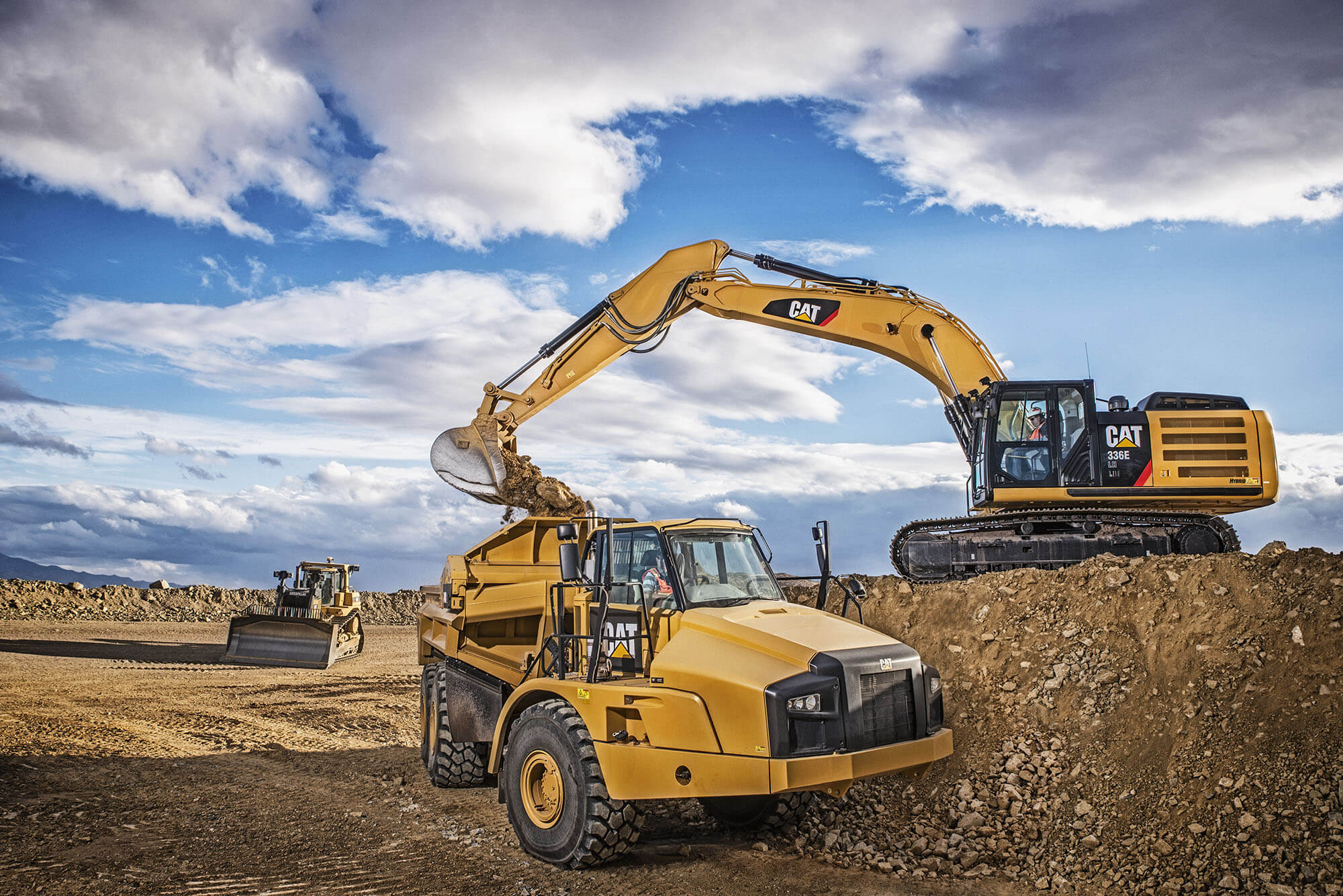
3. Articulated Dump Trucks

An articulated dump truck can transport and dump materials across a worksite with incredible efficiency. In some cases, you can take it on public roads. It’s a staple for construction, mining and demolition projects and can haul large volumes of durable materials, such as:

  • Soil
  • Asphalt
  • Building debris
  • Sand
  • Gravel
  • Lumber
  • Brick
  • Steel

You can choose a unit based on your hauling requirements. If your projects involve sturdier materials like stone, rock and metal, you’ll need something with a higher payload capacity. If you’re working with lightweight materials like sand and low-density soil, a smaller payload capacity will suffice.

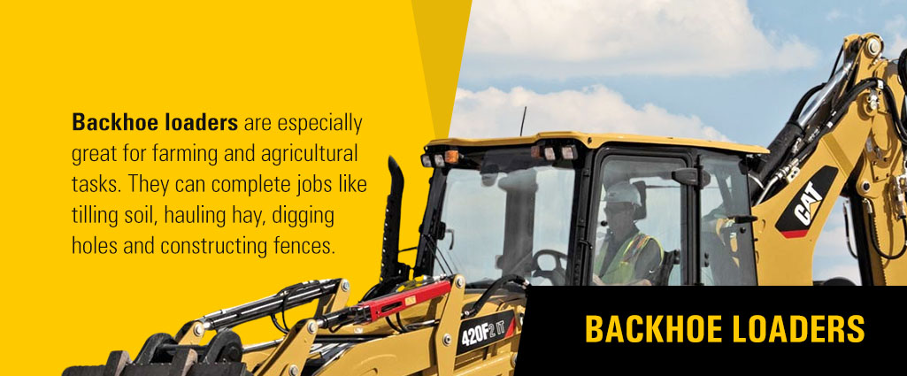
4. Backhoe Loaders

Sporting a digging arm and bucket, a backhoe loader can tackle a range of tasks, including:

  • Digging and moving materials
  • Landscaping
  • Road work
  • Snow removal
  • Small-scale demolitions like breaking asphalt or concrete

Backhoe loaders are especially great for farming and agricultural tasks. They can complete jobs like tilling soil, hauling hay, digging holes and constructing fences. You can also equip your unit with different attachments, depending on your project requirements.

Compact backhoes are ideal for smaller jobs. You can opt for a larger model if you need more digging depth and horsepower.

5. Compactors

If your project involves compressing materials like soil, dirt and gravel, a compactor is a must-have piece of rental equipment. Compactors exert a downward force on these materials. This process removes air pockets, packs the particles together and levels the terrain.

These machines are ideal for:

  • Compacting soil for building foundations.
  • Preparing and compressing base materials for driveways, paths and walkways.
  • Compacting materials for road construction and repair.
  • Leveling soil in trenches and excavations for laying pipes or cables.
  • Stabilizing the soil beneath landscaping features like patios and retaining walls.

6. Telehandlers

A telehandler is a hydraulic machine used to lift, carry and place heavy material loads. Its seamless maneuverability and compact frame allow it to navigate small spaces. Unlike some forklifts that only lift vertically, telehandlers can reach up, out and over obstacles. Telehandlers have a range of lift heights and capacities, letting them extend further.

You can also fit telehandlers with multiple attachments for different tasks, such as forks, hooks, booms and buckets. These machines fulfill an array of construction, agricultural and landscaping applications.

Determining the Necessary Equipment

Several factors determine the best machine to rent, from the type of terrain to the overall size of your worksite. Considering these aspects will allow you to choose a rental option that will help you get the job done more easily and accurately.

1. Project Scope

Think about the different tasks your project will entail. For example, the job might involve compressing and leveling soil for a home foundation or breaking and removing concrete to replace a sidewalk. Depending on the job scope and the number of tasks involved, you may require one or more machines.

Sometimes, you can rent one machine and equip it with multiple attachments to help you tackle various applications. Make a list of the tasks you’ll be completing, and establish what your budget can cover in terms of rental equipment and attachments.

2. Worksite Conditions

Remember that different equipment types are better for certain job site conditions than others. Factors such as soil density, ambient temperatures and terrain can all impact the type of machine you choose.

For example, if your project involves steep slopes or uneven terrain, you might choose a tracked excavator over a wheeled one. If you’re distributing and compacting layers of asphalt over a flat, even surface, an asphalt paver can be a notable asset. If the paver is not self-propelled, you might also rent a dump truck to tow it.

Consider your worksite’s conditions and terrain when determining the right type of rental equipment. Generally, wheels are better for stable, level terrain. They’re also handy if your project involves on-road driving, provided the law permits them on public streets.

In comparison, tracks are better for unstable conditions like mud, snow, rocks and wet surfaces. Tracked equipment evenly distributes the weight over vast surface areas to provide better traction. Increased traction means the machine can also climb hills and sloped surfaces with ease.

3. Equipment Size Requirements

Size is a critical consideration in your rental equipment decision, as it will influence your project’s efficiency. A common assumption is that the largest and most powerful equipment does the job most effectively. However, bigger isn’t always better when it comes to construction equipment.

For example, commercial and residential lots tend to offer less space, thus limiting your equipment size options. A full-size excavator may get the job done faster, but it may not have enough space to turn around and comfortably maneuver the site. Additionally, overhead obstructions like powerlines and beams can present size and reach capacity restrictions.

Likewise, you don’t want to rent a machine that’s too small for the task. Using a compact machine for a heavy-duty job can strain and overload the equipment, potentially damaging the unit. Consider the physical area, horsepower requirements and necessary reach capacity when determining the right rental equipment size.

Short-Term vs. Long-Term Rentals

Both short- and long-term rentals are flexible, cost-saving options. However, one might better align with your business and project needs than the other.

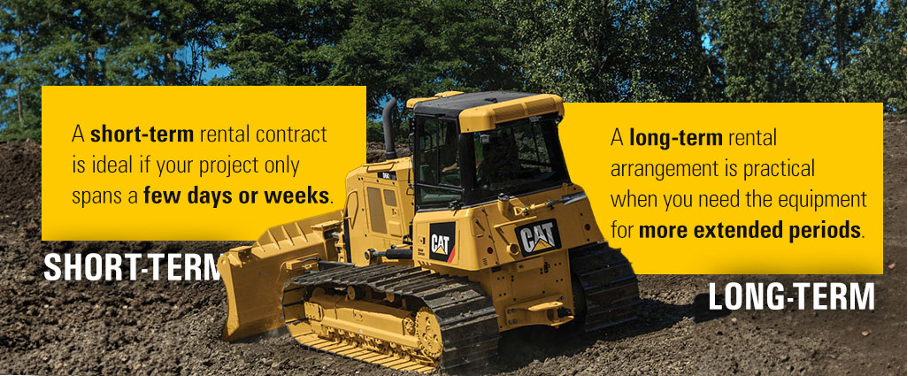
A short-term rental contract is ideal if your project only spans a few days or weeks. In some cases, you can rent on a day-to-day or hourly basis if you only need a machine for a quick, simple task. Once you’re done with the equipment, simply return it to the dealer. Short-term rentals let you try out different options before committing to a longer rental contract or purchase.

A long-term rental arrangement is practical when you need the equipment for more extended periods. These contracts can span anywhere from a month to over a year. They also typically cover repair and maintenance services. Should a breakdown occur, you can easily reach out to your dealer and swap out the equipment. If you need construction equipment for a prolonged duration but aren’t ready to commit to ownership, a long-term rental agreement may be right up your alley.

Other General Tips for Renting Construction Equipment

Following certain best practices can help you maximize your heavy machinery rental use and get the most for your investment.

  • Develop a plan. Before renting equipment, map out a project plan so you can accurately estimate how long you’ll need the machinery. Determine a ballpark project timeline and budget. If you need the equipment longer than you anticipated, you can easily contact your rental provider to extend your rental contract. Remember to account for the weather forecast during planning, as well. Certain conditions — such as severe heat, wind and storms — can affect equipment performance and potentially set back completion times.
  • Train your team. Teach your crew how to use rental equipment if they aren’t familiar with it. Attempting to learn new machines as they complete projects can significantly reduce productivity. It also increases the risk of misuse, operator incidents and equipment damage.
  • Keep the rental unit secure. Make sure you have a safe place to store the equipment, especially if you’re renting long-term. If you don’t have access to a warehouse or other storage facility, you can contact an equipment storage provider in your local area.
  • Choose properly maintained rental equipment. Finally, you’ll want to rent from a company with expertly maintained, well-cared-for equipment. At Warren CAT, our technicians meticulously inspect and maintain every machine in our fleet. That way, we can ensure the highest degree of performance, reliability and efficiency for our clients. We also provide full-service equipment maintenance and product support with our rental agreements.

Contact Us for Construction Equipment Rentals in Oklahoma and West Texas

If you want to rent equipment for your upcoming construction project, Cat equipment can deliver the unparalleled performance and accuracy your tasks require. Warren CAT offers Cat construction equipment rentals in West Texas and Oklahoma.

We’re your expert source for Cat equipment rentals, parts and services. Our team is ready to connect you with high-quality machinery for your unique projects and tasks. Browse our inventory of rental equipment to find what you need today.

Do you have questions about our products or construction equipment rental services? Contact us online or give us a call at 866-292-7736.

Compact Construction Equipment for Small Contractors

Whether you’re a contractor who’s just starting or you only take on small jobs, understanding and leveraging the right construction equipment for your projects can be a significant help. Specific machinery can address efficiency concerns, allowing you to finish jobs on time more often, and help you tackle more types of projects overall.

Many compact machines are highly versatile and can support a wide range of applications in addition to being cost-effective. With heavy machinery built for compact tasks, you can streamline your projects, helping you reach deadlines and impress customers as you grow your business.

Top Benefits of Small Construction Equipment

By investing in compact construction equipment, you can enjoy numerous benefits, including:

  • Project diversity: Adding compact equipment to your fleet can help your business take on different projects and perform new tasks, increasing your flexibility and adaptability.
  • Maneuverability: Small machinery makes it easier for operators to navigate through confined spaces and access hard-to-reach areas on your job sites.
  • Efficiency: Trying to tackle smaller-scale jobs, such as residential landscaping or park maintenance, with large construction equipment can slow down your team’s efficiency and add time to your project. Compact machines can help you stay productive and on schedule.
  • Cost-effectiveness: Small contractors tend to have limited resources and tighter budgets, so investing in compact equipment can help them save costs on everything from fuel to maintenance.
  • Easier transport: Because compact construction equipment is lightweight and takes up less space, contractors can easily tow or put the machine on a trailer for transport. Businesses also typically do not need special permits for hauling smaller-sized construction equipment models.
  • Less ground disturbance: Using smaller equipment reduces the damage done to the ground during operation. For projects that involve working on fragile lawns or pavements, a compact option is likely a better fit than a larger model.

Types of Small Construction Machinery

When browsing small construction machinery, you’ll come across several options, including various popular equipment types such as:

1. Mini Excavators

A mini excavator features a boom, arm and bucket or other attachment to streamline digging and excavation tasks. This equipment is also beneficial for various other applications:

Because compact excavators are highly maneuverable and versatile machines, they are widely used in the construction, landscaping, utilities and agricultural industries.

2. Skid Steer Loaders

A skid steer loader is a type of wheeled small dirt-moving equipment used for tasks like:

  • Digging
  • Grading
  • Backfilling
  • Material handling
  • Demolition
  • Debris removal
  • Trenching
  • Land leveling
  • Snow removal
  • Feeding livestock
  • Road repairs

You can equip skid steer loaders with a wide range of attachments, including a bucket, forks, augers, trenchers, grapples and more. They are highly versatile and handy machines to have in your fleet.

3. Compact Track Loaders

Compact track loaders can have a front bucket or other attachment and run on two parallel tracks, commonly made of rubber. Their tracked undercarriage allows them to distribute their weight over a larger surface area, minimizing ground damage and helping them easily navigate soft surfaces like mud or sand.

This type of small earth-moving equipment is particularly well suited for:

  • Digging
  • Grading
  • Site preparation
  • Material handling
  • Snow removal
  • Stockpiling
  • Debris removal
  • Demolition

Key Features of Compact Construction Equipment

There are a few key features to consider when looking into different types of small construction equipment:

  • Versatility: When buying or renting machinery, always consider the range of tasks the equipment can complete. You may take on diverse projects that require different types of tools. Keep versatility in mind as you select your next piece.
  • Attachments: The attachments you choose will determine the applications your compact equipment can complete. Select a machine that is compatible with the specific attachments you need to make your work easier and more streamlined. Most attachments are universal, but you should ensure the attachments you require won’t be too heavy or otherwise unsuitable for the machine.
  • Maneuverability: Whether you work on urban construction sites or congested residential projects, having a machine that performs well in confined spaces will help you maintain operational efficiency.
  • Cost-effectiveness: As a small contractor, larger machines might be out of your budget. Compact equipment can be a cost-effective alternative until you have the capital for a larger investment in the future. Plus, smaller models are relatively inexpensive to own and operate.
  • Technology: Another important feature to consider is the equipment’s technology. Advanced solutions help streamline your operations and enhance project efficiency. In some cases, you can integrate the machine’s tech with your company’s existing management systems for greater transparency and productivity.
  • Tracks or wheels: Consider the ground conditions you may encounter during projects. If your projects often involve soft or delicate surfaces, opting for a compact track loader may be best for minimizing damage and staying stable during operation. If you usually work on harder and more level surfaces, like warehouse floors or paved roads, choosing a piece of equipment with wheels is likely best.

Tips for Selecting the Right Equipment Model

Once you decide the type of compact equipment that is right for your business, a few tips can help you determine the best-suited model:

1. Consider Your Typical Project Requirements

Think of the types of projects you regularly take on and their specific requirements, like the scope, site conditions and travel distance. These factors will help you determine which model suits the most applications.

2. Prioritize Your Capacity Requirements

Lifting over capacity can be dangerous, damage your equipment and diminish project efficiency. Ensure you select a model that can properly and safely handle your heaviest materials and loads without issue.

3. Assess Long-Term Costs

As you compare different models, take note of the cost considerations for each, such as fuel consumption, ongoing maintenance and potential resale value. Consider the expected life span and operational expenses and use these factors to inform your decision-making.

4. Ask an Expert

Whether you’re unsure about your decision or you’d just like some additional advice, turning to a construction equipment expert can be highly advantageous when determining the right equipment model for your business. They’ll answer your questions and emphasize important considerations for getting the most out of your investment.

Turn to Warren CAT for Compact Construction Equipment

Whether you’re looking for full-size or compact construction equipment, Warren CAT has you covered. We have locations throughout West Texas and Oklahoma. You can explore our wide selection of new and used equipment available, including mini excavators, compact track loaders and skid steer loaders.

As an authorized Cat® equipment dealer, we provide durable, high-quality machines that will help you achieve greater efficiency and peak performance. We’ll partner with you to meet your project needs and find the best models for your applications.

Browse the construction equipment available from Warren CAT online or visit a location near you today.

Why Rent an Industrial Generator

Uninterrupted power is vital for businesses across many industries. Whether you are working with hospitals or data centers, having a backup source of electricity is indispensable. However, not all organizations are in a position to invest in an industrial generator. Renting provides an accessible, flexible and cost-effective means of acquiring the power generation equipment necessary to keep operations running smoothly.

Potential Consequences of Power Outages

Organizations that have mission-critical power needs must invest in a reliable backup source to ensure their operations can continue in the face of an outage caused by severe weather, strained power grids, local outages or human error. Power failure can have numerous negative consequences for businesses. For some, loss of power can be a considerable safety hazard.

1. Unplanned Downtime

One common result of power failure is unexpected disruptions and downtime. Businesses may experience halted productivity and delays, causing them to fall behind schedule. Whether you’re working with production lines or data center processing, halted operations may impact your bottom line.

A power interruption can also create a ripple effect throughout your supply chain, resulting in delays, missed deliveries, customer dissatisfaction and financial losses.

2. Equipment Damage

Another unfavorable consequence of power failure is the risk of damaging your business’s critical equipment. Electronics are especially sensitive to power surges, spikes and fluctuations. When disruptions to your electrical supply occur, the results can be detrimental to essential systems. They may require costly repairs, component replacements or complete overhauls, depending on the effects of the power interruption.

Equipment damage can lead to downtime and additional costs your organization did not plan for.

3. Data Loss

Most businesses across numerous industries rely on computerized systems for processing important information, record-keeping and operational monitoring. Sudden power loss can cause data center equipment to fail, resulting in data corruption and loss.

Without your data solutions in tact, your organization may experience challenges regarding decision-making and oversight of your daily operations.

4. Safety Hazards

Power outages can create serious safety concerns in industrial and commercial settings — life-saving equipment may fail. Dangerous machinery can malfunction or come to a sudden stop, and emergency lighting, ventilation or temperature control solutions may not work. All of these factors can lead to hazards for your workers, customers or patients. Reliable backup power is essential for operations where loss of power can impact safety and health.

5. Revenue Loss

Between unplanned downtime, operational disruptions and equipment damage, power failures can result in significant financial losses for businesses. Interruptions to your daily activities can impact your ability to generate more revenue and satisfy your customers’ demands.

Reasons for Renting a Generator

There are many reasons why renting an industrial generator is an advantageous decision for businesses.

1. Temporary Power Requirements

An industrial generator rental is often a practical solution for organizations with temporary power needs. For instance, a construction contractor might require power for a specific duration on a remote job site, or a company may be hosting an outdoor event that needs power for lighting and heating.

2. Cost Savings

If your business is not in the financial position to invest in an industrial generator, renting can be a cost-effective solution for getting the continuous power supply you require. Renting can help you forgo ownership expenses, like ongoing maintenance, repairs, long-term storage and depreciation.

3. Emergency Preparedness

Commercial generator rental solutions can give you peace of mind when power failures occur. Having a reliable backup power source is an essential element of your business’s emergency preparedness plan. This is especially important in regions prone to severe weather or outages.

4. Scalability and Flexibility

For businesses with fluctuating power requirements, renting a generator can help them meet their changing demands. These pieces of equipment provide greater flexibility and scalability for operations that may need additional power for a specific event or project.

5. Access to the Newest Technology

Another reason why companies opt to rent their backup power generation equipment is because they want access to modern technology that they may not be able to afford otherwise. Newer generator models have advanced features that help you maximize fuel efficiency, reduce emissions and monitor power demands with greater accuracy.

6. Maintenance and Support

Businesses can often rely on their equipment providers to take on the maintenance and repair responsibilities for their commercial generator rentals. You can enjoy the benefits of having a reliable backup power source without the burdens of ongoing upkeep and ownership. Plus, you often have access to customer support for troubleshooting any issues with your machine.

How to Choose the Right Rental Generator

A few key considerations can help your business determine the right industrial generator rental solutions for your specific operations.

  • Power requirements: Your power needs are a crucial factor to keep in mind. Select a model that can adequately support your continuous and peak demands. An equipment expert or electrician can help you determine your total power load and account for additional requirements if necessary.
  • Size and capacity: Businesses should also determine the size and capacity of their rental generator with power requirements in mind. Manufacturers rate their equipment according to kilowatt and megawatt capacities. You’ll need to ensure you select a model that supports your power needs.
  • Fuel type: Industrial generators typically run on natural gas or diesel. The former may be best if you’re looking to reduce emissions, and diesel models may be right for businesses that want superior durability and readily available fuel.
  • Fuel efficiency: Another factor to consider when choosing a generator rental is runtime and fuel efficiency. If your business will run the equipment for longer periods, a model with a larger fuel tank is ideal because you won’t have to worry about refueling or possible power disruptions.
  • Rental terms: Determine how long you’ll likely need a rental generator and find an equipment provider with rental terms that are flexible and make sense with your budget.

Always work with a reputable rental company with industrial generator expertise and excellent customer support, like Warren CAT — Cat® Rentals.

Find Industrial Generator Rentals From Warren CAT Rentals

If you’re looking for industrial generators for rent in Oklahoma and West Texas, turn to the selection available from Warren CAT Rentals.

In addition to commercial generators, we have air equipment, light towers and temperature control solutions for rent. Our team is happy to help your business find the right equipment for your unique applications and power requirements.

Browse rental power equipment from Warren CAT Rentals, or contact us to speak with one of our equipment rental representatives today.

Prepare for Power Outages With Warren CAT

Many external issues can cause downtime for businesses, and power outages are some of the most common. When a power outage occurs, you don’t want to sit idly by and wait for power to be restored — you need a strategy in place to keep operations moving. A preparedness plan and the right equipment can save your company valuable time, money and energy.

This guide explores the importance of preparing for an outage and how Warren CAT can help you manage outages with a wide range of power solutions.

The Impacts of Power Outages

Power outages are becoming increasingly more frequent in the United States. Strained power grids and the influx of severe weather are causing more disruptions, and businesses must understand the potential impacts of losing power so they can take the best approach to mitigate these issues.

  • Unplanned downtime: Whether your facility loses power for a few hours or days, the lapse in normal operations can be expensive. Outages can halt production, services and transactions, causing your business to lose valuable revenue. In some cases, you may have to pay workers for their time despite being unable to perform their job functions, contributing to even greater financial losses.
  • Data disruption and loss: If your company’s IT infrastructure does not have the proper backup system in place, a power outage can lead to data corruption. These disruptions can impact your communications with customers and your network equipment, causing additional operational delays and issues.
  • Damage to equipment: Power outages and subsequent power surges can cause damage to sensitive electrical equipment. In addition to repair and replacement costs, your business may have additional downtime waiting for new tools, machines or appliances to become available.
  • Compromised security systems: If your facility or job site uses electronic alarms, surveillance cameras or access control systems, an outage can cause your security systems to fail, leaving your business more vulnerable to outside threats.
  • Safety: Another potential result of power loss is increased safety issues. Failing lights, security systems and equipment can create serious hazards for your employees or customers. Remember that your business needs to meet important compliance criteria whether you have your main power source or not.

How to Prep for a Power Outage

As of 2021, the average duration of a power interruption was seven hours. Dealing with a power issue that lasts several hours can put a significant hold on your projects, especially considering the extra time needed to make up for the delay.

Preparation is key to protecting your bottom line and keeping your operations on schedule. A few steps will help you determine the right power solutions for your unique requirements:

1. Assess Your Power Needs

Begin by determining your business’s backup power needs. This is a critical factor for the generator model you select because it must safely and effectively accommodate the maximum requirements of all your primary systems. At the same time, a generator that does not supply enough power will be ineffective.

You can calculate your power requirements in kilowatts (kW) and kilovolt-amperes (kVA) by adding up the individual power requirements of each appliance and machine used in your daily operations. Working with an electrician can help you get a more accurate estimate of your facility’s needs.

2. Choose a Generator Type

A few considerations can help you determine the best generator type for your business. Again, you’ll need to know your power requirements. You’ll also need to keep your facility’s ground conditions and potential logistical challenges in mind.

The primary categories for standby generators include portable and stationary models. If your business operates out of a single location, a stationary option is likely best. If you work on different job sites and projects, a portable generator set will be more conducive to your operations.

Don’t hesitate to ask your equipment dealer for guidance on the best generator for your business’s unique needs.

3. Create a Power Outage Emergency Response Plan

Once you know your power requirements and the type of generator that will work best for your business, create an emergency response plan for your staff to follow when a power outage occurs. These plans will help you establish helpful protocols for safely halting operations and ensuring your team knows what to do with power tools, digital systems and equipment.

The primary objective of a power outage emergency response plan is to minimize the negative impacts of an unexpected power disruption on your business’s operations.

Quality Power Solutions From Warren CAT

If your business is looking for reliable power solutions in Oklahoma, West Texas or the Texas Panhandle, Warren CAT has a wide range of equipment available.

Our inventory features many new models, including:

You can also choose from our used power systems, including mobile generator sets, stationary generator sets and air compressors. Businesses looking to rent power equipment can turn to Warren CAT Rentals for air compressors, generators, light towers and temperature control solutions. Our options are suitable for various industries:

Our team is happy to help you find the right systems to support your business’s unique requirements.

Emergency Response and Support for Your Power Needs

When you work with Warren CAT, your business can enjoy power system services that will keep your unit in optimal condition. We offer cost-effective solutions to minimize downtime and maintain productivity during the unexpected.

Our experienced service professionals can handle a variety of issues with your equipment. If a breakdown or failure occurs, you can call us for around-the-clock emergency assistance.

With our emergency switchgear service, we’ll help you continue normal operations despite a power outage. Our team can meet you at your facility or one of our locations. We’ll work to get your equipment up and running quickly.

Contact Warren CAT to Learn More About Our Power Solutions

If your business is looking for reliable backup power solutions, turn to Warren CAT. We have a variety of equipment available, including new, used and rental options.

Our team will help you find the right equipment for your business’s unique requirements and backup power needs. Our factory-trained service technicians are here to handle maintenance and repairs to keep your power generation solutions in working order so they’re ready when your company needs them.

Are you interested in reliable backup power equipment from Warren CAT? Contact us online or find a location near you to get started today.

How to Avoid Construction Downtime and Keep Projects on Track

Construction downtime describes a period when construction operations are inactive. This duration can span anywhere from a few hours to several weeks, depending on the cause.

Downtime can occur for multiple reasons, such as equipment breakdowns, routine maintenance and weather. Planned downtime can be beneficial to avoid unplanned downtime through measures like preventative equipment maintenance, but unplanned downtime can set your project back, costing your business time and money.

The right strategies and techniques can prevent unanticipated downtime from impacting your operations. In this post, you’ll learn how to reduce downtime and increase productivity in your construction projects.

6 Common Causes of Construction Downtime and How to Avoid Them

Several factors can lead to construction equipment downtime or downtime that impacts other parts of your project.

1. Shipping Delays

When you have parts and materials coming to your job site from various locations, shipping delays are always a potential issue. Whether you have to deal with a supply chain disruption that pushes your delivery date back by weeks or forget to order an item halfway through the project, shipments can lead to unexpected downtime.

Though some shipping issues are unavoidable, you can take steps to prevent them as much as possible:

  • Plan carefully. Devoting extra time to the project planning stage helps ensure you don’t overlook any critical steps, tools or materials.
  • Request expedited shipping. If you’re in a bind for equipment parts or attachments, see if there’s an option to prioritize shipping and get your items sooner.
  • Rent equipment. Renting can be an efficient solution to get the equipment you need, especially if you only need these parts temporarily.

2. Weather

Certain weather conditions can prevent construction crews from completing projects on time.

  • Rain: Rain can create slipping hazards for equipment and operators. It can also cause sites to become unnavigable or cause wood to warp, crack and swell.
  • Wind: High winds can pose risks while operating equipment, especially in elevated platforms like boom lifts, scissor lifts and vertical personnel lifts. Extreme winds can also damage unfinished projects, especially when combined with rain. If strong enough, these winds can also strain and break equipment.
  • Lightning: Lightning is a serious occupational hazard for construction crews, as metal construction equipment is conductive. Lightning can strike exposed personnel or damage equipment, endangering any operators present.
  • Dryness and heat: Severe heat can overwhelm equipment, impeding its performance or causing it to break down. Extremely dry conditions can increase the amount of dust in the air, which can clog and jam sensitive components.

During the initial project planning phase, check the forecast for inclement conditions that could affect completion. Try to avoid scheduling tasks when these conditions are expected to occur.

3. Operator Incidents

In the private sector, the construction industry reported the highest number of fatal work injuries in 2022 due to construction equipment accidents like:

  • Falling from equipment, ladders and elevated work surfaces
  • Electrocution from equipment coming into contact with power lines
  • Getting caught between or in equipment
  • Getting struck or hit by a piece of equipment

Properly training your crew on equipment use and safety procedures can reduce the number of accidents and downtime. They should also use the appropriate safety gear and personal protective equipment, including:

  • Fall harnesses
  • Hardhats or helmets
  • Safety glasses
  • Protective footwear
  • Respirators
  • Earmuffs or plugs
  • Gloves and hand protection

4. Power Outages

A power outage can impede construction workers’ ability to complete projects on time. Thankfully, various solutions can help crews continue work as usual when the power goes out:

  • Power generators: A generator can power equipment like drills, saws, compressors and pumps. It can also charge battery packs for electric equipment.
  • Light towers: Light towers illuminate construction sites, providing optimal visibility for workers. They make it easier for crews to see what they’re doing, lowering the risk of injuries and improving safety. Light towers are portable and generate their own power, making them assets in nighttime operations, blackouts and power outages.

5. Management and Communication Challenges

Construction sites need effective planning, teamwork, communication and leadership for successful project completion. A lack preparation can cause a lull in your operations, making it far more difficult to complete tasks on time.

The best way to combat this problem is to hire strong managers and supervisors for your construction team. All team members should remain in the loop about their roles and responsibilities, as well as project schedules, timelines and deadlines.

Project managers should regularly check in at every phase of the project and make themselves available to answer any questions crew members might have. Additionally, they should ensure each piece of equipment and every operator is in the right place at the right time. That way, you can ensure projects run smoothly and stay on track.

6. Equipment Issues

Sudden equipment breakdowns are another typical cause of construction downtime. The reality is that construction machinery is prone to wear and tear. Ongoing preventative maintenance can help your machines perform their best, keep minor equipment issues from turning into major ones and extend the life span of your equipment.

Keep a preventative maintenance schedule for each machine in your fleet. The right maintenance schedule will depend on numerous factors, such as the manufacturer’s guidelines and how often the machine is used. By scheduling preventative equipment maintenance with a knowledgeable service provider, you can ensure your fleet receives the regular care and attention it requires.

Additionally, using the incorrect equipment for the job can waste time, reduce productivity and present hazards for operators. It’s smart to work with experienced dealers who can connect you with the right equipment to ensure you use the ideal solutions for the job.

Turn to Warren CAT for Construction Equipment and Maintenance Services

By investing in the proper machinery and keeping up with routine maintenance, you can minimize unwanted construction equipment downtime and the costs that come with it. Luckily, Warren CAT can help in both of these areas.

As an authorized Cat® dealer, we can work with you to find construction equipment that suits your projects, needs and budget. We have various solutions for rent and purchase, including dump trucks, bulldozers, skid steers and attachments. Our technicians also perform routine maintenance and emergency repairs, keeping your Cat equipment reliable and efficient.

Whether you’re seeking construction equipment or preventative maintenance services, Warren CAT is here for you. Let us know how we can assist you by sending us a message or calling 866-292-7736 today.

11 Benefits of Renting Heavy Equipment for Your Project

Businesses looking for an affordable way to secure the equipment they need for an upcoming project can benefit from renting from a trusted dealer. There are many circumstances when opting for rental machines is preferable and can help your operation meet important project goals, like when you have limited funds or last-minute needs.

Understanding the advantages of heavy equipment rentals can help you decide whether they’re right for your job. Construction equipment rentals can benefit your business in various ways:

1. Reduced Upfront Costs

A major advantage of renting equipment is getting access to the machine you need without high upfront costs. Your business may not have the funds available to invest in something new, and rental options afford you the tools needed to support project productivity without tying up too much capital.

Renting also offers protection from depreciation losses, and your business does not have to take on any debt to continue working on revenue-generating projects.

2. Forgo Storage Challenges and Expenses

Another perk of renting heavy equipment is avoiding common storage challenges. If you have an expansive fleet, finding adequate storage solutions in a convenient location can be challenging. Large pieces of equipment require a lot of space, and accommodating every machine can quickly become expensive.

Renting eliminates the need for on-site storage, saving your business time and money. When your rental term is up, you can return the machine to your dealer and forgo any storage hassles.

3. Fulfill Short-Term Needs

Your business can also turn to equipment rentals when you need to fill a gap in your fleet or tackle a new type of project. Renting is the ideal solution for getting a machine you require for short-term needs. It allows you to save costs while competitively bidding on various projects. You can diversify the kinds of jobs your team completes and select rental options that specifically suit your unique applications, supporting greater effectiveness and productivity.

4. Access to the Latest Technology

Most dealers frequently update their rental equipment inventory, helping customers like you gain access to the latest technologies and advancements in the industry. Newer equipment models with upgraded software offer advanced capabilities to enhance precision, streamline your operations and boost efficiency.

If you do not have the available capital to invest in newer equipment and tech, renting can be a cost-effective way to get the tools you want and need to stay competitive.

5. Reduced Maintenance Requirements

Construction equipment requires rigorous ongoing maintenance, repairs and servicing to remain in top condition and achieve optimal performance. Renting allows you to secure the machines and attachments your business requires without having to worry about upkeep.

In most cases, the rental company tackles machine maintenance needs, and you can rely on them for dependable, well-cared-for solutions. They are responsible for rental equipment maintenance and ensuring the machines you pay for are up and running as intended.

If your business is responsible for maintenance, a machine breakdown or failure could cause project downtime and delays. Renting helps you keep operations running smoothly to support productivity and profitability.

6. Reduce Transportation Logistics

Another benefit of renting heavy equipment is forgoing the stress of coordinating transportation. Since driving your equipment to most job sites is out of the question, you’d have to rent or invest in a tractor-trailer to haul your machines. Especially large models may require oversized or overweight load permits to legally transport them on the road.

When you rent equipment, the rental company will typically handle the transportation. They can deliver your rental directly to your job site and pick up the equipment after your rental term. Your team will enjoy greater convenience and less stress.

7. Increase Financial Flexibility and Control

Machinery rental allows businesses greater financial flexibility. Because renting is cost-effective, you do not have to tie up a lot of your capital. You can continue investing in other important areas of your business while still taking on new projects. With improved cash flow and greater control over your equipment costs, you can increase profitability.

Renting also allows you to have greater oversight of your project, as you don’t have to worry about additional expenses like repairs or inspections. Instead, you can get the machines you need, take on the projects you want and stick to your budget.

8. Try Before You Buy

A huge advantage of renting construction equipment is the opportunity to test different options before adding them to your fleet. You can try new machine sizes and models to determine which one suits your typical operations the best.

Ask your operators for feedback on the machine’s performance and whether it would benefit your project productivity. Your business can avoid investing in the wrong equipment and make informed decisions about which pieces to purchase.

9. Take on New Project Types

Businesses can also leverage construction equipment rentals to explore new job opportunities and open new streams of revenue. With access to specialized machines and tools, your team can take on new types of projects that ultimately benefit your bottom line. Renting makes it possible to expand your services without permanently growing your fleet.

10. No Resale Hassles

When you invest in your equipment, you must put time, money and energy into retaining the asset’s value. When it is time to sell, you must consider both the resale market and your equipment’s condition. Renting allows your business to forgo the financial responsibilities and hassles of selling a machine when you are done with it.

11. Minimize Your Fleet

Equipment rentals are a useful tool for businesses looking to minimize and optimize their fleet. With fewer machines comes fewer storage, maintenance, repair and operational costs. You can save money while streamlining fleet management and improving equipment utilization. Renting allows you to get the right equipment for your job site without complications or strained resources.

Find Reliable Rental Equipment From Warren CAT Rentals Today

If you are looking for quality construction equipment for rent in Texas or Oklahoma, turn to the selection available from Warren CAT Rentals. Our team will help you find the rental machines, attachments or power solutions your business needs to thrive, and we’ll provide support along the way for a seamless experience.

Whether you need to fulfill short-term project needs or your budget constraints are keeping you from investing in a new piece of equipment, our rental solutions are here for you. Browse the rental inventory from Warren CAT Rentals, or contact us for more information today.

9 Tips to Increase the Life Span of Your Generator

Taking measures to extend your generator’s working life can help maximize your investment and boost the unit’s reliability. A generator’s average life span depends on factors like brand, type, size, age, usage patterns and maintenance practices. Failing to properly care for and operate your generator can shorten the unit’s life and result in the need for an expensive replacement sooner.

Implementing a few useful tips can help your generator perform at its best and last longer.

Tips for Maximizing Generator Life Expectancy

Regular upkeep and attention are key to running your equipment efficiently for years to come. Follow these nine tips to extend your commercial generator’s working life.

1. Review Manufacturer Guidelines

In the manufacturer’s guidelines, you can find recommendations for maintenance, load capacity, fuel and best practices for running your model. Following these instructions for service and operation will help you take the best care of your unit. Review these guidelines closely to get the most out of commercial generators and lengthen their working life.

2. Keep Up With Preventative Maintenance

Performance testing, inspections and fluid analyses are common parts of preventative maintenance. Follow a routine care plan to maximize your generator’s working life. A professional should inspect your unit at least once or twice a year to determine its condition and ensure it functions properly. By identifying worn or damaged components during these inspections, you can tackle small repairs before they become a bigger issue.

In addition, it’s important to keep records and documentation of preventative maintenance tasks and maintain a regular schedule of inspections and professional service visits.

3. Opt for High-Quality Fluids

It’s critical to choose quality fuel, oil and coolant to maximize your generator’s performance, efficiency and working life. Low-quality fluids can lead to many complications, including:

  • Overheating: Using inadequate coolant can negatively impact operating temperatures and cause the unit to overheat more quickly.
  • Increased wear and tear: Poor quality fluids can result in more friction, speeding up wear and tear on the unit’s critical parts.
  • Contamination: Impurities in lower-quality fluids can make them more corrosive. Corrosion damages the unit’s internal components over time, leading to issues like leaks and blockages.
  • Reduced power output: High-quality fluids promote the generator’s combustion process and are key to optimal output. If you use low-quality fluid options, your unit will likely fail to deliver the same amount of power, efficiency and reliability.
  • More frequent repair and maintenance: The fluids you choose can impact how often maintenance and repairs are required. Lower-quality fluids can lead to more frequent repair needs over time, increasing the overall cost of ownership.

Performing regular fluid testing can help enhance your generator’s performance and extend its life span. Make sure the fuel in your unit is not degrading and the equipment is ready for use when you need it.

4. Check Oil Level and Condition Routinely

Regularly checking the oil levels can help keep your equipment in the best condition. Pull out the unit’s dipstick every few weeks and examine the oil levels. As a rule of thumb, a dipstick with a low level but clean oil means more oil should be added. A dipstick with a low level and dirty oil means the oil needs to be changed. Regularly scheduled oil sample testing can give you insights into equipment health beyond a visual inspection.

5. Combat Wet Stacking

Wet stacking can occur in generators with diesel engines when unburned fuel leaks or drips into the unit’s exhaust pipes. The result is a thick, black buildup that can shorten the unit’s life span if left unattended.

Factors that contribute to wet stacking include:

  • Running the unit with an improper air-fuel ratio
  • Overworking the generator
  • Using the unit at unsuitable temperatures
  • Operating it under 60% of its rate power load

Preventative maintenance and regular load bank testing are key to avoiding wet stacking. Inspect your unit monthly for signs of this problem to keep the generator in the best working order.

6. Winterize Your Generator

Low temperatures, snow and ice can wreak havoc on improperly maintained generators. Before the start of winter, change the oil, store the unit in a secure location and perform routine battery testing and exhaust inspections.

During winter, complete regular inspections and routine service, including checking the unit’s condition and performance, to keep your generator working effectively for longer. You can also consider having a professional perform a comprehensive inspection every few months until spring.

7. Find the Best Location

Storing your generator in a suitable location is essential for safety and proper operation. Place your unit far away from the doors, windows or vents of a building, and avoid proximity to high-traffic areas and anything flammable. A hood or jacket can help protect generators against precipitation, wind and debris.

To extend your gas or diesel generator’s life expectancy, keep the unit somewhere with clean air if possible. Dust, dirt and debris can create an issue if they clog the air filters.

8. Complete Load Bank Testing

Conduct load bank testing on a regular basis to identify how efficiently your unit runs. Load bank testing is typically part of preventative maintenance efforts to combat carbon buildup in the engine and ensure the electrical connections work as expected. Testing is also helpful in identifying parts that may be failing or close to failing, avoiding wet stacking and extending your unit’s life span.

9. Perform Repairs Promptly

Whether you are performing a daily inspection or a professional is servicing your unit, it’s important to complete repairs immediately. You can save considerable time and money by fixing worn and damaged components as soon as possible. If repair needs are left unattended, the result could be more extensive issues within your unit.

Reach Out to Warren CAT for All Your Commercial Generator Needs

At Warren CAT, we have various types of commercial generators available, including gasoline, natural gas and diesel generators by Caterpillar®. We are proud to serve Oklahoma and West Texas as a full-scale solutions provider for sales, rentals, parts, services and more.

Our team understands the importance of having reliable, well-maintained equipment when your company needs them most. Along with new, used and rental equipment, we provide world-class service for Cat® generators. Our technicians undergo state-of-the-art training and are ready to help your unit perform at its best for longer.

Browse our selection of generators or contact us today.

Heavy Equipment Guide

Investing in a new machine means your business can diversify its offerings and tackle new projects. The key to making the best buying decision is understanding the basics of construction equipment.

When you are ready to expand your fleet, a few considerations will help you pick the right model for your applications. Explore this heavy equipment guide before choosing your next machine.

Different Types of Heavy Equipment

Construction equipment comes in all shapes and sizes to meet unique project requirements and deliver efficient results. Choose from various options, including:

  • Pipelayers
  • Compactors
  • Wheel Loaders
  • Forest Machines
  • Hydraulic Mining Shovels
  • Wheel Tractor-Scrapers
  • Cold Planers
  • Electric Rope Shovels
  • Off-Highway Trucks
  • Dozers
  • Skid Steers and Compact Track Loaders
  • Drills
  • Backhoe Loaders
  • Excavators
  • Telehandlers
  • Draglines
  • Motor Graders
  • Road Reclaimers
  • Articulated Trucks
  • Material Handlers
  • Track Loaders
  • Asphalt Pavers

Consider what machines are currently part of your fleet. You may want to upgrade an outdated model or add something new. In addition, buying heavy equipment from a trusted manufacturer helps maximize your investment.

Choosing the Right Machine for the Job

It’s important to analyze the following factors when purchasing heavy machinery for your operation:

  • Project requirements: Consider your business’s typical applications, standard project requirements and job site conditions. Which options will help increase overall efficiency for your routine tasks? The model you select should be well-suited to the work you do to maximize productivity and profitability.
  • Attachments: Do your projects require specialized attachments? If so, it’s important to select ones from the same manufacturer as your machine.
  • Equipment Size: Larger models can help your team increase workload but are less maneuverable, especially for jobs with limited space. Smaller machines are often easier to handle but do not accomplish the same productivity due to their size. Equipment dimensions will also impact transportation logistics from site to site.
  • Machine Condition: If you want to purchase a used model, inspecting the machine with a fine-toothed comb is crucial. Consider the equipment’s operating hours and if it has any imperfections or worn parts. Ask for detailed service records to verify that the machine has been properly maintained. Always check the controls and test the machine before buying.
  • Maintenance & Repair Costs: Regular preventative maintenance is essential to get the most out of your construction equipment, and larger machines may be more expensive to maintain. Keep future maintenance and repair costs in mind when selecting a new or used machine.
  • Availability: Whether you are looking to buy or rent, keep in mind that some models may have a waitlist and not be immediately available. Determine the expected availability of your prospective machine and any required attachments.
  • Budget: Your business’s financial position will determine which equipment you can afford. Depending on your situation, financing, leasing or renting may be more advantageous for your operation.

Safety and Training Considerations

Safety is always a top priority when working with heavy equipment. Before putting your new machine to work on a job site, it’s crucial to be well-versed in safety protocols, including:

  • Training: Schedule in-depth training sessions that are dedicated to operational best practices and avoiding injuries. Enforce standards so that only individuals who complete these programs can operate the equipment. Check to see if your equipment dealer offers professional operator training, site assessment and safety training.
  • Safety checklists: It’s important to establish safety-related checklists for each operation phase. All operators should also review the manual for each piece of equipment.
  • Proper habits and protocols: Operators should wear all necessary protective gear and thoroughly inspect the machine before each use. While operating the equipment, your team should always wear a seat belt and stay vigilant while scanning the surrounding area. When the job is complete, equipment must be parked on even ground, and the operator should turn the engine off before exiting.
  • Inspection schedule: Machines should be inspected on a regular basis to determine any necessary maintenance or repairs.

Renting vs. Buying Heavy Equipment

It’s important to determine whether renting or buying a piece of construction equipment would be more beneficial for your company.

Renting is a great option if your business does not have the funds to cover upfront costs, or if you need the equipment for a particular short-term job. Buying is often the better choice if the machine is required for long-term use, and you can afford to cover the costs without tying up too much capital. If you’re considering highly versatile equipment that can serve multiple purposes, purchasing is usually a smarter option than renting.

Used vs. New Equipment

Weigh the pros and cons of new vs. used equipment options to make the most informed decision.

The benefits of a new machine include:

  • The latest technology: New heavy equipment models feature advanced technology and controls to support project efficiency and operator safety.
  • Long-term operation: A recent model can offer a longer working life so your business can get the most time out of your investment.
  • Lower repair costs: Brand-new machines come with warranty coverage and typically require less maintenance than older models with higher operating hours, saving time and money.

On the other hand, brand-new equipment can involve higher initial costs and the potential for waitlists and longer lead times.

Buying used equipment has its own advantages:

  • Lower upfront costs: Buying or renting used machines means you can avoid the higher initial investment associated with brand-new equipment.
  • Slower depreciation: A machine’s market value decreases over time, especially when it is brand-new. Used equipment typically does not depreciate as quickly as a new model, which is ideal if you plan on selling your machine in the future.
  • Lower insurance rates: Used machinery has a lower price tag, which helps reduce insurance premiums and improve overall affordability.

When buying used, it’s a good idea to choose trusted industry brands and to have an expert inspect any machines you want to buy.

Contact Warren CAT for All Your Heavy Equipment Needs

Warren CAT is the authorized Cat® dealer serving Oklahoma and West Texas. As a full-scale solutions provider, we have a vast selection of new and used machines available for sale as well as rentals, parts, service and more. We take a long-term partnership approach, working with our customers to meet their specific needs and help find the right model for any application. In addition, our team of technicians receives state-of-the-art training for expert diagnosis and repair.

Contact Warren CAT or find a location near you to discover the best equipment for your next project.