The diverse and unpredictable West Texas and Oklahoma climate can be challenging for landscaping professionals. Extreme heat, wind and sun can create dry or drought-like conditions that make it more challenging to dig into the soil. While heavy snow and frigid temperatures aren’t as extreme in the region as in some other parts of the country, they can cause landscaping issues like frozen ground and biting winds.
The changing weather can also make selecting the right equipment for the conditions more difficult, as it can impact performance and productivity.
Choosing the Right Equipment for Diverse Conditions
Selecting the most appropriate all-season landscaping equipment requires considering multiple factors. Climate resilience is paramount, so the machines must be durable and withstand extreme temperature variations. They must be adaptable to various soil types, ranging from heavy clay to sandy composition.
Because of the region’s terrain variability, the equipment may need to navigate anything from rolling hills to flat plains. The strong winds in Oklahoma and the Texas Panhandle demand stable machines that won’t tip over and possibly injure the operator.
Practical Tips for Equipment Maintenance and Operation
The harsh Oklahoma and Texas conditions can take a toll on the equipment. Regular maintenance is crucial for keeping machines on the job and maximizing their life spans. Helpful landscaping equipment tips for hotter climates include:
Check the coolant levels regularly.
Maintain consistent oil change and lubrication schedules.
Inspect and clean the battery and cables.
Sharpen blades to minimize engine strain by ensuring clean, efficient cuts.
Check tire pressure frequently since extreme heat can cause it to increase.
Store the equipment indoors or under cover to protect it from the elements.
These tips also apply to colder temperatures with some variations. For example, you’ll need to lubricate moving parts more frequently to ensure smooth operation. Use a high-quality grease specifically designed for cold temperatures.
Learn More About Our West Texas and Oklahoma Landscaping Equipment
Warren CAT offers various backhoes, compact track loaders, wheel loaders, mini excavators and field leveling equipment in the Texas Panhandle, West Texas and Oklahoma. You’ll find everything you need for essential landscaping tasks like irrigation, tree installation, design and build, soil preparation, nurseries and snow removal. We also carry numerous attachments to enhance the machine’s versatility and productivity, like trenchers, augers and brooms.
Specialty equipment is designed to perform specific tasks efficiently, consistently and precisely. For example, you may need to break up pavement to replace an old road or driveway. In that case, a jackhammer can come in handy. The right equipment for your niche projects can enhance your business’s productivity, profits and quality.
While we’re known as the region’s authorized Cat® dealer, we also supply rental machines from other reputable brands. These partnerships enable us to provide a broader range of construction site equipment, such as power generators, jackhammers, skid steers and telehandlers. We also supplement our equipment line with the latest technology features, helping your workflow become all the more efficient.
You can find nearly anything on your construction equipment checklist, including:
1. Power Solutions
A reliable backup electricity source is often necessary for a job site, as you never know when you might need it. Warren CAT has the region’s most comprehensive selection of rental power generators if you need to supply power to your operation.
We have vast expertise in power solutions if you need more clarification on what power capacity your site requires. Connect with one of our experts and we’ll match you with the right unit. Our rental generators fulfill many applications, including:
Powering lights and equipment for outdoor events, such as fairs and concerts.
Providing backup power at remote work sites.
Helping industrial facilities continue operations while the primary power source is down for maintenance.
Allowing emergency crews to work uninterrupted in disaster relief zones.
We have both diesel and natural gas generators available for rent. These units are self-contained, and are available mounted to a skid or a trailer for easy transportation between sites.
2. Light Equipment
Proper illumination is essential for construction crews to work safely and efficiently. That’s why light towers are critical construction site safety equipment. They provide clear visibility for dimly lit work settings or nighttime projects, reducing hazards and injury risks on the work site. Light towers can also enhance security and help safeguard facilities, equipment and materials.
If you need to rent a light tower in the Texas Panhandle, West Texas or Oklahoma, turn to The Warren CAT Rental Store. We have plenty of solutions to handle your short-term lighting needs. We can also help you select the ideal light tower to ensure maximum brightness for your site. We assist every step of the process, including:
Delivering the light tower to your site
Installing and starting up the light tower
Performing emergency service and routine maintenance as needed
Removing the light tower from your site when you’re finished with it
3. Tools
Having the right tools for your project makes all the difference in efficiency. Fortunately, you can find many of the tools you need at The Warren CAT Rental Store, such as:
Jackhammers. If you need to break up concrete, stone, asphalt and other dense materials, you can find rental jackhammers at Warren CAT. Manufactured by Atlas Copco, these pneumatic breakers include a vibration-reducing hand and arm protection system, which can reach up to seven times the trigger time of a standard jackhammer. Their polyurethane silencers can also decrease sound by up to 75%.
Light compaction equipment. We have multiple light compaction solutions for rent, including trench rollers, plate compactors and tampers. These units come from high-quality brands like BOMAG and Wacker Neuson.
4. Construction Site Equipment
With our extensive rental selection at Warren CAT, you can easily cross off the different machines on your construction equipment list. Our lineup includes:
Mini skid steers. A mini skid steer loader is perfect for smaller-scale material handling tasks, such as spreading and grading soil, digging and filling small trenches, plowing snow or clearing debris from the site. Warren CAT offers Ditch Witch mini skid steer rentals with superior traction and maneuverability for more challenging terrains.
Telehandlers. Telehandlers are true workhorses, letting you lift, carry and place large material loads. Despite their heavy-duty load capacities, they have a compact frame so you can easily navigate more confined work areas. Telehandlers suit many job sites, including construction sites, farms and landscaping settings. At The Warren CAT Rental Store, we have several JLG telehandlers for rent in Oklahoma and West Texas.
Landscaping equipment. Wood chippers are indispensable for disposing of excess branches, limbs and logs. We have Vermeer wood chippers for rent, which are known for their durability, ease of use, safety features and convenient transportation.
Industries We Support
Many businesses need reliable machinery for specialized operations, from construction sites to waste management companies. Warren CAT serves a diverse variety of industries with our well-maintained equipment, including:
General construction. Construction sites rely on various tools and equipment for building projects, including telehandlers, jackhammers and light towers. Keep your construction workflow on track with solutions from The Warren CAT Rental Store.
Landscaping. Landscaping projects involve a great deal of digging, grading and hauling materials. Renting equipment from Warren CAT — like mini skid steer loaders, telehandlers and wood chippers — can make these tasks far more efficient.
Paving. You’ll need reliable equipment if you frequently handle roadwork and paving applications. We have a range of solutions for the paving industry, including compactors, skid steers and pavers.
Agriculture. Farming and agricultural operations depend on quality equipment for land leveling, tilling, plowing, planting and material hauling. The Warren CAT Rental Store is your go-to resource for farming machinery, including telehandlers, skid steers, wheel loaders and backhoe loaders.
Save on Costs by Renting
If you’re seeking an economical solution to get the equipment you need, renting may be the right option for your business. It helps you avoid a high initial purchase cost and reduce overhead. You can also forgo expenses like permanent storage space and equipment repairs.
When renting from The Warren CAT Rental Store, you can access various tools and equipment at competitive rates. Our knowledgeable representatives can connect you with the best solutions for your projects and needs.
Choose The Warren CAT Rental Store for Specialty Tools and Equipment
You’ll find many necessities for your specialized tasks, from general construction equipment to light towers and generators at Warren CAT. We proudly serve Oklahoma and West Texas with durable, expertly maintained rental equipment.
The heavy equipment suppliers your business works with can significantly impact your operations, and working with the wrong businesses can be an expensive mistake. Doing some research can help you avoid overspending at a dealer that sells substandard equipment and unreliable customer service.
Choosing a reliable equipment supplier is essential for acquiring top-quality machines and getting the assistance needed for optimized fleet management. Establishing a relationship with a quality provider can reap many benefits for your team and operations, and you can find the right heavy equipment dealer by keeping a few considerations in mind.
1. Your Specific Equipment Requirements
One of the most important considerations for selecting an equipment dealer is your business’s distinct needs. Assess your current fleet, your budget and your upcoming project timelines. These factors will help you determine the best buying options for your company’s unique circumstances and constraints.
As you look to introduce new equipment to your lineup, you’ll need to decide between buying and renting each machine. Purchasing is generally best for businesses that use the equipment consistently and have the capital for the upfront investment. Renting is typically a better option if you want to avoid tying up too much money or need the machine exclusively for a short-term project.
Some dealers also buy and sell used equipment, which can help your business save significant costs and access models you might not currently afford otherwise. A good dealer will be willing to partner with you and capable of offering expert advice on what equipment is right for your specific situation.
2. Supplier Inventory
You want to find a supplier with the equipment models your business needs. Their product range needs to suit your changing requirements and effectively fill the gaps in your fleet. Make sure to pick a dealer that offers an extensive range of equipment from top-quality manufacturers like Caterpillar®.
Work with a supplier that can help your business grow and scale with the best machines on the market. A heavy equipment supplier that maintains a comprehensive inventory of machines will be well-versed in the latest advancements and technologies. They’ll help your business stay competitive and get cutting-edge tools to benefit your operations.
3. Customer Service
Another important consideration when selecting a heavy equipment provider is the kind of customer service they provide. Good customer service is important for navigating equipment acquisition clearly and streamlined.
Find an equipment dealer that makes communication simple and understands your construction business’s evolving needs. The sales representatives should be welcoming and willing to help you find the equipment, attachments, tools and accessories you are looking for, all while being ready to address your questions and concerns.
4. After-Purchase Support and Services
As you assess different heavy equipment and parts suppliers, inquire about their after-purchase support. Find a dealer with a robust parts network that offers ongoing assistance, such as repairs, preventative maintenance or emergency services. Good dealers will also provide high-quality OEM replacement parts, making servicing your equipment much easier.
Ask about the dealer’s sales and service warranty information. Working with a supplier that offers fair terms can give you greater quality assurance, financial protection and peace of mind.
A great dealer can help you extend equipment performance and working life with long-term support that optimizes your business’s benefits.
5. Equipment Supplier Reputation
Before working with a new supplier, your team should read various testimonials and reviews about the business. Explore what past buyers say about their experiences with that dealer to learn more about what you can expect from them.
Ensure you select an experienced provider that resolves issues quickly, provides reliable emergency services and honors the details of their equipment warranty agreements. The employees should be knowledgeable, friendly and helpful. The equipment they sell and rent should also have a reputation for durability, quality and reliability.
Only work with heavy equipment distributors with a great track record and positive reputation in your industry. Your fleet is one of your largest business expenses — make sure you work with a dealer that helps you maximize these investments.
6. Supplier Financing Options
When deciding between construction equipment suppliers, see if they offer financing options. Flexible financing arrangements can be highly beneficial in helping your business acquire new machines without straining your current financial position.
You can generally find various types of financing plans available at equipment dealers:
Loans
Lines of credit
Lease agreements
Equipment rentals
Comparing different factors like payment plan terms and interest rates can help you locate a cost-effective dealer that enables you to preserve your cash flow. Some dealers may offer customized financing options tailored to your company’s specific needs and conditions.
Do your research on the available financing options. Ask questions about other programs the heavy equipment dealer provides, such as preventative maintenance agreements. Some suppliers also sell insurance plans to protect your business’s equipment investments, so you may want to inquire about those options.
7. Location and Proximity
Another important consideration when picking a heavy equipment dealer is their location relative to your business and job sites. Choosing a supplier that is convenient and accessible can help your business reap many benefits, including quicker equipment deliveries, maintenance and emergency assistance. Your business can reduce transportation burdens and lead times, saving your team time and money.
Working with a dealer that is part of a wider network can also be advantageous for your company, giving you access to a larger inventory of equipment, attachments, parts and accessories over a wider region. Ask about delivery options and typical lead times if you’re working with a dealer far from your job site or facility.
Warren CAT has over a dozen West Texas and Oklahoma dealers to support your construction operations. We make getting the equipment and services you need simple with many convenient locations throughout the region.
Choose Warren CAT for Your Heavy Equipment Needs
While finding the right heavy equipment supplier may take some time and consideration, it’s worth it to make sure you choose the best partner for your business from the start. Fortunately, you don’t have to go far to find a reliable, reputable dealer with high-quality equipment and premier service.
When you need a reliable and trusted heavy equipment dealer in Oklahoma, West Texas or the Texas Panhandle, turn to the team at Warren CAT. We can help you get the necessary machines to supercharge your operations and optimize efficiency.
Whether you’re looking to rent or buy, we have a wide inventory of Cat machines and attachments. Our team of expert technicians also offers equipment service and repair to help you keep your fleet in top condition.
Whether you’re working on a major highway construction project or rebuilding a deteriorating sidewalk, having the right pieces of equipment is essential for the job. A little strategic planning will help your construction business determine the best paving and road-building machines for your unique operations. We explore key considerations and tips for finding the right models below.
Understanding Your Project Needs
Your project and its unique requirements will impact which pieces of equipment are necessary to get the job done right and efficiently. A few key considerations will help your business tackle your next road-building project with fewer obstacles and challenges:
Project Scale
The scale of your upcoming paving project will help you determine the right pieces of equipment needed. If your business is working on an extensive roadway network, you may need large, heavy-duty models to support efficiency. A smaller project, such as an urban paving job, will likely require smaller machines to maintain productivity.
Consider project scale and if there are other essential construction tasks, like installing utilities or sidewalks, that could significantly impact the overall job requirements.
Terrain and Environmental Factors
Before choosing equipment for your project, you must understand the terrain and environmental factors that will impact operations. Look at elements like slope, gradient and soil conditions to determine what types of machines are necessary for site preparation.
Proper runoff is also essential to paving projects, and you must consider how drainage features will affect the construction process.
Materials
The materials you are working with play an integral part in equipment selection. You must choose machines for handling asphalt, concrete or aggregates with ease. Consider the tools you’ll need to achieve the right surface texture and finish and the machines necessary for material handling applications and transport.
Types of Paving and Road Building Equipment
The ground must be ready before kickstarting the paving process. A few pieces of equipment are handy for site preparation and pre-paving tasks:
Motor graders: These machines grade and level the ground to create a smooth and even surface for paving.
Soil compactors: Prepping the dirt is easy with a soil compactor that helps remove air and increase ground density to support a solid foundation for the street or pavement.
Wheel loaders: Wheel loaders are a go-to machine for material handling applications like transporting gravel or hauling dirt.
Wheel tractor scrapers: These pieces of equipment support maximum efficiency and are useful for moving or spreading large volumes of materials using an especially sharp front edge.
The machines used in the actual pacing process help create a smooth, stable roadway that lasts:
Asphalt pavers: Asphalt paving machines lay the asphalt or concrete to create a smooth, uniform surface with the right thickness and compaction.
Cold planers: These machines are useful for correcting and improving the road surface to create a more level finish.
Tack trailer: This type of equipment creates a bond between the asphalt layers and ensures proper adhesion to increase the pavement’s stability and durability.
Remixing transfer vehicle: These trucks haul and deliver mixed materials around the job site.
The Road Construction Process
The road construction process begins with rigorous planning. Once you know the scope, budget and timeline of your project, your business can start breaking ground:
1. Site Preparation
Road and paving construction starts with site preparation. Your project may require different types of earthmoving equipment, like a wheel loader, to haul away any obstructions and clear the work zone. Then, your team can begin earthwork with equipment such as motor graders, soil compactors and wheel tractor scrapers. You’ll also tackle drainage needs during the preparation phase.
2. Aggregate Placement
Once the land is ready, you can begin subbase and base construction for your roadway. This phase requires you to lay aggregate materials to form the foundation for the pavement project. Motor graders and road reclaimers are handy pieces of equipment for this second stage.
3. Paving
The paving process will look a little different depending on the type of road you are building. Asphalt roads are more straightforward and involve laying the hot asphalt mix with a paver followed by a compactor with a roller.
Concrete pathways are slightly more complicated to construct and require operators to slowly dump the material before shaping it into a smooth, even plane. Once the concrete dries, you’ll add saw cuts or expansion joints to finish it off.
Tips for Choosing the Best Equipment
A few practical tips can help you determine the right pieces of equipment for your next road building or paving project:
Keep your financial constraints in mind: Consider the road construction equipment and tools your business already has and if you have the budget to expand your fleet. Renting offers a cost-effective and financially flexible solution for accessing machines that are out of your price range.
Consider equipment use: When deciding between different equipment models, always choose the option that your business will get the most use out of. Look at both your short- and long-term needs and consider the types of projects you often work on. These factors will help you determine which models are best suited for your unique applications.
Explore different features and attachments: Keep in mind the key features, like engine power, machine size and lift capacity, when determining if a piece of equipment is right for your business. Attachments are also an essential consideration for adding versatility to your lineup and tackling unique applications.
Choose equipment based on materials: Consider what paving materials, such as asphalt or concrete, you typically work with. Select machines that work well with your materials’s unique characteristics and support your specific paving operations.
Contact Warren CAT for Quality Road Building and Paving Equipment
When your business needs reliable road construction and paving equipment, turn to the selection available from Warren CAT. We are the authorized Cat® dealer for Oklahoma and West Texas. Our team will assist you in finding the right machines for your special job requirements. As your full-scale solutions provider, we offer new, used and rental equipment that is ready when you are.
Whether you need a paving equipment rental or your business is ready to invest in a brand-new machine, Warren CAT can take care of your construction equipment needs. Contact Warren CAT or find a dealer location near you and get started today.
Cost management is a vital component for construction businesses and contractors. Equipment expenses make up a significant portion of monthly and annual costs, whether you purchase, finance or rent. By researching expected costs, you can make more informed decisions about your budget.
Equipment expenses vary depending on machine type, insurance requirements, maintenance needs, the type of work being performed and other related factors. Estimating construction equipment costs helps you maintain profitability and prepare for success. Learn more about how to estimate equipment costs in construction with this guide.
What to Consider When Calculating Equipment Costs
Many factors impact heavy equipment prices. When purchasing new equipment, you encounter both fixed and variable costs. Fixed prices are upfront and typically occur once, while variable prices change and can happen multiple times. Learning more about these factors helps you estimate the most accurate expected expenses.
1. Average Equipment Prices
The first fixed cost for equipment is its base price. Heavy equipment costs vary depending on several factors:
Model: Manufacturers frequently introduce new models with new features and capabilities. For instance, new models can incorporate advanced technology that allows for more efficiency and accuracy. Older models might cost less than new ones, depending on their condition and features.
Size: Construction equipment is available in many sizes, depending on the model’s load capacity, power, weight and other dimensions. Larger sizes often cost more than smaller sizes due to their additional capability.
Condition: You can find heavy machinery in varying conditions, depending on their age and usage levels. Most equipment providers carry both new and used models and can give comprehensive details about the model’s history. Used options usually have lower prices than new models but might have more wear.
You should also factor in resale value. Many contractors or businesses purchase equipment and resell it later when it no longer meets their needs. Both new and used models can have high resale values if the equipment receives proper maintenance and care.
Different equipment types vary in price. You can either pay the full cost upfront or choose a financing option that spreads out your payments over months or years.Some construction teams prefer to rent equipment, which makes it easier to control overhead expenses and calculate equipment costs per hour or day.
Below are a few of the most popular heavy equipment types and their average costs:
Excavators: Hydraulic excavators are popular and versatile tools, able to dig and move significant amounts of earth. They’re available in many sizes and specifications and therefore come in a wide range of prices. Compact sizes suit more precise and smaller applications and typically cost between $25,000 and $90,000. Standard-sized and larger-sized excavators can cost between $100,000 and $850,000.
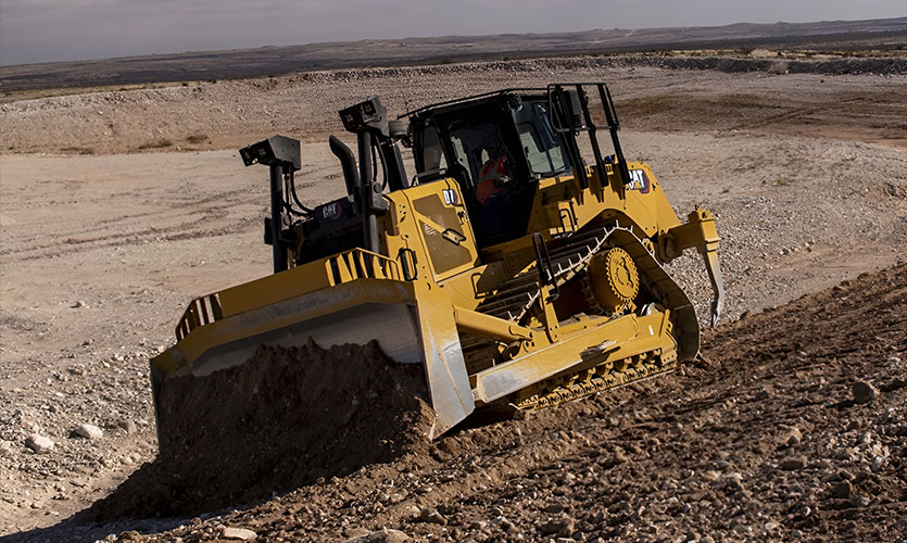
Dozers: Dozers are powerful pieces of equipment available in compact and large sizes. They are useful for various applications, from earthmoving to site preparation. Smaller models can cost about $40,000, while larger options can sell for over $500,000.
Skid steers: Skid steers and compact track loaders are versatile options for digging, lifting and other applications. They have various sizes, attachments and features, making their costs vary. A new, standard-sized skid steer can range from $17,000 to well over $50,000.
2. Insurance Costs
Insurance is an essential variable cost for equipment purchases. Insurance provides coverage for damages, theft, breakdowns and other instances that impede a construction site’s efficiency. Depending on your insurance plan, the provider might cover part or all of the related fees. Other insurance options provide reimbursements for business interruptions that occur during machine downtime.
Insurance costs vary depending on the provider, equipment cost, construction site specifications and other factors. Insurance providers can offer specific quotes for monthly or annual rates. Safety also plays an important role, as your rate might increase if you experience frequent accidents.
3. Repair Costs
Another variable expense is the cost to repair your equipment. Regularly used equipment is susceptible to wear and can sustain damage over time. It’s important to repair equipment quickly to maintain its condition and keep your construction site working safely and at peak efficiency.
It can be challenging to estimate annual repair costs because they vary in severity and frequency. The more you use equipment, the more wear it endures. The environmental conditions you typically work in directly impact machine wear and tear, and especially harsh job site conditions can result in increased repair needs.
Repairs can consist of a single part breaking or an entire machine breakdown, leading to a wide difference in potential costs. Machines in poor condition might also need repairs more frequently than new machines.
Common heavy equipment repairs include:
Engine: Basic repairs, like replacing a sensor or gaskets, can cost a few hundred dollars or upwards of a couple thousand dollars. Rebuilding or overhauling an engine can cost anywhere from a few grand to more than $20,000.
Hydraulic system: Minor repairs, such as swapping out a seal or hose, can range between a couple hundred to a couple thousand dollars. More serious hydraulic repairs can cost upwards of $10,000.
Structural: The average costs of structural damage will vary depending on severity and location. Extensive repairs can potentially cost tens of thousands of dollars.
4. Preventative Maintenance Costs
Regular maintenance is vital for heavy equipment and helps you identify potential problems before they grow into more significant and costly issues. Tasks like oil changes, wire replacements and track adjustments are essential for efficient operation and machine life span.
Even though proper maintenance can provide significant cost savings, these tasks still add to your equipment costs. Many businesses and contractors partner with providers for specialized maintenance plans, which can have monthly or annual fees. However, these costs even out — maintenance helps you increase equipment life spans and boost overall productivity, resulting in long-term gains.
5. Fuel Costs
Fuel costs are another significant consideration for equipment owners, contributing between 30% to 50% of overall expenses. Your equipment’s fuel use depends on many factors, making your overall cost vary each month. For instance, fuel costs are based on:
Fuel efficiency: The rate your equipment consumes fuel varies by machine and work type. Certain models might consume fuel faster than others, causing you to spend more. Many other features impact fuel efficiency, including operating techniques, equipment application or onboard technology.
Diesel fuel value: Fuel prices change constantly, which can make your monthly costs unpredictable. Most heavy equipment runs on diesel fuel, and its price differs depending on market availability, labor costs, taxes and other factors.
Each machine type consumes fuel at a different rate, and the cost of fuel can change quickly, making it harder to estimate costs.
6. Work Type and Conditions
The type of work you typically complete will also impact equipment costs. Consider the strain your common applications and job site conditions can have on your fleet. For example, a wheel loader used primarily for moving sod on landscaping projects will likely have lower operating costs and fewer repair needs than a loader used for hauling boulders in rock quarries.
Your unique project requirements directly influence how hard your equipment must work and how efficiently it can complete tasks, which will ultimately affect your ownership costs.
Contact Warren CAT for Deals on Construction Equipment
The more you understand typical heavy equipment expenses, the better you can prepare your budget for upcoming projects. In addition to upfront costs, you need to manage ongoing insurance, maintenance and fuel fees.
Warren CAT offers a wide range of new, used and rental heavy equipment to meet project requirements of any size. We help you find the best fit from our broad inventory of reliable and heavy-duty equipment. We also offer many financing options that make payment processes flexible and transparent.
Equipment rentals provide flexibility for construction businesses and contractors. You can use the exact equipment models you need, when you need them, without purchasing, creating more financial flexibility each month. This ease lets you stay on track with project schedules while maintaining your typical monthly expenses.
Understanding heavy equipment rental costs helps you plan for project expenses. Rental costs vary by equipment type, size and other factors, so it’s important to research prices and see how they fit into your available budget. Learn more about how much it costs to rent heavy equipment with our guide.
Cost by Rental Equipment Type
Certain types of equipment can cost more than others, depending on their specifications — the cost to rent a backhoe is different than the cost to rent an excavator. Construction sites typically rent equipment by the day, week or month. Breaking down average prices by rental types helps you anticipate your costs. Most rental providers offer free quotes to help you evaluate the cost before you commit to a rental. Here are typical prices for four major heavy equipment options:
1. Excavators
Excavators are one of the most popular equipment types, meeting many digging applications, from digging trenches to demolition jobs. They vary widely in size, from compact to large sizes. Excavators can complete earthmoving tasks quickly, aiding with site efficiency and meeting deadlines. An excavator may be able to complete site tasks within a few hours or days, making a rental agreement a great option.
Exact rental prices depend on the excavator’s size and capabilities. Daily rental rates can range from $450 to more than $3,000, with the largest heavy-duty options toward the top end of the scale. It often costs less to rent a mini excavator because of its compact size. In contrast, the purchase price of a new standard-size excavator can cost between $200,000 and $600,000.
2. Skid Steer Loaders
Skid steer loaders are versatile compact machines that can clear and move soil, along with many other functions available through a wide variety of attachments. It costs between $200 and $400 per day to rent a skid steer. Additional attachments like buckets, augers, grapples or brooms can increase rental costs.
3. Telehandlers
Telehandlers are lifting machines that carry and transport heavy materials across construction sites. They are available in many sizes, load capacities and boom heights. These factors impact their rental or purchase prices, with larger machines typically costing more than more compact options. Telehandler rentals start at $300 per day for smaller models and go up to $500 for more larger options.
4. Aerial Lifts
Aerial lifts provide an airborne platform workers use to reach higher elevations and perform tasks safely. Whether your crew needs to construct a high-rise apartment complex, perform HVAC repairs or pick items in a warehouse, aerial lifts can help you get the job done. Daily rental prices for aerial lifts can range between $250 and $700, depending on the brand and specifications.
Factors That Determine Rental Equipment Rates
By understanding the factors that influence equipment rental costs, you can make better budget projections and decisions. These are other considerations for your heavy equipment rental prices:
1. Equipment Application
It’s important to map out your project needs and goals before selecting rental equipment. Consider your project goals and what types of equipment are necessary to complete them. Bigger projects might need higher numbers or more specific equipment types to address every project requirement. In contrast, smaller projects might use more compact machines or fewer numbers to complete.
For instance, residential projects usually need smaller machine types for more precision in smaller lots. Landscaping applications require smaller and gentler handling to rearrange the earth, while trench digging needs more heavy-duty equipment.
2. Size of Equipment
As mentioned, the equipment’s size has a significant impact on rental prices. Construction sites must find the best machine sizes to meet their job needs. Equipment that’s too small can impede efficiency, making you work longer hours and placing more strain on the machines. However, equipment that is too large can make handling more challenging and drive up fuel costs. You can work with a rental provider to find the best size for your site needs, maximizing the rental cost and benefit.
3. Technology Included
Modern models of rental equipment might also feature various forms of technology like site positioning. These additions can boost accuracy and efficiency, providing you with valuable options you can use to increase productivity. You can research available technology or ask a rental provider about advanced options and their price ranges.
4. Length of Contract
Rental agreements cover specific durations, including hourly, daily, weekly and monthly options. Generally, longer terms offer lower per-hour rental rates, but you don’t want to rent a machine longer than necessary. You should contact a rental provider to discuss contract lengths and terms. They can offer more insights into prices and options that could meet your project requirements.
5. Availability of Specialty Equipment
Certain equipment models include special features that can raise rental prices. For projects that need specialized attachments or have heavy power demands, you might encounter difficulty finding the equipment you need. Certain specialty models might be difficult to find, which also increases their price. Only a few providers might have the exact model you need, and they might only have a few in their inventory. That’s why it’s important to find a dealer that has a robust inventory where you can find all the parts and equipment you need.
You can expect higher prices during the busiest times of the year, while you might find lower rates in the off-season — usually in the winter.
6. Location
Your location also plays a big role in ultimate rental costs. Each state varies with business taxes, wage levels, supply costs and other essential fees. The higher these fees are, the more expensive it becomes to loan out equipment, which is reflected in rental fees.
Rental providers typically set prices based on local competition and overall business costs. Project locations in one part of the country could manage completely different prices from another part.
You should also consider your proximity to rental suppliers. Transporting equipment to your work site is a part of your rental costs, so renting from the nearest reputable dealer is typically beneficial. You can request equipment delivery directly to your job site, or you can consider the cost of transporting the equipment yourself.
Request a Rental Quote From the Warren CAT Rental Store
Understanding average rental costs helps you make the most informed decision for your project and team. At the Warren CAT Rental Store, we understand the importance of transparent rental prices. We offer a wide range of heavy equipment rentals, from excavators to power generation units. Our expert customer service, high-quality machinery and fleet size and variety set us apart as a perfect partner.
Unexpected power outages cost American businesses around $150 billion yearly and put them at risk of losing efficiency and profitability. Businesses can strengthen their operations with an uninterruptible power supply (UPS). These electronic devices operate as backup power sources to keep your most important operations running smoothly. Integrating these tools into your contingency plan will give you the confidence you deserve.
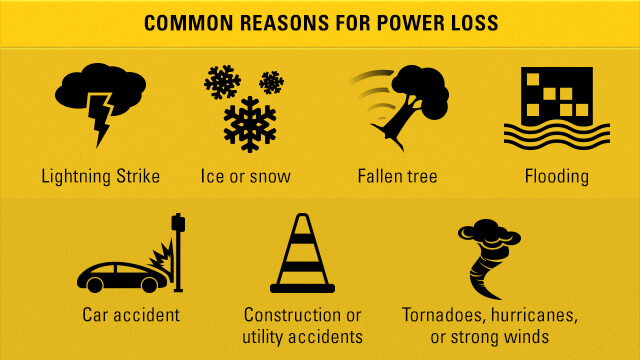
COMMON REASONS FOR POWER LOSS
Power outages occur for many different reasons, including:
Storms
Animals
High demand
Car accidents
Earthquake
Lightning
Power outages put business operations at risk and can cause costly project delays. UPS systems allow your workflow to continue as usual during an outage, powering your heat, equipment and other necessities to remain productive and profitable. During long-term blackouts, you can count on these systems to give you enough time to convert to an alternate power source.
WHAT IS AN UNINTERRUPTIBLE POWER SUPPLY SYSTEM?
UPS systems provide critical backup power to keep essential equipment operating and decrease the risk of downtime. Unlike traditional power sources such as generators, these machines switch on seamlessly and eliminate any effect of power interruption. These tools are available in various models and can take unique shapes, such as a desktop system responsible for securing your personal computer or a facility-wide power source relying on mega-ton or megawatt configurations.
You will typically find battery-based systems in smaller operations like home computers or offices and the flywheel configuration in bigger systems that power large facilities. The bigger systems provide reliable electricity within seconds by using a combination of a switchgear and power transformers. Each UPS configuration is a filter to protect against outages and other anomalies, providing critical operations with clean, stable and consistent power.
HOW DO UNINTERRUPTIBLE POWER SUPPLY SYSTEMS WORK?
The different types work differently, but they all aim to store and supply power when needed. In a data-driven world, even a momentary glitch with the power has the capacity to result in lost data, zapped systems, missed changes, corrupt files and lost production.
A flywheel or battery-powered UPS plugs into a power source, draws energy and stores it. Often, it filters and refines the energy as well. The three main uninterruptible power supply systems are standby, interactive line and online.
Standby UPS System: Standby UPS systems are offline devices that quickly switch to battery power following an unexpected power outage to deliver a steady supply of short-term electricity.
Line-Interactive UPS System: This UPS type provides superior filtering capabilities with a battery and inverter that are always connected to the output. If power fails, a switch changes the electrical flow.
Double Conversion UPS System: Double conversion UPS system configurations receive incoming alternating current (AC) power and convert it to direct current (DC) before converting back to AC to eliminate noise, spikes or surges.
Uses of UPS Devices
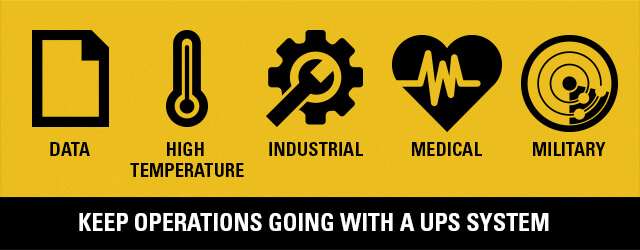
Keeping a steady stream of clean power is important anywhere you have operations that can’t stop. Using a UPS can protect data and maintain a high level of efficiency, abilities required throughout various applications, including hospitals, data centers, universities and other facilities. Types of UPS systems include:
Data: A UPS for applications such as a server farm or communication center.
Temperature: Some people need a UPS that will withstand hotter climates.
Industrial UPS System: These power systems are geared toward use in manufacturing and other types of plants and factories.
Medical: Hospitals and other medical settings use a UPS to ensure continuous operation of critical equipment like life support.
Military: These systems are certified for quality under military specifications.
Costs Associated With Your UPS System
UPS devices are often built in various configurations to meet specific facility demands. They commonly come in single- or triple-phase designs, powered by either a set of batteries or a flywheel component. These differences will alter your required investment, potentially totaling thousands of dollars.
However, an efficient, Energy Star-rated UPS system can help reduce general energy loss by as much as 55%. For example, a 1,000-kVA UPS used in a data center application could save as much as $18,000 per year in energy costs.
You should also be prepared to pay an electrician for anything more than the basic installation of the smallest system. Hobbyists and the inexperienced should know that attaching a UPS and its associated hardware is a job for professionals. Most UPS systems need a cool, dry, dust-free place to exist. If you choose a battery-based system, know that the batteries last about 5–10 years and must be disposed of properly according to environmental standards.
ADVANTAGES OF USING AN UNINTERRUPTIBLE POWER SUPPLY SYSTEM
UPS systems provide exceptional reliability and protection and keep critical systems running. They refine the quality of the power as it reaches your building, office and equipment, providing unrivaled protection against short- and long-term power outages. Experience benefits of UPS such as:
Continuity: Experience no outages to critical equipment like computers to factory production lines.
Consistency: A UPS’s electronics enable quick activation and signify when alternate power is needed to eliminate errors or faults and streamline the process.
Protection: These systems create an extra layer of protection against electrical surges, spikes, dips and even total failure, as they can detect potential threats and take the necessary precautions to avoid damage.
Filter: A UPS, such as a line-interactive UPS, refines incoming power and adjusts outputs to ensure internal components have unrivaled access to safe electricity.
FLYWHEEL UPS SYSTEMS ARE LEANER AND CLEANER
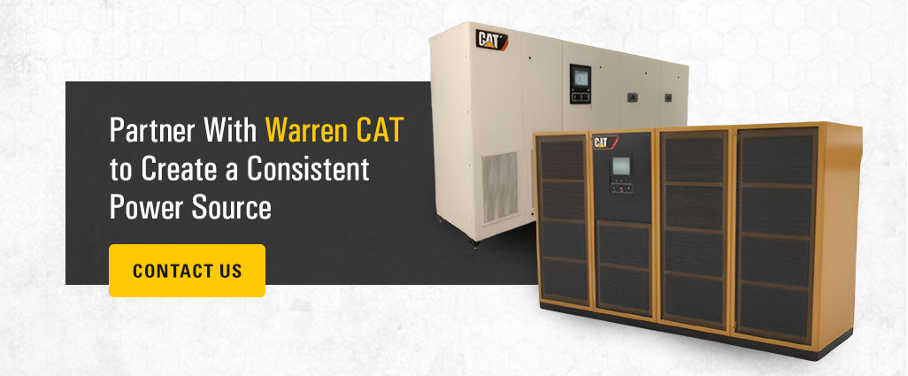
A Caterpillar® UPS with flywheel technology, available through Warren CAT, provides superior power and the most advanced technology in UPS systems. They feature an exclusive kinetic-energy storage device that functions like a traditional UPS but without batteries and with much less maintenance and hassle.
The complete line of Cat UPS systems offers capabilities that range from 150 kVA to 3.6 MVA. They will carry a facility through an outage or interruption and, depending on the model and technology, they will refine the incoming power so it’s as clean as your system needs it to be. Flywheel-style Cat UPS systems have several advantages, like no-break technology and an infinite life cycle.
THE COMPONENTS OF A FLYWHEEL UPS SYSTEM
Input contactor
Static switch
Line conductor
Inverter fuse
Filter inductor
Utility converter
Flywheel converter
Flywheel system
Bypass and output contactors
Options include cabinets with static bypass, MMU isolation, MMU connection, maintenance bypass and dual output. The flywheel motor compartment contains no permanent magnets and has a magnetic bearing integrated into the field circuit.
ADVANTAGES OF A FLYWHEEL UPS SYSTEM
Produces superior-quality output
Eliminates or reduces batteries
Lowers system maintenance, operating and replacement costs
Requires less upkeep
Needs less space at a size that’s about 75% smaller than battery-based systems
Reduces annual, overall energy costs by as much as 4%
Provides fail-safe backup power
Can be optioned for high-temp operation up to 104 degrees Fahrenheit
Poses no safety hazard to employees or the environment
Enables easy expansion through modular, scalable architecture
A flywheel UPS addresses both efficiency and environmental considerations. For example, a traditional battery-based UPS of 300 kVA would occupy 40 square feet, weigh about 13,000 pounds, and use about 52,269 BTUs. A Cat UPS 300 kVA system would occupy 14 square feet, weigh 4,475 pounds and use about 25,300 BTUs.
One of the Cat UPS systems is a high-endurance model designed to operate at temperatures as low as -4 degrees Fahrenheit and as hot as 104 degrees F. You can put monitoring equipment for the Cat UPS system anywhere in the building, with optional Ethernet connections and various choices for computer display.
Caterpillar has mastered the science of using kinetic energy to provide a true, uninterrupted power supply. When power surges, dips, or ceases, inertia keeps the rotor spinning and creates kinetic energy to convert to electricity. The flywheel spins with such low resistance (virtually none), that frictional loss remains very low, thereby creating a super-efficient environment.
Finding the Right UPS System for Your Needs
UPS systems handle intricate power consumption ratings expressed in VA or kVA values. Consulting a professional is the best way to find the most cost-efficient model ready to protect your operations from costly downtime. They’ll have the product knowledge to help you reap the advantages of UPS devices:
Little electromagnetic interference and acoustic noise
Reduced-distortion input current (THD)
Regulated output
Shorter transitions from regular to backup power
High efficiency and reliability
Partner With Warren CAT to Create a Consistent Power Source
If you’re looking for a qualified expert to help you explore the different kinds of UPS systems, our team at Warren CAT is ready to help. We employ specialized professionals, such as electricians, engineers and technicians, to support your search. They can translate the language of UPS systems and their many parts, including power generation, transfer switches, distribution panels and mobile or permanent alternative-power sources, as well as provide services or support for all of the above.
We strive to be your trusted partner and leverage more than 50 years of industry experience to pair you with the best UPS for your demands. These capabilities are possible thanks to our participation in the network of Cat dealers and access to all kinds of UPS models. With our cutting-edge products and dedication to providing unrivaled support, you can count on Warren CAT for a robust UPS.
Construction businesses must prioritize effective equipment fuel management practices to optimize operations and reduce waste. Whether you’re looking to maximize your investments or lessen the potential negative impacts of your construction projects, a few strategies can help your team achieve greater fuel efficiency.
Understanding the Need for Effective Fuel Management in Construction Equipment
Fuel management impacts various key aspects of your construction business:
1. Operational Costs
Fuel accounts for a significant amount of the overall operating expenses for many construction projects. By carefully monitoring fuel usage and following the best practices, your team can effectively lower daily operational costs and boost profitability.
Tracking your fuel levels and usage can also help your team optimize refueling schedules and maintain minimal operational disruptions. Effective management helps ensure your business achieves the greatest project efficiency possible. With the right fuel management practices, you can avoid issues like inconvenient refueling needs that can lead to increased downtime or operational delays that impact how quickly you can complete important tasks.
The right fuel management efforts can play an important role in controlling your business’s project costs and timelines.
2. Equipment Performance
Construction equipment fuel efficiency directly influences performance. Fuel consumption is linked to a machine’s reliability and power output, so proper management is essential for achieving the greatest overall efficiency and productivity.
Further, your fuel practices will impact your equipment’s life span and longevity. Using high-quality fuel and keeping up with maintenance practices can prolong the life of your fleet while offering additional benefits, like reducing repair costs and helping you realize a maximum return on investment. Adhering to these best practices can contribute to more reliable and consistent fleet performance.
3. Environmental, Health and Safety Considerations
The environment is another key reason why effective fuel management is important for your construction business to consider. By taking steps to optimize fuel consumption while still achieving project efficiency goals, your team can strive to minimize greenhouse gas emissions on each project.
For many construction businesses, reducing environmental impact is an important priority. You can effectively lessen your operation’s impact on the planet by establishing the most fuel-efficient practices. Be aware of the applicable regulations or emission standards for your machines set by governing bodies like the Environmental Protection Agency. Your business must aim to optimize fuel efficiency to stay compliant and avoid potential violations. Some local municipalities and cities also have some own environmental regulations to consider.
Fuel management is also an important part of job site safety. Your team should be familiar with and facilitate the safest handling, storage and fuel usage to avoid accidents or hazards while supporting optimal performance.
Strategies to Improve Fuel Efficiency in Heavy Construction Machinery
Construction businesses can use a few strategies to boost fuel efficiency to ultimately reduce costs, improve equipment performance and minimize negative environmental impacts.
1. Prioritize Proper Maintenance
One tactic for optimizing fuel efficiency is prioritizing appropriate ongoing maintenance efforts. Establish a routine for preventative maintenance and ensure your operators inspect their equipment daily.
They should take a closer look at the machine’s fluid levels, filters, spark plugs and wear components regularly. Check tires or tracks for signs of wear and tear and encourage your operators to tend to repair needs promptly.
Remember to have a professional inspect your equipment as needed, too. Prioritizing equipment inspections can help you locate small issues before they turn into major problems that waste fuel and cause project setbacks.
These maintenance practices will help to ensure your equipment operates efficiently and consumes less fuel.
2. Train Your Operators on Best Practices
Another way to improve construction equipment fuel efficiency is to train your operators. They should be well-versed on how to use their machines. Remind them to avoid common activities that waste fuel, like frequent idling or improper usage.
Discuss best practices and explain why optimizing fuel efficiency is important to your business’s bottom line. Bring it up often and remind your team to prioritize the best operational techniques to support lower fuel consumption.
3. Use Newer Equipment Technology
Modern construction equipment technology can help your business reap many benefits, including increased visibility into fuel efficiency with the help of data and monitoring systems. Investing in newer systems is a great way to harness more insight into how each machine is operating and whether it is using too much fuel.
Data is an incredible tool for identifying opportunities for improvement and reducing unnecessary fuel waste that is impacting your business’s bottom line.
4. Choose the Right Machines
Construction businesses can improve fuel efficiency by selecting the right piece of equipment for every job. As you decide which machine in your fleet to use, consider how it will perform on the job site. Assess load capacity requirements and ground conditions.
Be strategic about the size and speed of your equipment. For instance, using a machine that is too small for a certain task can strain the engine and lead to excessive fuel consumption. Opting for a machine that is too large for a particular application can also result in wasted fuel and inefficiencies.
5. Minimize Equipment Idling
Equipment idling burns fuel without positively contributing to your project’s productivity. Encourage your operators to minimize how often and how long they allow their machines to idle and waste fuel.
Creating idling guidelines can help your team combat unnecessary operations. Setting a specified warmup and shutdown time can help your operators stay cognizant. Your construction business can also benefit from investing in tech that tracks idling behaviors and has fuel-saving settings.
6. Optimize Each Load
Another strategy for increasing your equipment’s fuel efficiency is prioritizing load optimization. You can effectively reduce energy needs and minimize wear and tear on your machines by ensuring your operators follow the manufacturer’s load capacity requirements.
If you do overload your equipment, you risk increasing resistance, strain and drag on the machine during operation, all of which contribute to excessive fuel consumption.
Optimize Fuel Efficiency With Reliable Equipment and Maintenance Services From Warren CAT
If your construction business is looking to maximize fuel efficiency with high-quality machines, turn to the selection from Warren CAT. We are proud to be the authorized Cat® dealer in Oklahoma, West Texas and the Texas Panhandle.
You can choose from new, used and rental options, depending on your unique project requirements and budget. We’re your long-term partner for all your equipment needs. We also offer routine service and preventative maintenance to keep your machines functioning at their best.
As a contractor or small business owner who relies on construction equipment, you’ve probably tackled a broad range of projects. Whether performing road work, building a home foundation or paving a parking lot, different tasks call for different types of equipment. However, hauling multiple machines for one project can be a hassle. That’s where interchangeable attachments come in handy.
Equipment attachments are a flexible solution to complete basic tasks without bringing in additional large machines. For example:
Several benefits come with renting attachments for your equipment.
7 Reasons to Rent Cat® Equipment Attachments
Caterpillar is a manufacturer prized for its reliable, long-lasting equipment and parts. As an authorized Cat dealership, Warren CAT can help you find high-performance attachments that align with your projects, budget and needs. When you rent Cat equipment attachments from a trusted dealer like us, you can experience numerous advantages.
1. Cost-effectiveness and Flexibility
Say you need a specific attachment for a short-term project. Renting offers a flexible avenue to get the part you need when you need it. Attachments are also quick and easy to install and remove. That means you can use various attachments for a project without needing multiple large pieces of equipment.
Renting can be a cost-effective solution for your business if you only need an attachment temporarily. Purchasing an attachment you only plan to use for a short interval can be a wasted investment. Instead of letting the attachment sit in storage and collect dust, simply return it as soon as your rental duration is up.
Likewise, if you realize you need the attachment longer than anticipated, you can easily call the dealer and extend your rental period.
2. No Maintenance or Repair Costs
When you rent equipment attachments from a reliable dealer like Warren CAT, you can rest assured we’ll perform the maintenance and repairs necessary to keep them functional. Our highly trained technicians inspect products carefully to confirm everything works properly — all at no extra cost. Maintenance and repair expenses are automatically part of your rental agreement.
Cat attachments offer years of performance and durability. Even so, that added layer of protection can give you more peace of mind throughout your rental contract. Besides normal wear and tear, Cat parts have a minimal risk of malfunctioning. However, we’ll replace a faulty attachment with a new one should you encounter issues down the road.
3. Wide Availability
Because we have an extensive selection at Warren CAT, you rarely have to question if you’ll be able to find the solutions you need. From drills and blades to buckets and brooms, you can find nearly everything you need at affordable rental rates.
Our vast inventory of attachments means you can take on a broader variety of projects and tasks. Additionally, our ongoing repair and maintenance services ensure you can reap the most use from your investment. Warren CAT is your one-stop shop for all the attachments you need — plus the services needed to maintain them.
4. Reduced Storage Burdens
A large stockpile of equipment attachments can quickly take up valuable storage space. Storage majorly contributes to the overall expense of equipment ownership. Some businesses and contractors may not have enough space to store additional tools and equipment — or the funds to expand their storage facilities.
Renting attachments means you don’t have to find extra storage space. You’re only responsible for the attachments if you rent them, so permanent storage arrangements aren’t a concern.
5. Speed and Efficiency
Perhaps you already have equipment attachments, but they’re out of commission for the foreseeable future. Renting is also an excellent option if your current attachments are undergoing servicing or repairs.
Rental attachments can help maintain efficiency on your job site. You don’t have to halt your operations, compromise your workflow and risk profit loss simply because you don’t have a working attachment. Rental attachments can help you stay on top of project deadlines and avoid costly downtime.
Breakdowns and malfunctions can occur when you least expect them. Fortunately, renting lets you get the solutions you need quickly in these urgent situations. You can keep things in order even when your go-to parts and equipment are unavailable.
6. Opportunity to Try Before You Buy
If you are considering adding new equipment and tools to your fleet, renting lets you test out different products before committing to a purchase. You can determine what attachments and features would accommodate your project needs.
The flexibility of trying before buying is easily one of the most considerable perks of renting. Find what best suits your business without the pressure of time constraints.
7. Easy Access to Rental Attachments in Numerous Locations
Contractors and business owners wear many hats. Between negotiating contracts with customers, organizing projects and scheduling employees, you likely have oodles of tasks on your plate. You may not have the time in your jam-packed schedule to travel long distances to pick up rental equipment and attachments.
Fortunately, Warren CAT makes it simple to find rental attachments near you. With 11 convenient locations throughout Oklahoma, the Texas Panhandle and West Texas, the right attachment is never far away. You can visit your closest rental location for professional guidance in finding the proper equipment attachments. Our experts will help you select attachments based on your work site, project specifications, timeline and budget.
That way, you can get the solutions you require without majorly impacting your workflow. With our wide range of locations, convenient pickup options and efficient access to rental products, you’ll quickly have your attachments on-site when you need them.
We want to make the rental process as simple and hassle-free as possible. Regardless of your schedule and requirements, we’re ready to meet you where you are.
Choose Warren CAT for Equipment Attachment Rentals
Warren CAT proudly serves Oklahoma and West Texas with quality, dependable Cat attachments. Whatever your unique project specifications, we’re ready to help you find solutions that meet your needs and budget.
If you need help finding the right work tool rental attachments, contact us online or give us a call at 866-292-7736. Otherwise, you can browse our assortment of rental attachments and get a quote.
In the instance of an unforeseen power outage or construction equipment breakdown, emergency response rental equipment is critical. You never know when these circumstances could arise, so you want to be ready.
Renting equipment is a beneficial option, as you can get the parts and machinery you need quickly in pressing situations. Discover the value of emergency rental equipment, qualities to look for in a rental dealership and our available solutions at the Warren CAT Rental Store.
Why Should You Rent Equipment in Emergencies?
Whether a major storm hits your area, or your main equipment line is down for maintenance or repair, it’s important to prepare with backup solutions you can rely on in various situations.
1. Power Outages
Power outages can occur for numerous reasons, such as inclement weather and planned maintenance. Construction projects may occur in remote locations and areas prone to extreme weather, like snow, ice and thunderstorms.
Regardless of the cause of the power outage, you’ll want to keep operations running as usual. A generator can supply stable power to your facilities and sites to maintain business continuity. If you don’t own emergency response equipment, renting offers an efficient way to get the solutions you need.
Here are some other reasons to consider an emergency generator rental:
Customer service: On the customer service side, construction companies depend on functional technology to provide support. A power generator helps them keep in touch with customers even during outages.
Safeguarding data: Construction companies manage large volumes of client data. A power outage can lead to sensitive data loss or corruption. A backup power source is essential to minimize disruptions and protect valuable information.
2. Equipment Malfunctions
Many businesses — such as construction companies, mines, farms, and oil and gas companies — rely on equipment that is always ready to work. Equipment downtime can be costly for construction companies.
Various factors can cause equipment to fail, such as:
Improper maintenance
Operator misuse
Physical wear and tear
If you experience a sudden equipment breakdown, renting offers a quick and easy solution to get the replacement units you need. Whether your fleet includes bulldozers, excavators, skid steers or dump trucks, you can find the necessary construction equipment to continue projects without costly interruptions.
How to Choose the Right Emergency Heavy Machinery Rental Service
Now that you know the importance of emergency rental equipment, the next step is determining where to rent your equipment. Here are some qualities to look for in an equipment rental provider:
1. Solutions for Every Industry
Many types of businesses rely on equipment and stable power sources. On that account, an emergency rental equipment dealer should cater to a wide range of sectors, including construction, mining, agriculture and oil and gas.
2. Responsive Services
Time is of the essence during an emergency power outage or equipment malfunction. You’ll want a rental equipment company that can provide speedy service, getting your equipment to your site as quickly as possible. Try to choose a company with efficient and convenient delivery options.
3. Modern Features and Technology
Ideally, you should be able to find rental equipment with built-in technology features for enhanced performance and safety. For instance, remote monitoring functionality can notify you of low fuel levels and system conditions.
Consider a rental equipment provider with a quality selection and access to the latest technology. Renting equipment shouldn’t mean you have to compromise on state-of-the-art features and capabilities.
4. A Broad Selection
Try to choose a dealer with a large rental equipment inventory. That way, they’re more likely to have the solutions you require. Whether you rely on compactors, wheel loaders or rock-crushing equipment, you should be able to find everything you need in one place. Choosing a dealer with a vast rental inventory saves you the hassle of visiting multiple dealerships.
Emergency Cat® Equipment Rentals Available at Warren CAT
If you’re seeking a rental equipment provider that embodies the above qualities, look no further than the Warren CAT Rental Store. We supply parts and equipment from Caterpillar, a global brand known for its superior durability and performance, as well as other leading brands.
Our technicians meticulously inspect and maintain our rental equipment to ensure reliable performance in any situation — whether it’s an emergency or just another day on the job. Browse the different rental equipment we offer below.
1. Power Generators
If you need to rent an emergency power generator in the Texas or Oklahoma area, Warren CAT is ready to assist you. We have a variety of diesel, biofuel and natural gas generators available for rent. A rental genset can:
Supply backup power at a remote construction site or similar location.
Help industrial facilities operate at full capacity while primary power systems are out of commission.
Allow emergency response teams to work continuously in disaster relief zones.
Find the emergency construction equipment you need from our selection today.
3. Equipment Attachments
Bringing in multiple pieces of large equipment can be challenging and, in some cases, impossible on short notice. Equipment attachments are a quick and flexible alternative. They let you perform different tasks with one machine, like drilling, hammering, sweeping and mulching. These parts are fully detachable, so you can install and remove them as needed.
Renting equipment attachments is practical when you only need these tools temporarily. You don’t have to purchase a specialized attachment you might never use again — simply return it when your rental contract is up. Additionally, you can easily contact your dealer and extend your rental duration if the project runs longer than expected.
Rental attachments let you take on last-minute and short-term projects with more peace of mind. We have several rental attachments available at Warren CAT, including:
Augers
Brooms
Buckets
Jackhammers
Stump grinders
Tillers
Trenchers
4. Light Towers
Light towers are ideal for added site security and provide powerful illumination for urgent nighttime operations, like rescues, investigations and post-disaster cleanups. If you’re looking to rent a light tower for your construction project, mine or agricultural operations, we have an extensive stockpile to choose from at Warren CAT.
Find Emergency Rental Equipment at the Warren CAT Rental Store Today
If you’d like to rent high-quality Cat equipment in Oklahoma, the Texas Panhandle or West Texas, Warren CAT is your one-stop shop for parts and machinery. Whether you’re searching for construction equipment, attachments or a power generator, you can find it all here.
Browse our inventory of rental equipment and request a quote today. Need help finding the right rental solutions for your emergency applications? Send us a message or call 866-292-7736.